Ultrasound Detection of Airborne Corona, Tracking, and Arcing in Sub-stations

📌 Executive Summary
Detecting high-frequency ionization sounds of corona discharge in switchgear before thermal cameras can register temperature rise.
1. High-Frequency Sound: The First Sign of Failing Insulation
Electrical phenomena such as corona, surface tracking, and arcing all release part of their energy as sound waves above human hearing, typically in the 20-100 kHz range. An airborne ultrasound detector receives these emissions and heterodynes them down into the audible range, allowing the inspector to locate the source and classify the type of discharge.
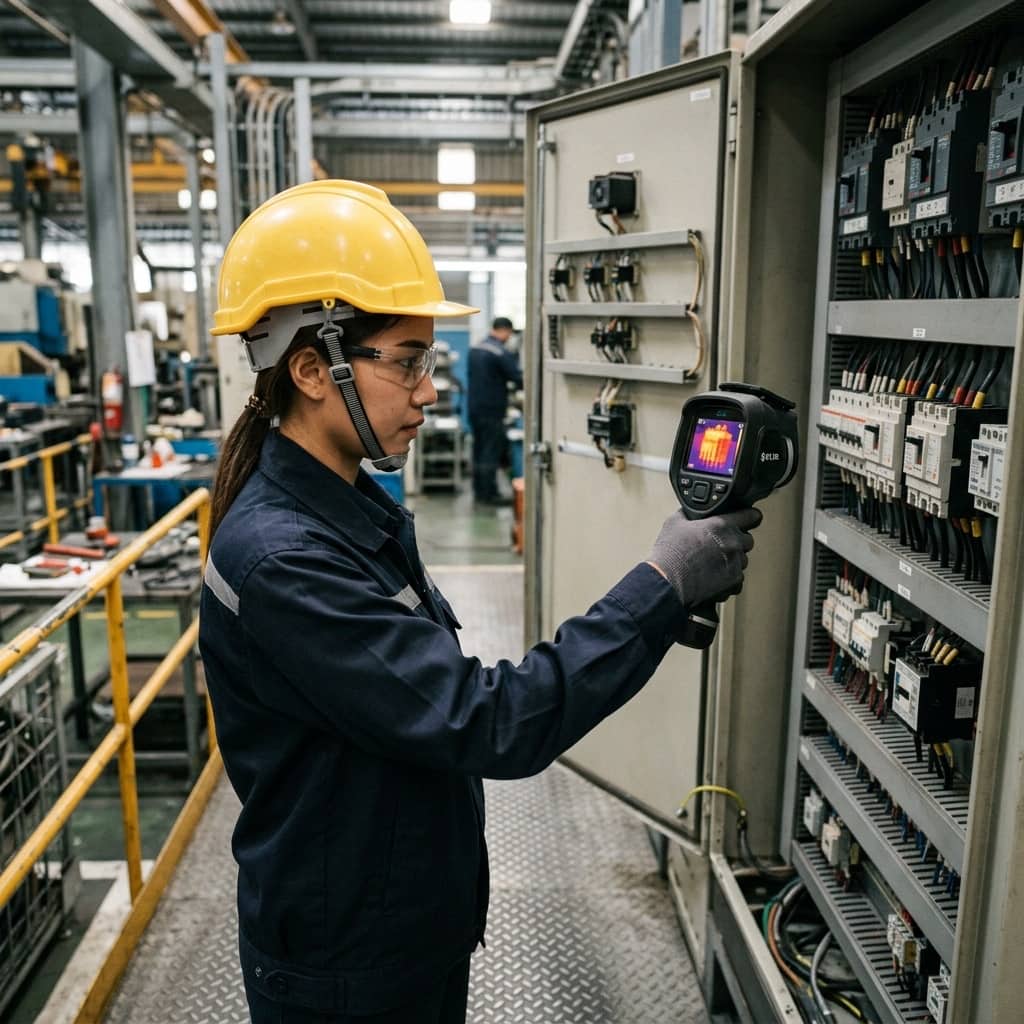
The key strength of this method is that it finds problems before a thermal camera can. Early-stage corona and surface discharge generate almost no measurable heat but produce distinct high-frequency sound — especially in switchgear at 12-24 kV and above, where degradation of bushings, insulators, or cable terminations typically begins as small discharges that build for months or years before developing into a violent short circuit. Ultrasound inspection therefore complements thermography; it does not replace it.
2. Distinguishing Corona, Tracking, and Arcing Signatures
Interpretation relies on each phenomenon's acoustic signature. Corona produces a steady frying or hissing sound synchronized with the voltage peaks of every half cycle, usually at sharp metal edges or where electrical clearance is inadequate. Tracking — sometimes called baby arcing — produces an irregular, intermittent hiss, indicating current beginning to creep along contamination or moisture on the insulation surface. True arcing produces harsh, erratic popping and crackling, a danger level requiring urgent correction.
Modern instruments can record the signal and display its spectrum against the 50 Hz power frequency to confirm classification, and acoustic imaging cameras with dozens of microphones overlay the sound source directly onto a visual image. This pinpoints discharge on elevated equipment or behind safety barriers without approaching it, improving both safety and survey speed in outdoor switchyards.
- Corona: steady hiss correlated with 50/100 Hz — monitor and plan correction
- Tracking: intermittent, erratic hiss — contaminated or damp insulation; clean and investigate
- Arcing: harsh random crackling — dangerous, correct as soon as possible
- Always pair with thermographic inspection for full coverage
3. Field Survey Technique
For enclosed switchgear, scan along panel seams, ventilation louvers, and door seals — ultrasound escapes readily through small openings. Some facilities install dedicated ultrasound ports so cabinets can be surveyed without opening covers. For outdoor equipment such as insulators, high-voltage terminations, and transformers, a parabolic dish extends detection range and narrows the pickup angle, allowing accurate pinpointing from a safe distance.
Environmental conditions strongly affect results: high humidity, fog, or recent rain intensifies surface discharge on contaminated insulation, so surveying in both dry and damp conditions gives a more complete picture. Inspectors must also discriminate against other ultrasonic noise — compressed-air leaks or lighting ballasts — which trained personnel recognize by rhythms uncorrelated with the power frequency. Every finding should be logged with an audio file, location, and decibel level for trending in the next survey.
4. Root Causes of Discharge and Prevention
Frequent root causes include insulation surfaces contaminated by salt or industrial pollution forming conductive paths, moisture accumulating in cabinets from degraded seals or failed anti-condensation space heaters, inadequate electrical clearance from installation or later modification, poorly assembled high-voltage cable terminations, and sharp metal edges lacking field-grading hardware.
Prevention starts with scheduled insulator cleaning in high-pollution areas, checking and replacing space heaters and door seals, using qualified jointers and prefabricated termination kits assembled per the manufacturer's manual, and correcting early corona at its source — dressing sharp edges, increasing clearance, or adding grading devices. Making ultrasound inspection a standard annual PM line item alongside thermography is the most cost-effective way to intercept high-voltage insulation problems before they become a plant-wide outage.
Need engineering consultation regarding Preventive Maintenance?
The WIN TECH SERVICE engineering team is ready to provide site surveys, electrical system inspections, and prepare accurate legal certification reports.