Creating a Master Electrical Preventive Maintenance (EPM) Checklist for Factories

📌 Executive Summary
Structuring daily, monthly, semi-annual, and annual testing protocols according to NFPA 70B standards.
1. Why Factories Need a Structured EPM Program
Many factories still maintain their electrical systems reactively — running equipment to failure and repairing afterward. It looks economical in the short term, but the true cost of an outage goes far beyond the repair bill: lost production, spoiled work-in-progress, expedited delivery costs, and safety risks to personnel. A structured Electrical Preventive Maintenance (EPM) program replaces firefighting with systematic risk management.
The heart of a good EPM program is a checklist that states exactly which equipment is inspected, what is checked, by what method, how often, by whom, and against what acceptance criteria. The checklist must be built from a complete equipment inventory — from the high-voltage intake and transformers through the MDB down to sub-panels and end devices — then prioritized by the production impact of each item's failure.
2. Program Structure per NFPA 70B and Thai Law
NFPA 70B is the primary reference framework for EPM, and its 2023 edition was elevated from a recommended practice to a mandatory-language standard. It bases maintenance intervals on the equipment's condition of maintenance, its criticality, and its operating environment rather than fixed calendar intervals alone — equipment in poor condition or harsh environments must be inspected more frequently.
On the Thai legal side, the Ministerial Regulation on electrical safety B.E. 2558 (2015) requires annual inspection and certification of the electrical system, and the EIT (Engineering Institute of Thailand) electrical installation standard serves as the installation-compliance reference that inspectors evaluate against. Designing the EPM program around these requirements from the start turns the annual certification into a simple evidence-gathering exercise instead of a year-end scramble.
- Daily/weekly: visual, sound, smell, meter readings, and abnormal indicator checks
- Monthly: load logging, electrical room temperature checks, emergency lighting tests
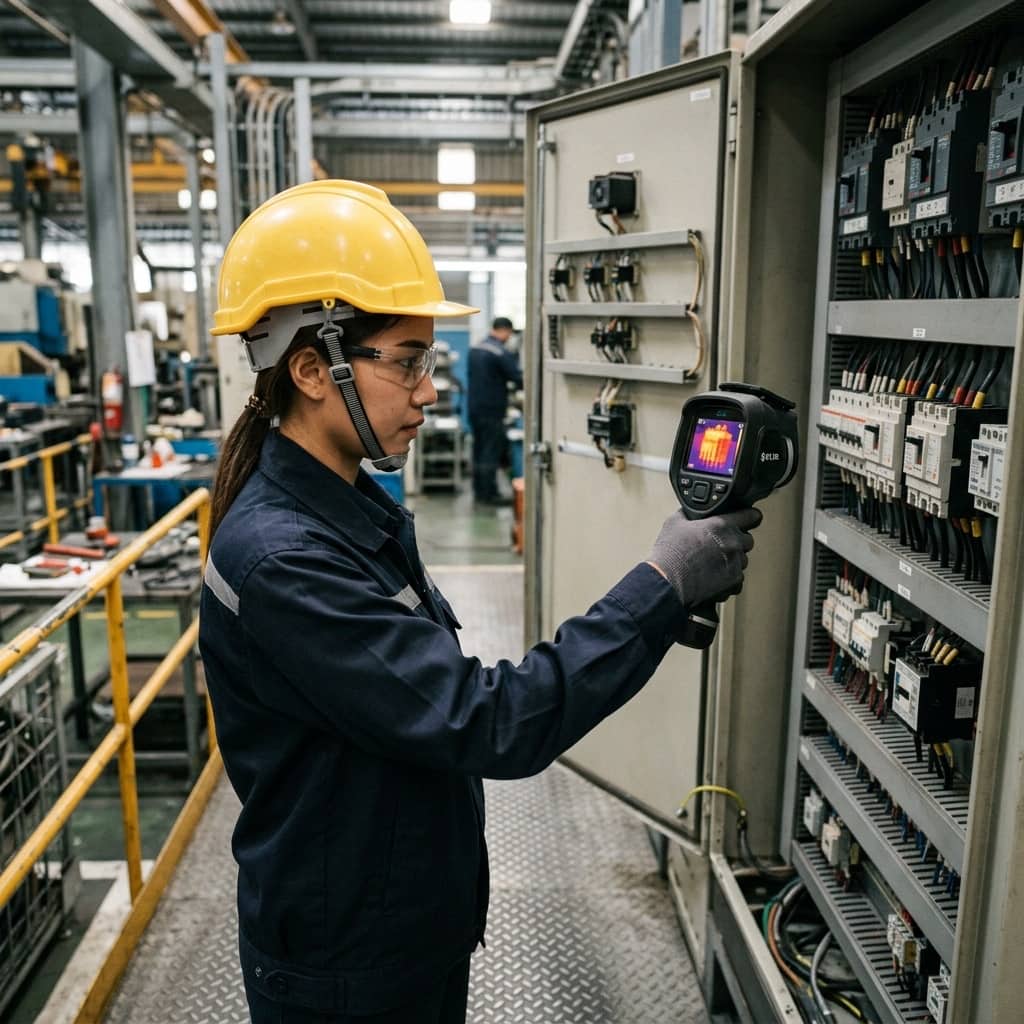
- Semi-annual: thermo-scan, panel cleaning, torque checks on critical connections
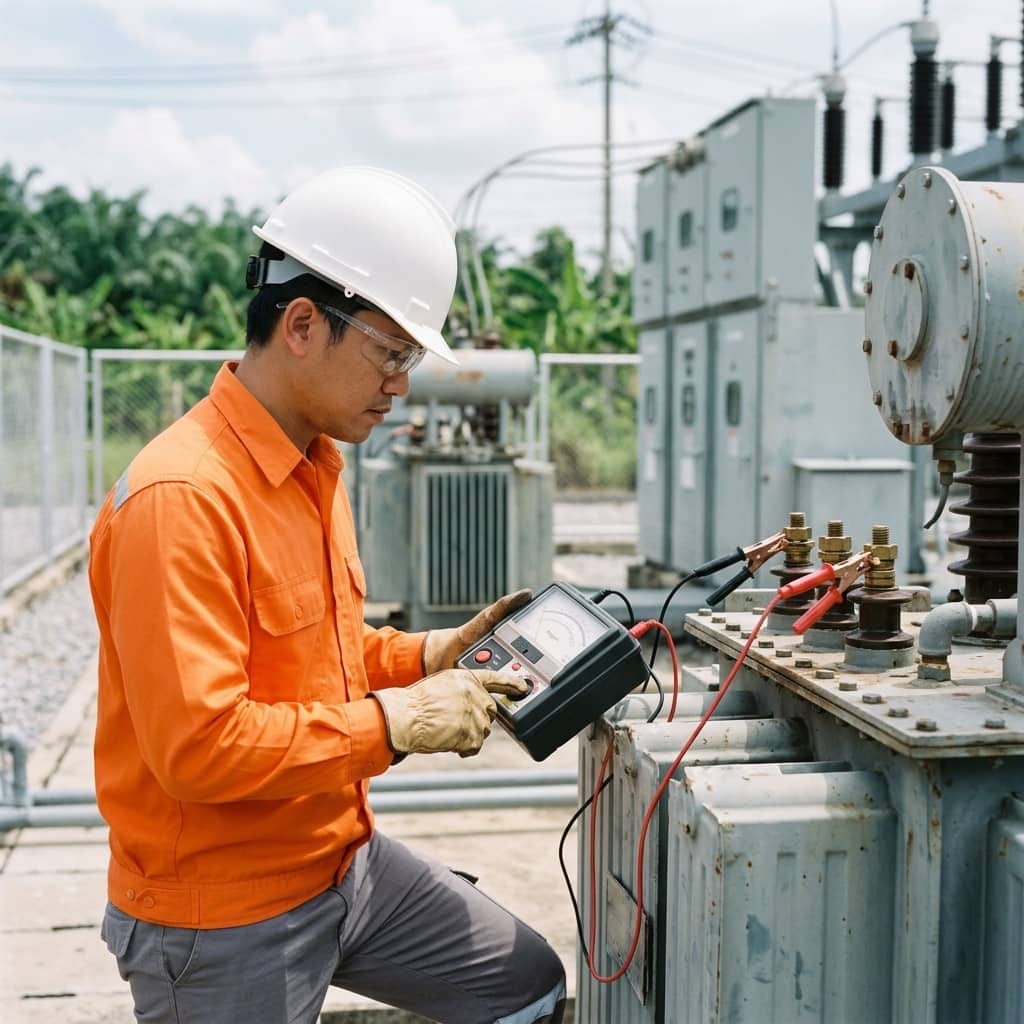
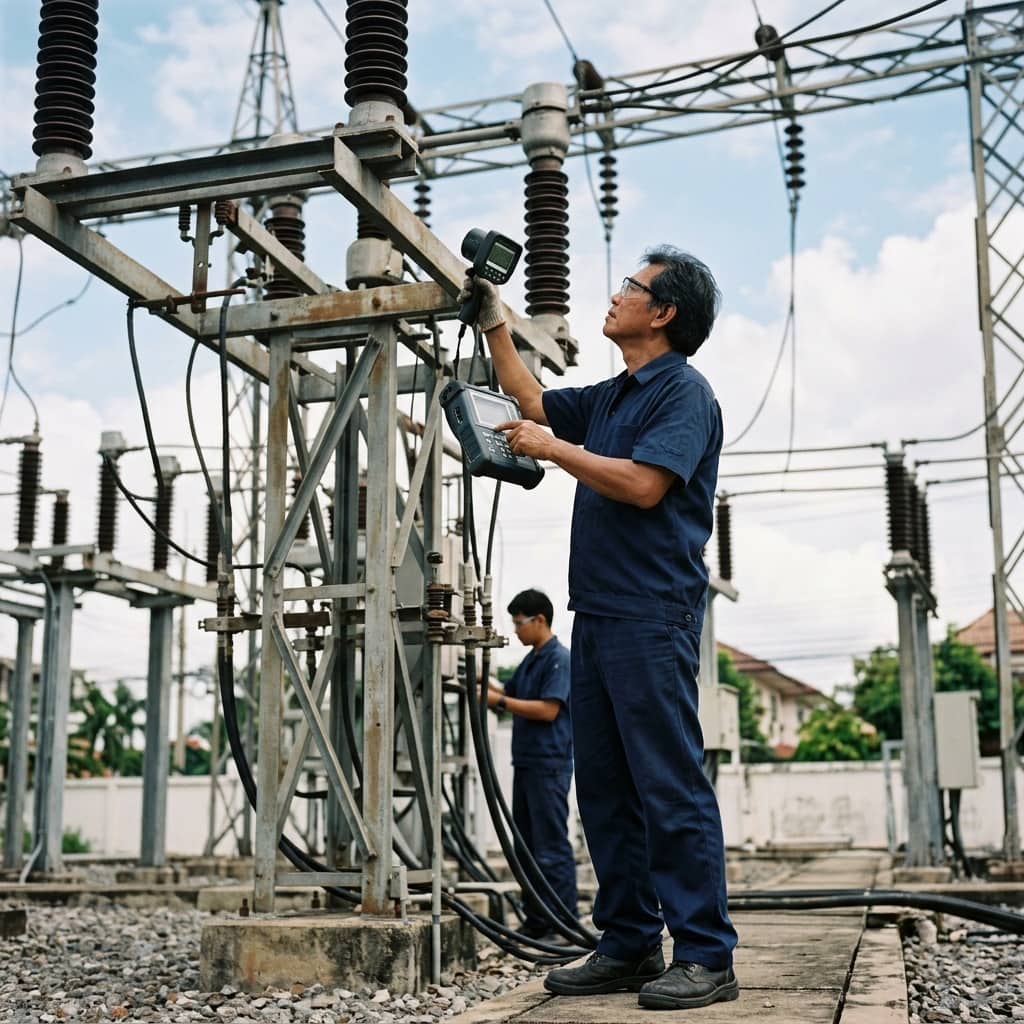
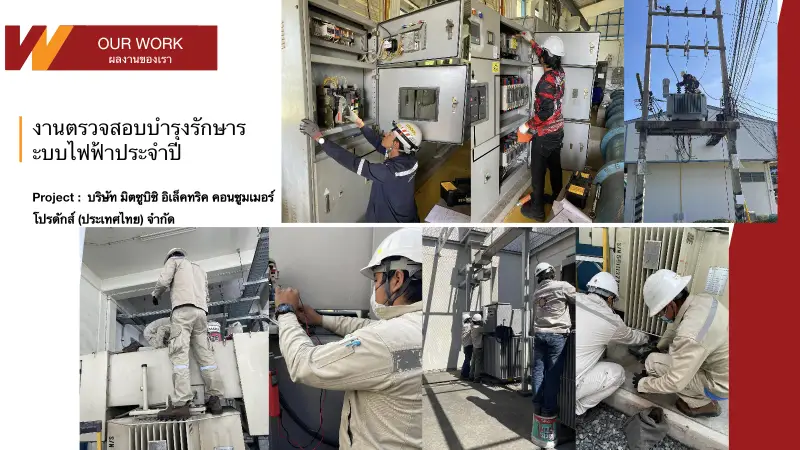
- Annual: electrical testing (insulation, grounding, relays, transformer oil) and statutory certification
- Always: record results into equipment history for trend analysis
3. Building the EPM Checklist Step by Step
Begin by surveying and registering every asset with its ratings, installation year, and an up-to-date single line diagram. Then perform a criticality assessment for each item: how badly would its failure affect production or safety, and is there redundancy? High-criticality assets — the main transformer, MDB, and main breakers — warrant more frequent inspection and more rigorous test methods than ordinary sub-panels.
Next, define the task list for each equipment type with acceptance criteria referenced to standards or manufacturer manuals — connection torque values, minimum insulation resistance, acceptable Delta-T, and so on. Map everything onto an annual calendar, scheduling outage-required work into production stoppages. Finally, standardize the recording forms and approval flow so every inspection becomes traceable equipment history.
4. Common EPM Program Pitfalls
The most common failure mode is a beautifully written plan that never gets executed — the task list exceeds the maintenance team's capacity, or no budget and outage windows were allocated. A good plan balances coverage against real resources. Another frequent problem is checkbox-style inspection without recording measured values, which destroys the trend data that gives EPM its real value: seeing degradation before failure.
Many plants also forget to update the plan when the electrical system changes — new machinery, load expansion, or a solar rooftop addition — leaving new equipment outside the inspection scope. The remedy is to review the EPM program at least annually and after every electrical modification, and to feed inspection findings into next year's maintenance budget so field data actually drives decisions.
Need engineering consultation regarding Preventive Maintenance?
The WIN TECH SERVICE engineering team is ready to provide site surveys, electrical system inspections, and prepare accurate legal certification reports.