Guide to Transformer Oil Maintenance & DGA Test
📌 Executive Summary
How regular oil filtering and Dissolved Gas Analysis (DGA) prevent unexpected high voltage transformer failures.
1. Why Transformer Oil Is the Heart of Reliability
Insulating oil performs two duties at once: it provides dielectric insulation between the windings and the tank, and it acts as the cooling medium that carries heat from the core and windings out to the radiators. When oil degrades due to moisture, oxidation, or contamination, its dielectric strength drops and its cooling capability deteriorates, causing the cellulose paper insulation inside the windings to age at an accelerated, compounding rate.
The key insight for engineers is that the true life of a transformer is the life of its paper insulation, which cannot be replaced without unwinding the coils — whereas oil can be filtered, reclaimed, or replaced. Regular oil quality management is therefore the most cost-effective way to extend transformer life. Industrial plants that skip annual oil testing typically discover problems only when it is too late, such as abnormal overheating or unexplained trips.
2. Dissolved Gas Analysis (DGA) per IEC 60599
Dissolved Gas Analysis (DGA) is the most powerful diagnostic tool for internal transformer faults. It relies on the principle that each fault type — overheating, partial discharge (corona), or arcing — decomposes the oil and paper insulation into gases with distinct proportions. The key gases measured are hydrogen (H2), methane (CH4), ethane (C2H6), ethylene (C2H4), acetylene (C2H2), carbon monoxide (CO), and carbon dioxide (CO2).
IEC 60599 and IEEE C57.104 provide interpretation methods such as the Duval Triangle and Rogers Ratio to classify fault types. For example, elevated acetylene indicates high-energy arcing inside the tank, requiring immediate de-energization and inspection, while steadily rising CO and CO2 indicate paper insulation degradation. Sampling should be performed at least annually for typical distribution transformers, and more frequently for power transformers or units with a history of abnormalities.
- Isolated high H2: indicates partial discharge or corona
- C2H2 (acetylene): sign of high-energy arcing — inspect urgently
- High C2H4 (ethylene): hot spot exceeding roughly 300°C
- Continuously rising CO/CO2: paper insulation degradation
- Interpret with the Duval Triangle per IEC 60599 to classify the fault type
3. Recommended Annual Oil Maintenance Program
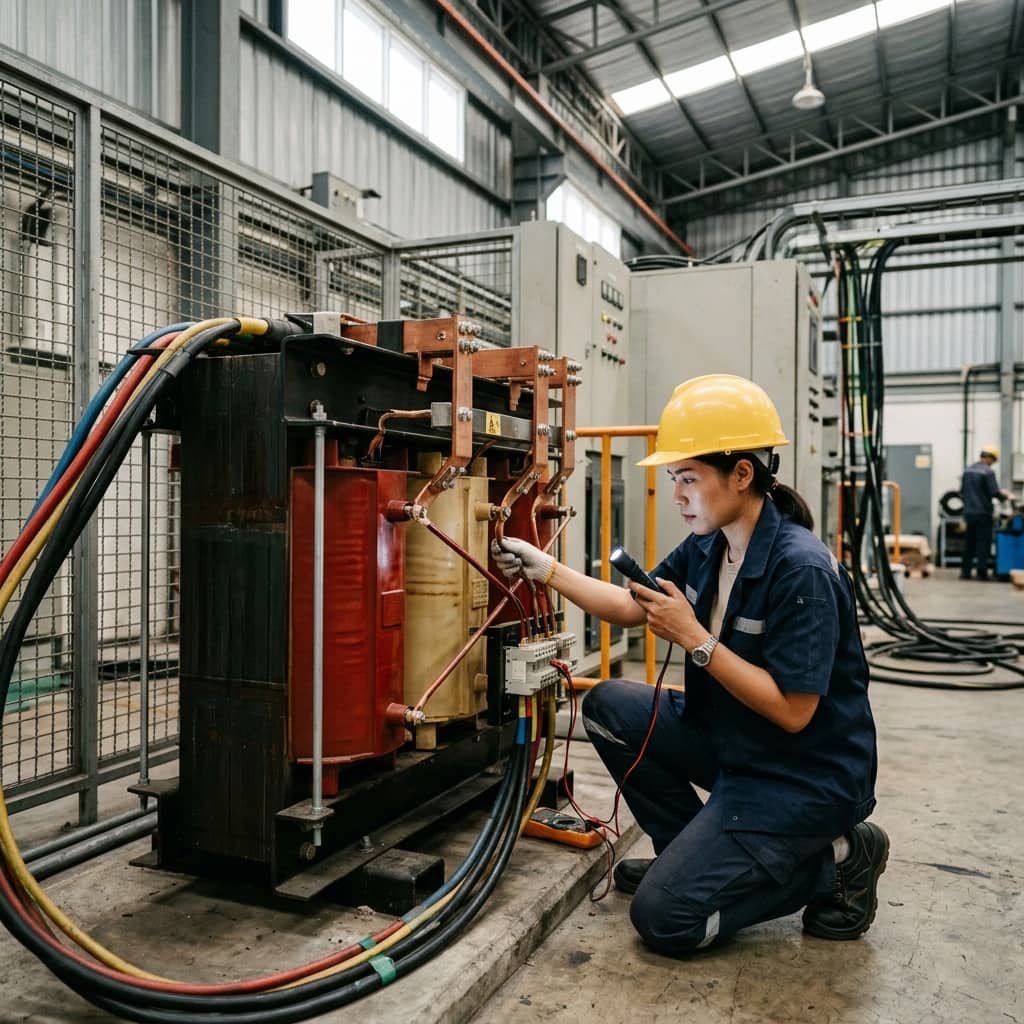
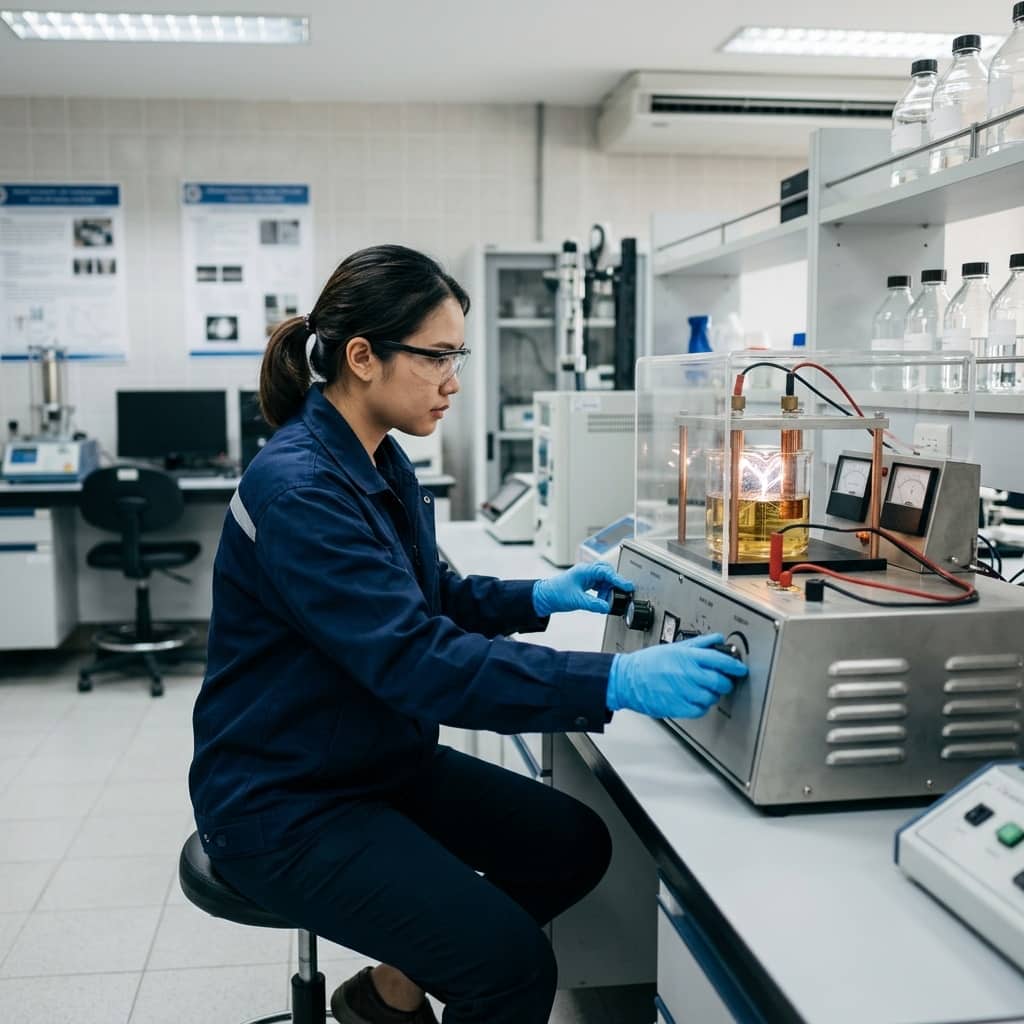
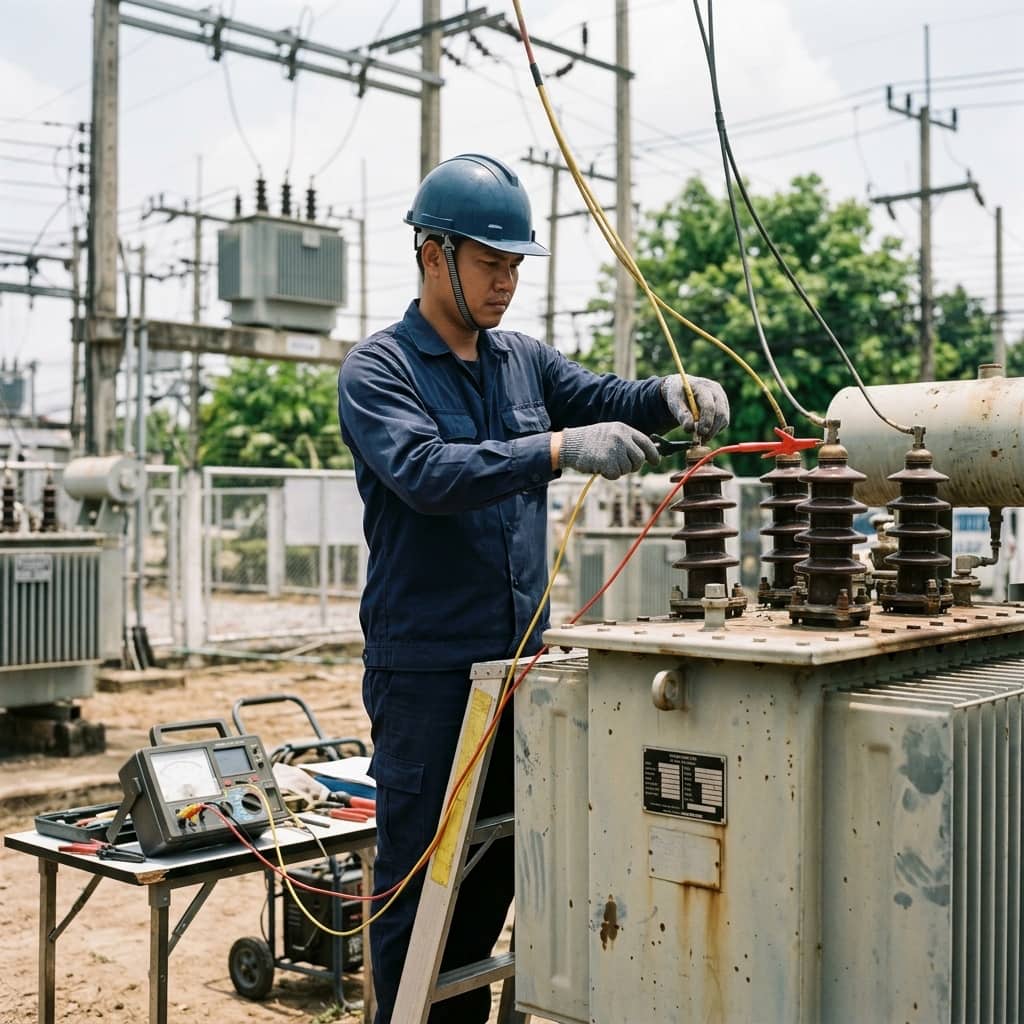
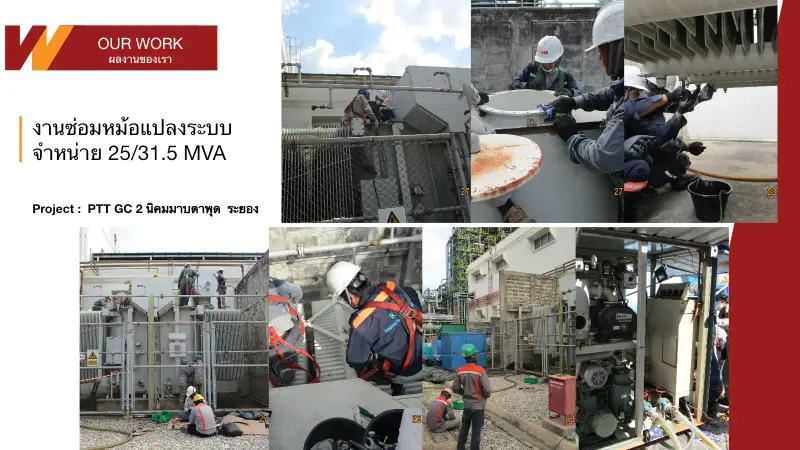
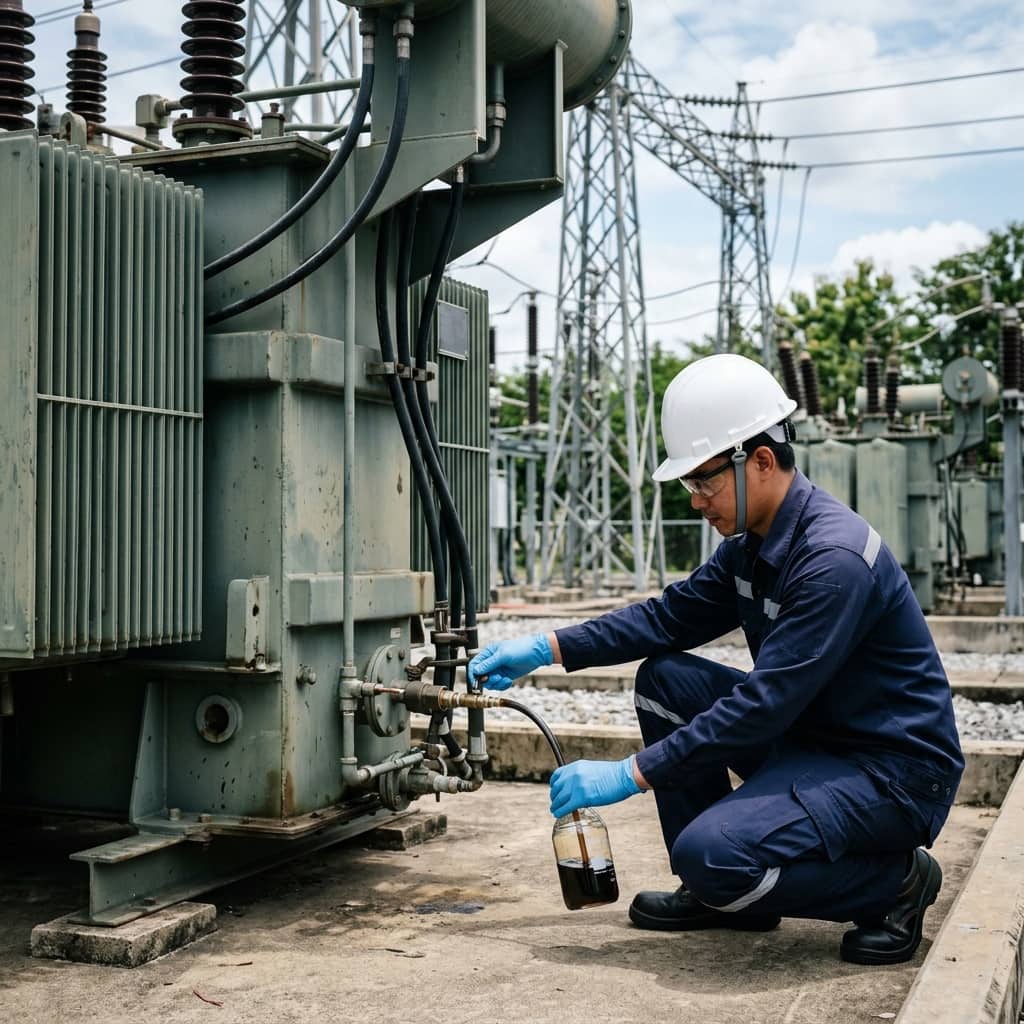
A sound oil maintenance program starts with correct sampling: draw from the bottom drain valve while the transformer is energized under normal load, using an airtight bottle or syringe so dissolved gases do not escape and ambient moisture does not enter. The sample is then tested for a basic suite — breakdown voltage (BDV), moisture content, acidity, interfacial tension, and color — alongside DGA.
When results show low BDV or moisture above the IEC 60422 limits, the remedy is vacuum oil filtration, which in some cases can be performed without an outage. If acidity is high enough to form sludge, oil reclamation with adsorbent media or a complete oil replacement should be considered. Recording results year after year builds a trend history, which is far more valuable than any single test result.
4. Common Mistakes and How to Avoid Them
The most common mistake in typical industrial plants is improper oil sampling — for example, failing to flush stagnant oil from the drain pipe before collecting, which inflates measured moisture and contamination, or using unclean containers. Another pitfall is interpreting DGA from a single test with no historical baseline, which can lead to unnecessary major repairs or, conversely, to missing a developing fault.
Prevention comes from assigning trained personnel to sampling, following the same standardized procedure every time, using an accredited laboratory, and maintaining a test-result database per transformer serial number. Oil results should also be tied into the overall preventive maintenance plan — checking silica gel condition, gaskets, and oil level in the same visit — to build a holistic picture of transformer health.
Need engineering consultation regarding Transformer?
The WIN TECH SERVICE engineering team is ready to provide site surveys, electrical system inspections, and prepare accurate legal certification reports.