Understanding Dielectric Breakdown Voltage (BDV) in Transformer Oil
📌 Executive Summary
Why BDV testing according to IEC 60156 is critical for evaluating insulation moisture and contamination levels.
1. What BDV Is and What It Tells Us
Dielectric Breakdown Voltage (BDV) is the maximum voltage the transformer oil can withstand before flashover occurs between standard electrodes — a direct indicator of how well the oil still performs as an insulator. A falling BDV usually does not mean the oil molecules themselves have degraded; it most often indicates free moisture, conductive particles, or fibers in the oil, which create pathways for current to punch through the insulation.
A point engineers often misjudge is that the moisture–BDV relationship is non-linear. Hot oil can hold considerable dissolved water with little BDV penalty, but when temperature drops — at light load or overnight — dissolved water separates into free water droplets and BDV plunges. Oil condition should therefore always be assessed using relative saturation of moisture together with BDV, never either value in isolation.
2. Test Method per IEC 60156
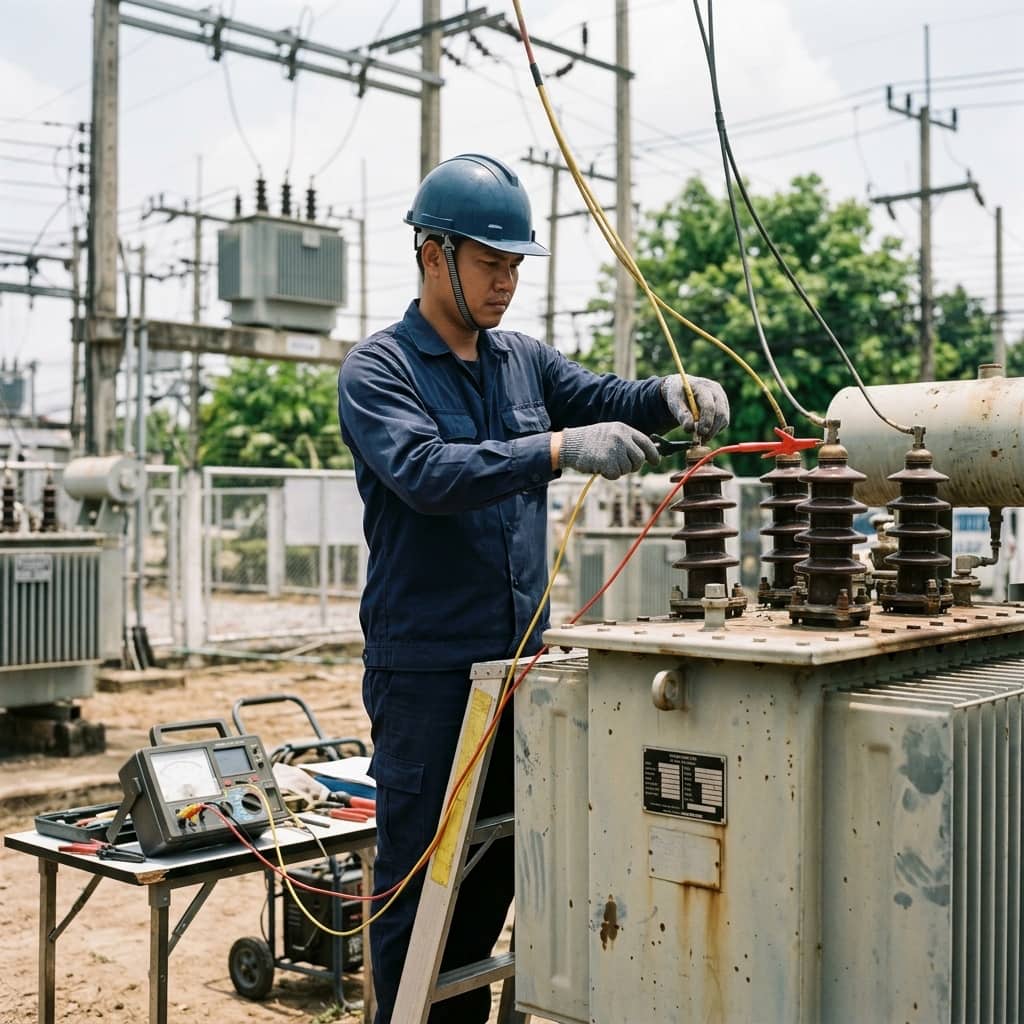
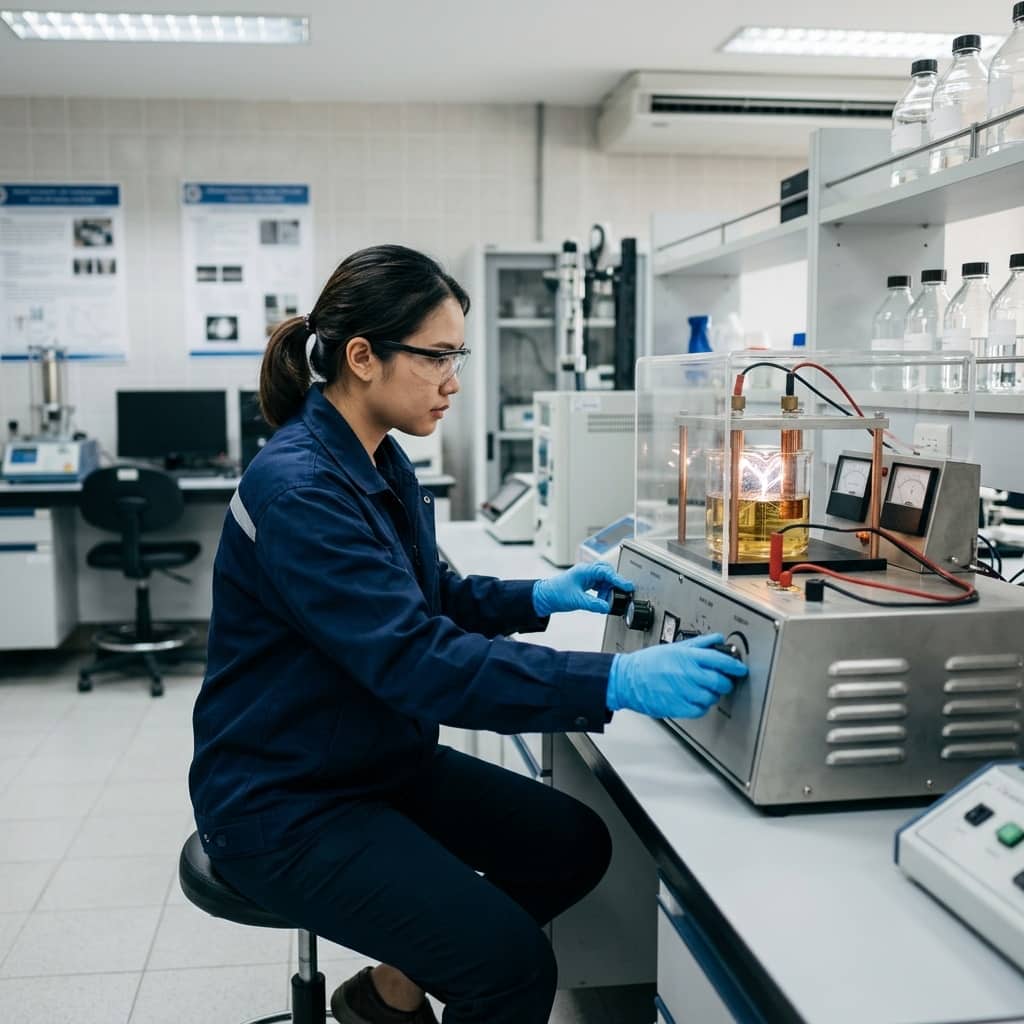
IEC 60156 specifies testing with mushroom-shaped electrodes set 2.5 mm apart, immersed in a test cell filled with the oil sample. Voltage is raised at 2 kV per second until breakdown, repeated six times with rest intervals and gentle stirring between shots, and the mean value is reported. Assessment limits for in-service oil follow IEC 60422, which sets minimum values by transformer voltage class — the higher the system voltage, the higher the required minimum.
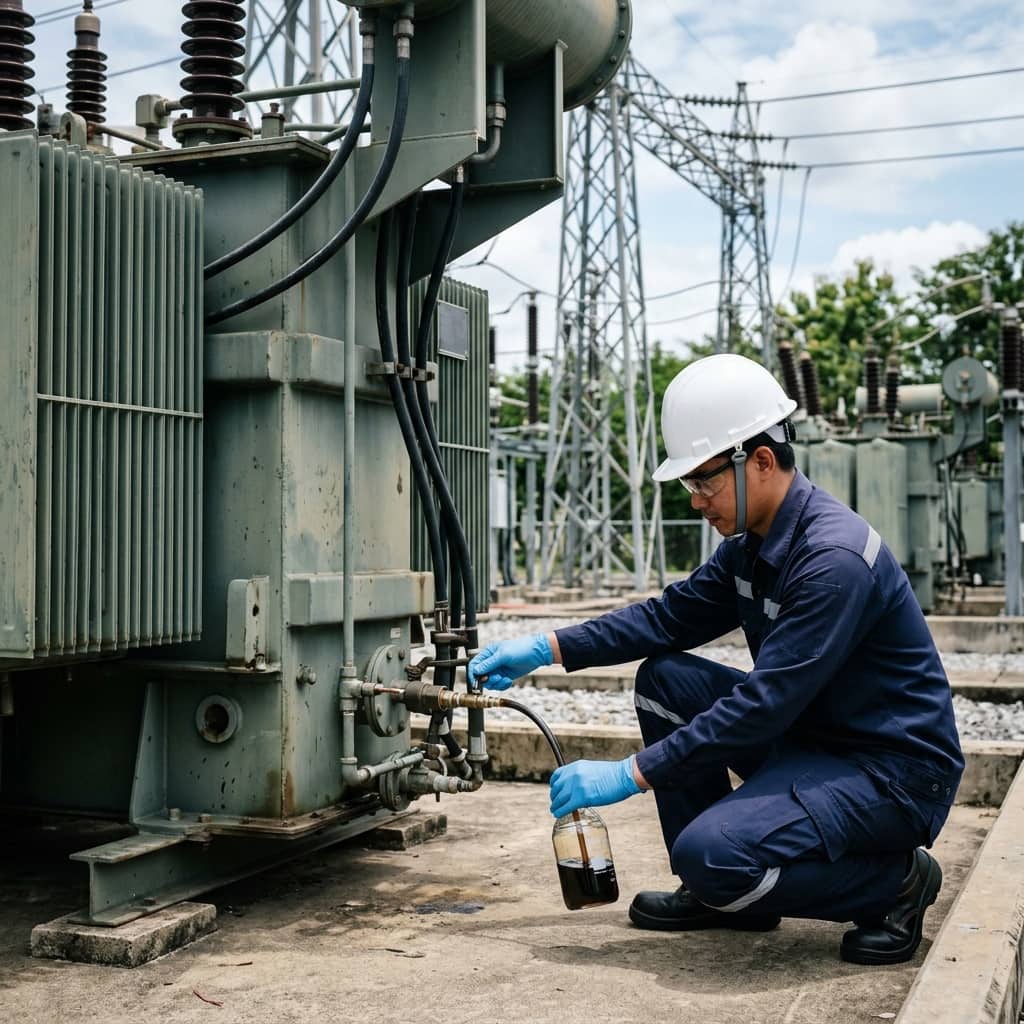
Result quality depends heavily on sampling and preparation. Containers must be clean and dry, stagnant oil must be flushed from the valve before collection, and agitation that creates air bubbles must be avoided, because tiny bubbles in the test cell trigger breakdown at artificially low voltage. The laboratory should let the sample stand until bubbles clear and control sample temperature within the standard's range, so that results remain meaningfully comparable year over year.
- Standard electrode gap 2.5 mm, voltage ramp 2 kV/second
- Six breakdowns per sample, mean value reported
- In-service assessment limits per IEC 60422, by voltage class
- Air bubbles and unclean containers depress results artificially
- Always let the sample stand until bubbles clear before testing
3. Interpreting Results and Engineering Decisions
Once BDV results arrive, decisions should not rest on a single number — examine the spread across all six breakdowns as well. If the mean passes but individual shots break down abnormally low (high standard deviation), it usually indicates unevenly distributed particulate contamination, a warning sign worth tracking. Conversely, consistently low values across all shots point to dissolved moisture throughout the system.
When results fail the limits, respond in proportion to severity. Marginally low values call for increased test frequency and oil filtration planned into the next maintenance window. Very low values, or a sharp drop versus the previous year, warrant prompt vacuum filtration plus a hunt for the moisture ingress path — exhausted silica gel, leaking gaskets, or cracked bushings. If BDV recovers after filtration but falls again quickly, that is evidence the moisture resides in the paper insulation, and a full dry-out should be considered.
4. What Drives BDV Down and Long-Term Prevention
The main drivers of falling BDV in service are ambient moisture breathing in through an exhausted silica gel breather, moisture generated by aging paper insulation itself, carbon particles from internal arcing (especially in tap changer compartments), and cellulose fibers shed from insulation. All of these accumulate slowly with no external symptoms until a critical point is reached.
Long-term prevention therefore focuses on cutting off moisture and contamination at the source: replace or regenerate silica gel as soon as more than two-thirds has changed color, inspect and renew gaskets on schedule, maintain the conservator sealing system, and test BDV together with moisture content (Karl Fischer method) at least annually. A typical industrial plant that does this consistently will see a stable BDV trend and can schedule oil filtration proactively instead of firefighting when the transformer is near failure.
Need engineering consultation regarding Transformer?
The WIN TECH SERVICE engineering team is ready to provide site surveys, electrical system inspections, and prepare accurate legal certification reports.