Dry-Type vs Oil-Immersed Transformers for Industrial Plants
📌 Executive Summary
Comprehensive guide comparing fire safety, maintenance requirements, lifespan, and operating costs of Dry-Type and Oil-Immersed transformers.
1. Construction and Principles of the Two Types
An oil-immersed transformer uses insulating oil both as the dielectric and as the cooling medium, with the windings and core submerged in a sealed oil tank. A dry-type transformer — particularly the cast resin variety — encapsulates the windings in epoxy resin for insulation and dissipates heat through air (Air Natural: AN, or Air Forced: AF). This fundamental difference has significant implications for installation, maintenance, and safety.
In terms of cooling performance, oil transfers heat far better than air, so an oil-immersed unit of the same rating is usually more compact and tolerates temporary overload better. Dry-type units, on the other hand, suit indoor installation because there is no risk of oil leakage or oil-fed fire. A typical industrial plant must weigh these factors against the actual installation location and load profile.
2. Applicable Standards and Fire Safety Requirements
Power transformers in general are governed by the IEC 60076 series, with dry-type units specifically covered by IEC 60076-11, which classifies fire behavior (e.g., class F1), environmental class (E0–E2), and climatic class (C1–C2). The defining property of cast resin is that it is self-extinguishing and does not propagate flame, making it the primary choice for high-rise buildings, shopping centers, hospitals, and densely occupied spaces.
For oil-immersed units installed inside or near buildings, the EIT (Engineering Institute of Thailand) electrical installation standard and utility requirements mandate additional measures such as oil containment pits, fire barriers, clearance distances from buildings, and appropriate fire suppression. Designers should always verify local utility requirements as well, since interconnection and installation approval conditions vary by area and voltage level.
- IEC 60076-11: dry-type transformer requirements, including fire class F1
- Indoor oil-immersed units require oil pits and fire barriers per EIT standards
- Cast resin suits high-rises and crowded spaces due to flame-retardant behavior
- Always verify local utility requirements before finalizing the installation design
3. Selection Criteria for Industrial Plants
Type selection should start with the installation location. For outdoor installation on a transformer yard or pole, an oil-immersed unit is usually the more economical choice and, thanks to its sealed tank, withstands weather, dust, and humidity better. For an indoor electrical room, a location near production areas, or a basement, a dry-type unit dramatically reduces the fire protection and civil works burden.
The next factors are load characteristics and environment. Loads with high harmonic content or frequent inrush create accumulated heating, which oil-immersed units inherently handle better. Environments with conductive dust or chemical vapors can deposit on the resin surface of a dry-type unit and cause surface tracking, so the enclosure IP rating and a cleaning schedule must be considered. Finally, compare total cost of ownership — including oil maintenance, annual testing, and fire protection systems — rather than the purchase price alone.
4. Maintenance Cautions for Each Type
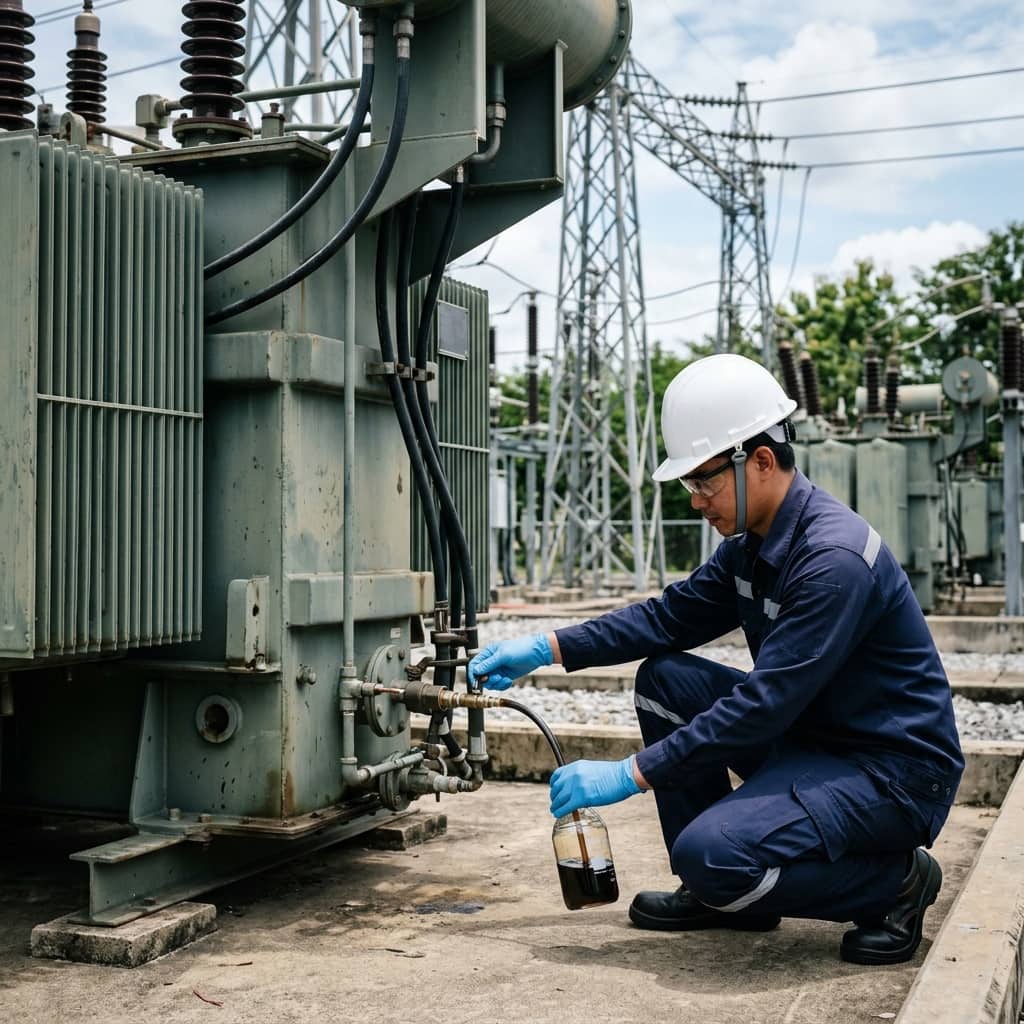
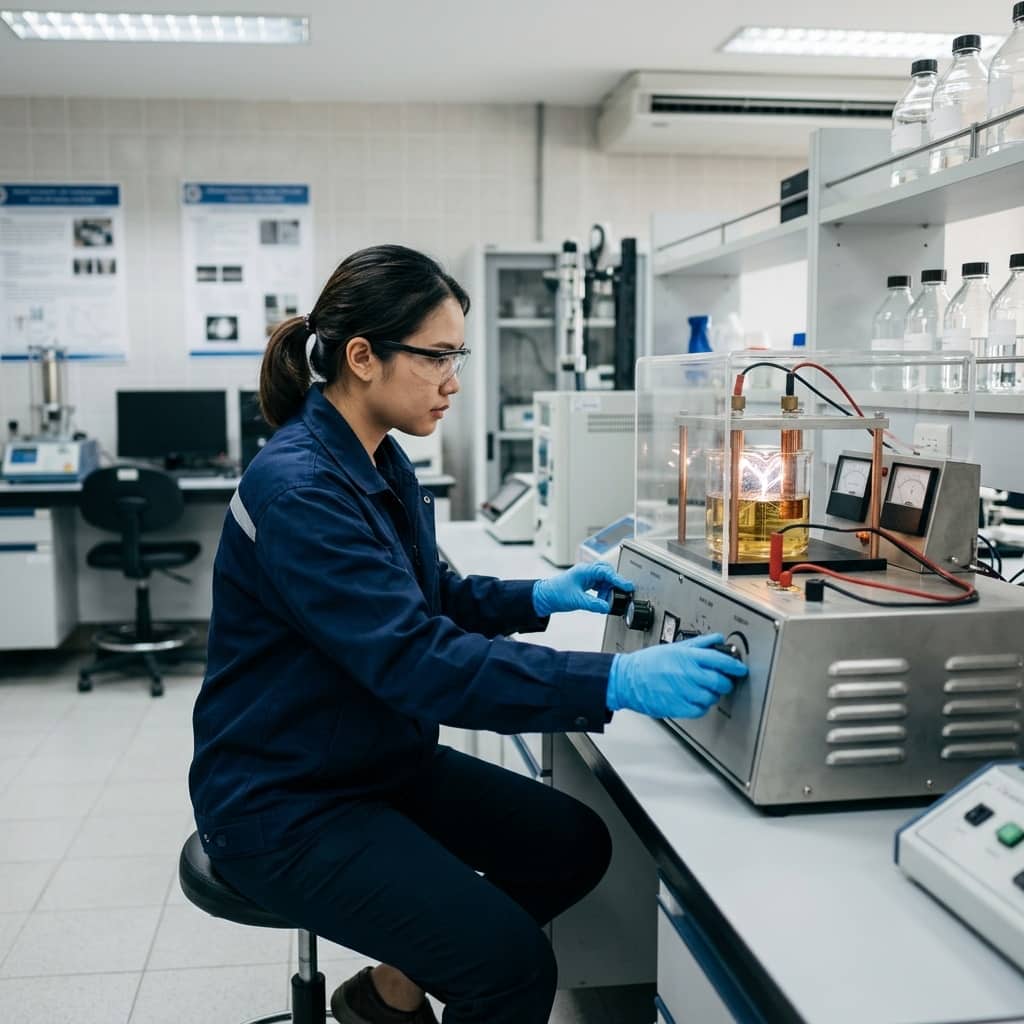
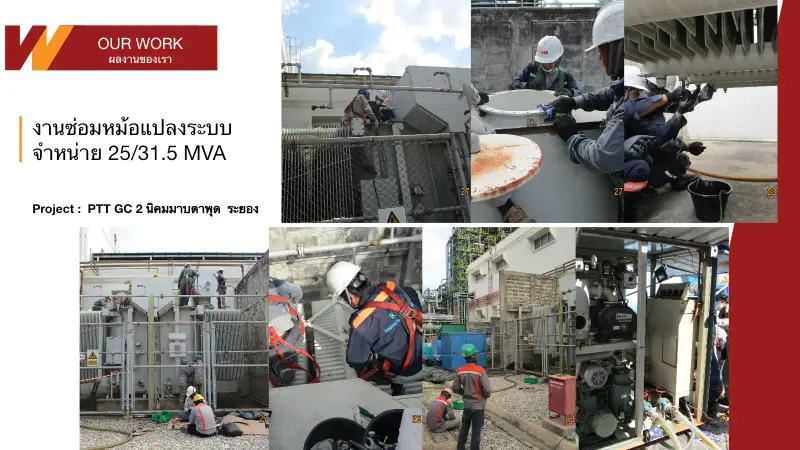
Oil-immersed units need an annual oil testing program, gasket and valve leak inspection, silica gel color checks, and conservator oil level monitoring. A frequent failure mode is letting oil degrade until sludge coats the windings, worsening heat dissipation and making remediation difficult. Dry-type units, though marketed as low-maintenance, are not maintenance-free.
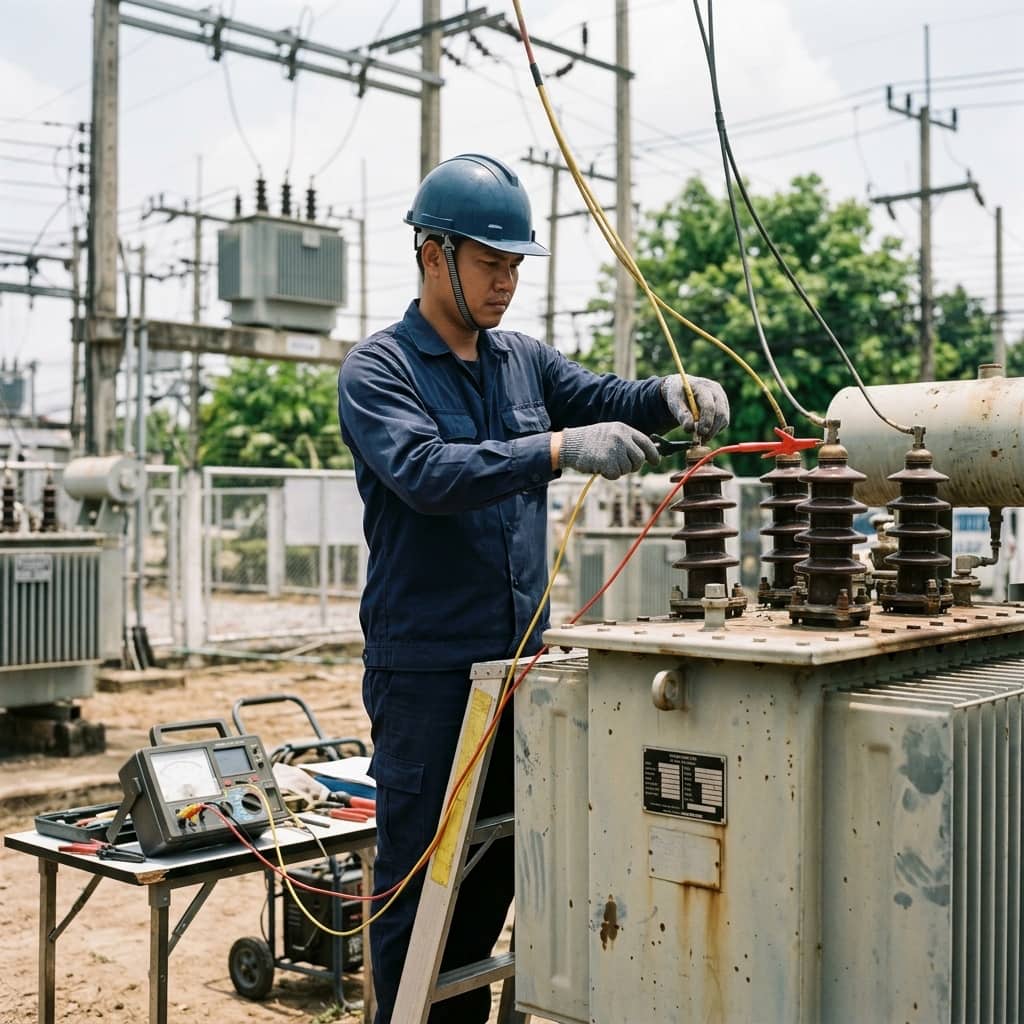
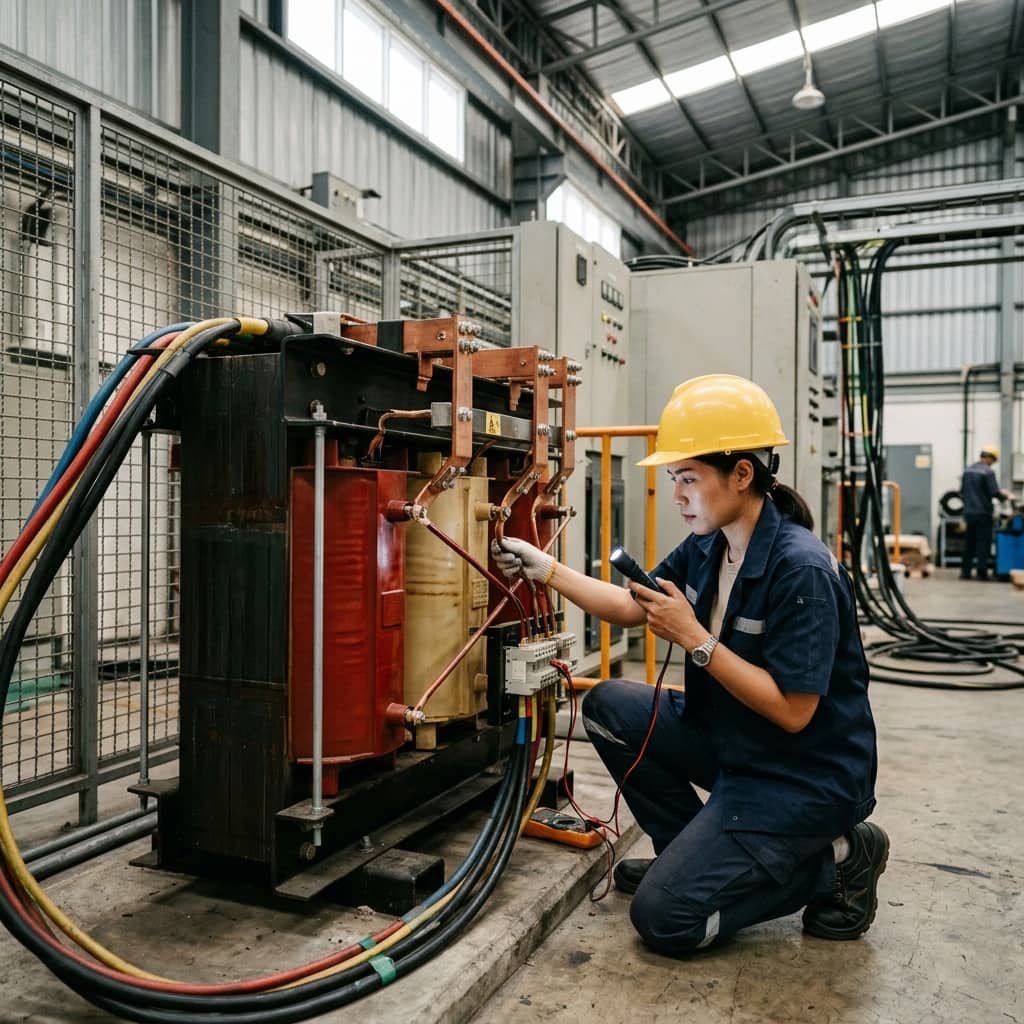
The main task for dry-type units is regular removal of dust from winding surfaces and ventilation ducts using low-pressure dry air, checking cooling fans (if fitted), and insulation resistance testing with a megohmmeter during shutdowns. Dust-blocked air ducts are a leading cause of dry-type overheating. Good practice for both types is at least one thermal imaging survey per year to catch abnormal hot spots at cable connections and terminals before they escalate.
Need engineering consultation regarding Transformer?
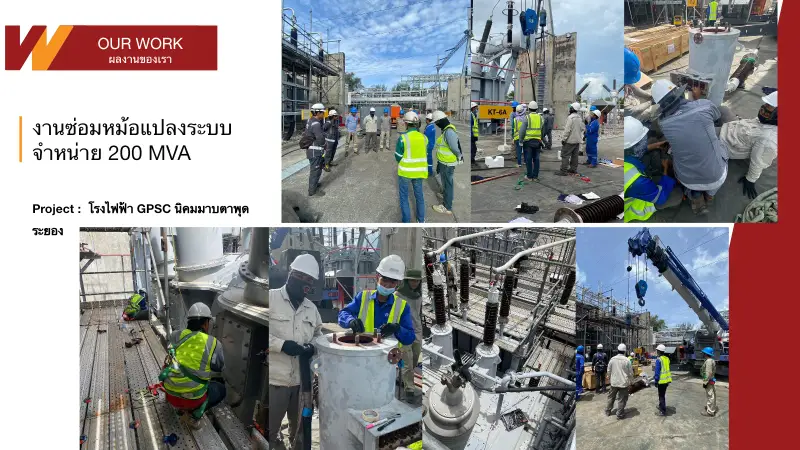
The WIN TECH SERVICE engineering team is ready to provide site surveys, electrical system inspections, and prepare accurate legal certification reports.