Solar PV String Commissioning: I-V Curve Tracing & Insulation Resistance
📌 Executive Summary
Detecting micro-cracks, PID (Potential Induced Degradation), bypass diode failures, and shading mismatch using I-V curve analyzers.
1. Why DC-Side Testing of PV Systems Matters
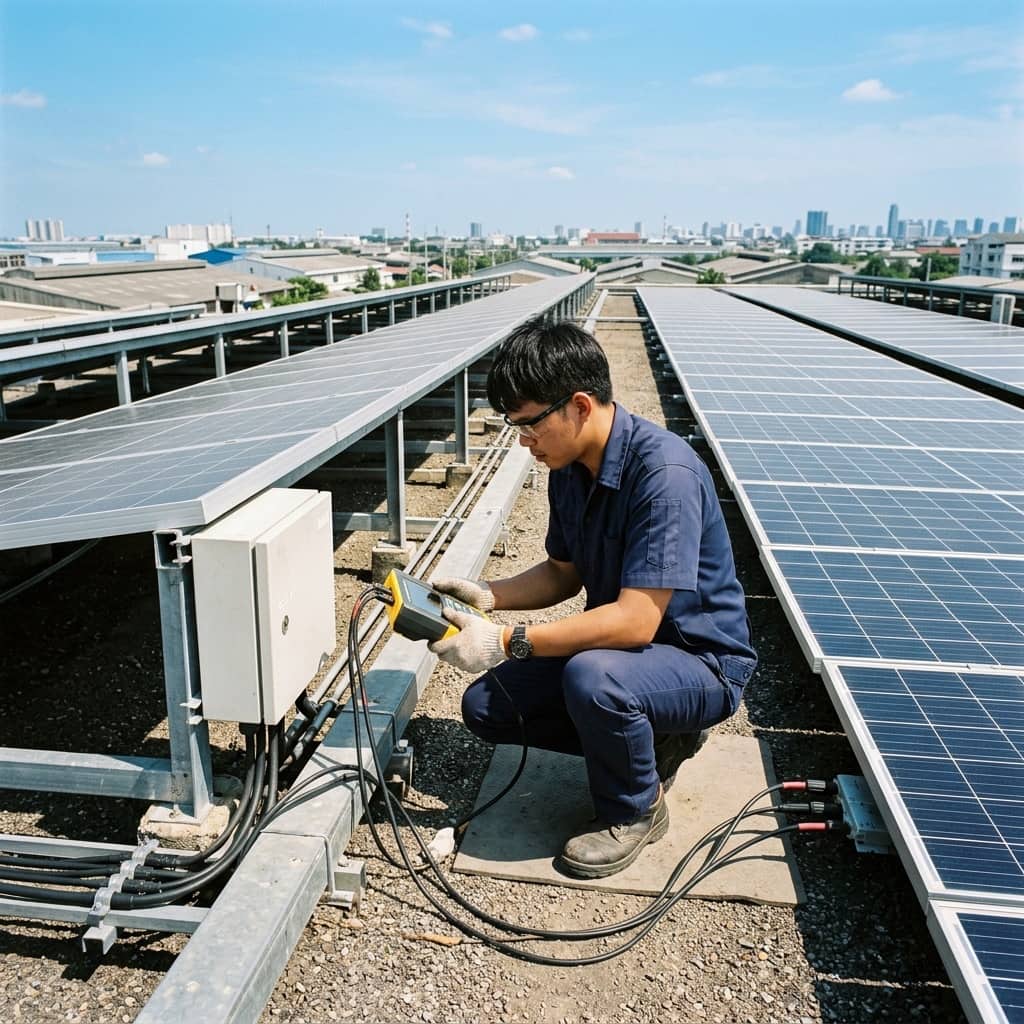
The DC side of a PV system is where most problems hide — module degradation, loose connections, failed bypass diodes, and cable insulation aged by heat and UV. These issues rarely show up clearly in daily yield data because typical monitoring only sees aggregate inverter power. String-level testing is the only tool that pinpoints which string is losing energy and what electrical mechanism is responsible.
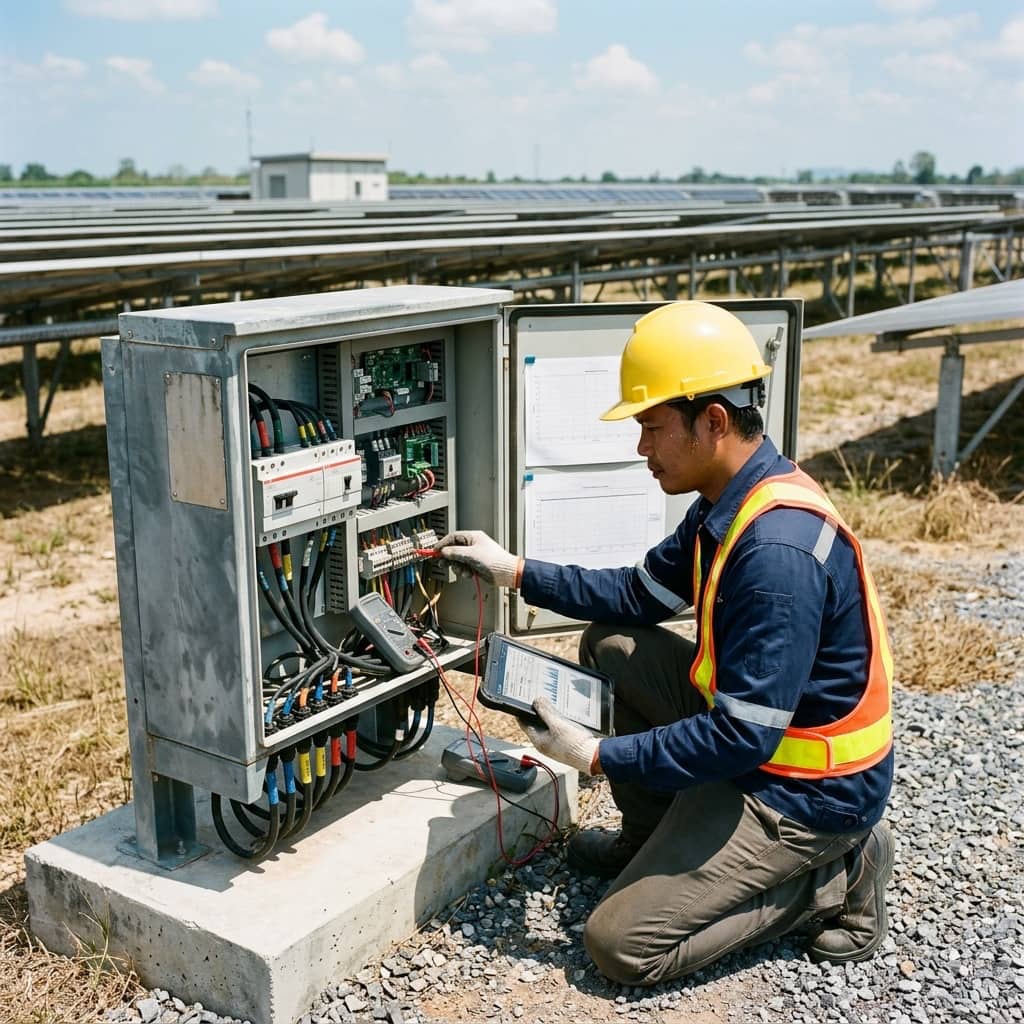
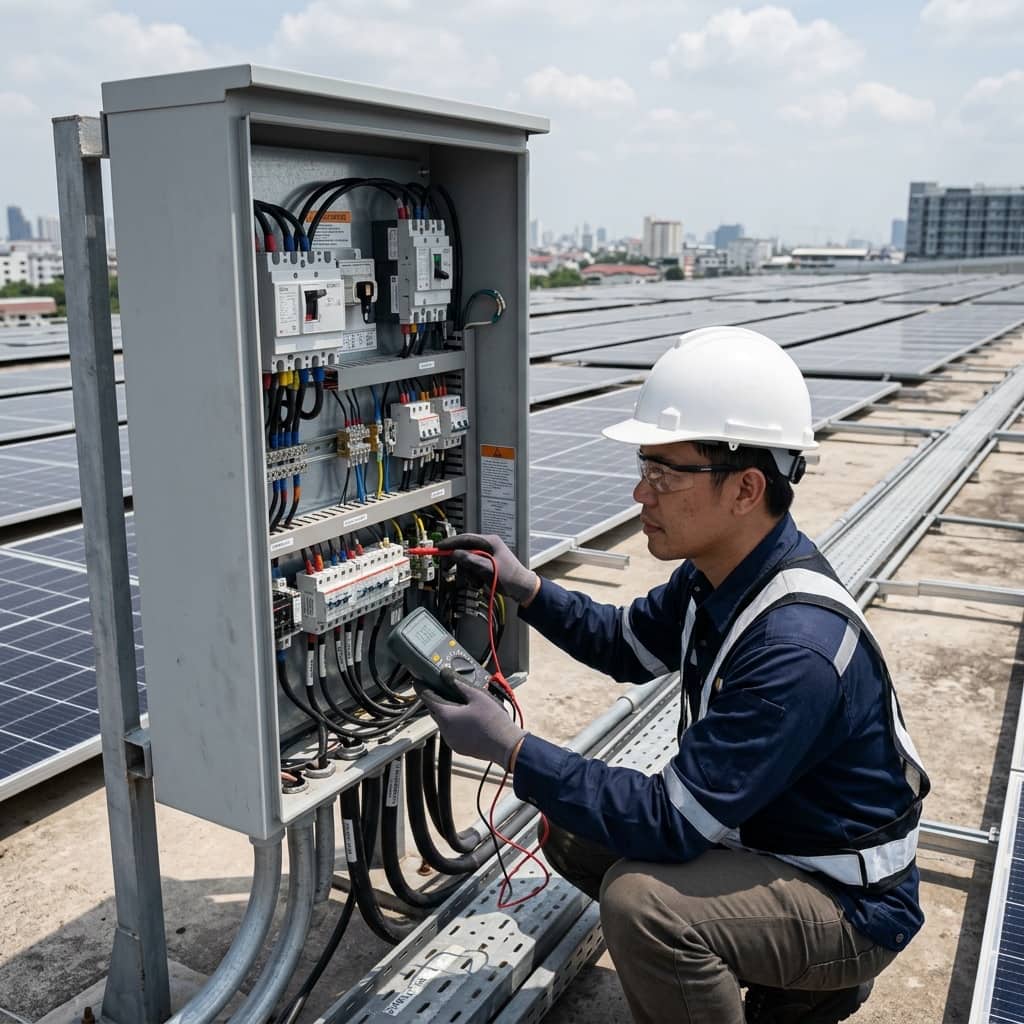
The core string tests used in commissioning and maintenance are open-circuit voltage (Voc) measurement, short-circuit or operating current (Isc/Impp) measurement, I-V curve tracing, and insulation resistance testing with a megohmmeter. All of these are test items defined in IEC 62446-1 for the inspection and handover of grid-connected PV systems.
2. IEC 62446-1 and the Required Test Items
IEC 62446-1 (Grid connected photovoltaic systems — Minimum requirements for system documentation, commissioning tests and inspection) is the international reference framework for PV acceptance testing. It organizes tests into categories by depth: visual inspection, earth continuity, per-string Voc and current measurements, and DC circuit insulation testing — the minimum set every system should pass before commercial energization.
For deeper analysis, the standard defines additional tests such as I-V curve tracing compared against the module manufacturer's reference curve after irradiance and temperature correction to STC, and thermographic imaging, which together discriminate loss mechanisms in finer detail. Referencing this standard in inspection contracts also gives owners and contractors a shared, unambiguous set of acceptance criteria.
- Visual inspection and earth continuity measurement
- Voc and current on every string versus calculated values
- DC circuit insulation resistance testing with a megohmmeter
- I-V curve tracing with correction to STC
- Thermographic imaging to support hotspot analysis
3. Interpreting I-V Curves and Safe Insulation Testing
The I-V curve's shape reveals the fault mechanism almost directly: steps in the curve indicate bypass diode conduction from shading or damaged cells; abnormal slope near Voc reflects increased series resistance from degraded connections; increased slope near Isc indicates low shunt resistance from cell degradation. Good measurements are taken under high, stable irradiance and corrected to STC before comparison with the datasheet.
Insulation testing with a megohmmeter requires disconnecting strings from the inverter and strict safety procedure, because PV strings are energized whenever light is present. The tester must select a test voltage appropriate to the system rating, ensure surge protective devices (SPDs) are disconnected from the circuit before testing, and record measured values against the standard's minimum thresholds along with ambient conditions, since humidity significantly affects insulation readings.
4. Common Findings and Follow-Up Practice
Frequent field findings include Voc significantly below calculation — usually a string with fewer modules than designed or permanently shorted bypass diodes; string current lower than neighboring strings from soiling or localized shading; and abnormally low insulation resistance pointing to DC cables abraded on tray edges or standing water in conduits. Left alone, these escalate into permanent energy loss or fire risk.
Good practice is to store every test result in a database that supports historical comparison, performing the full test suite at commissioning as a baseline and repeating it on the preventive maintenance cycle. Trending Voc, current, and insulation values per string year over year detects gradual degradation before it ever becomes visible in energy yield figures.
- Abnormally low Voc: check module count and bypass diodes
- Low string current: check soiling and shading
- Low insulation: trace DC cables and water-trapped conduits
- Keep results as a baseline for year-over-year trending
Need engineering consultation regarding Solar & Clean Energy?
The WIN TECH SERVICE engineering team is ready to provide site surveys, electrical system inspections, and prepare accurate legal certification reports.