DC Combiner Box Design & Rapid Shutdown Systems for Rooftop Solar
📌 Executive Summary
Installing DC fuses, DC isolators, SPD Type 1+2, and AFCI (Arc Fault Circuit Interrupter) protection to eliminate DC fire hazards.
1. The DC Combiner Box's Role in Fire Safety
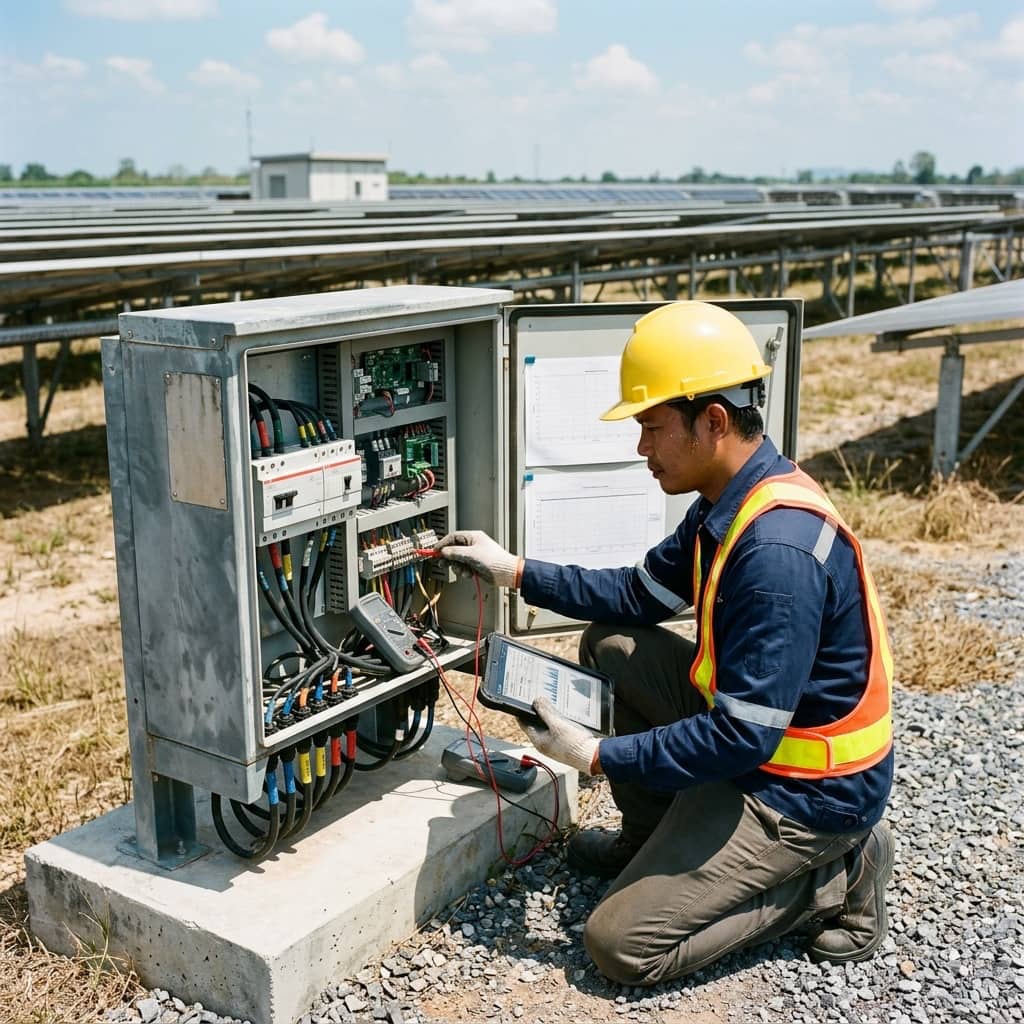
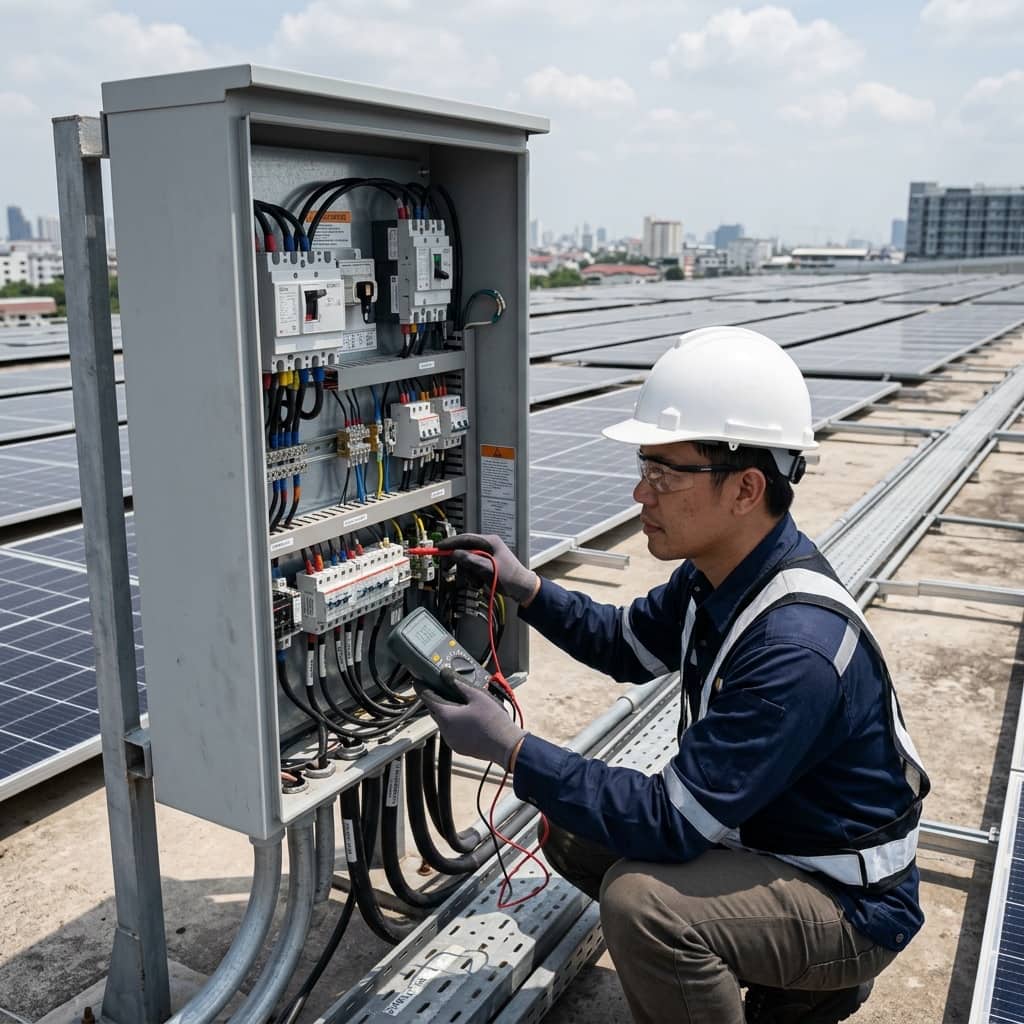
The DC combiner box is where multiple string cables converge before feeding the inverter, making it the highest-density concentration of electrical connections on the DC side of a PV system. Direct current has a defining hazard: a DC arc does not self-extinguish the way an AC arc does at the waveform's zero crossing. A loose termination or degraded connector inside the box can therefore develop into a sustained arc hot enough to ignite surrounding material. Combiner design is a safety discipline in its own right, not mere cable management.
A well-designed box includes per-string fuses rated for reverse current, DC-rated surge protective devices (SPDs), a true DC load-break disconnect switch, and an enclosure with an IP rating suited to outdoor installation, laid out for good heat dissipation — accumulated enclosure temperature accelerates the aging of both fuses and insulation.
2. Standards Governing Combiner Boxes and Rapid Shutdown
Components inside the box should follow PV-specific standards: gPV fuses per the IEC 60269-6 approach for photovoltaic circuits, and SPDs designed specifically for PV DC systems. The modules themselves must carry IEC 61730 safety certification, which covers the module's fire performance and electrical safety requirements. For installations in Thailand, the EIT (Engineering Institute of Thailand) electrical installation standard for solar power systems should be followed as well.
The rapid shutdown concept originates in the United States' National Electrical Code (NEC), which requires rooftop DC conductors to be reduced to a safe voltage within a defined time after a shutdown command, protecting firefighters who must work on the roof. While such requirements are not yet universally mandated in every country, they represent good practice that industrial building owners should consider, particularly for high fire-risk facilities.
- gPV string fuses per the IEC 60269-6 approach
- SPDs purpose-built for PV DC circuits
- Modules certified to IEC 61730 safety requirements
- EIT installation standard for solar power systems
- Rapid shutdown concept per NEC requirements
3. Designing the Box and Implementing Rapid Shutdown
Box design starts with calculating each string's maximum current including an allowance for above-standard irradiance, to select fuse ratings and busbar sizing. Then lay out positive and negative polarities in clearly separated zones to reduce cross-polarity arc risk, choose cable glands that preserve the enclosure's IP rating, and site the box out of direct sun or behind a shade plate — elevated internal temperature forces derating of every component inside.
Rapid shutdown is implemented with module-level power electronics or string-level control boxes that collapse voltage when the control signal is lost. Critically, the emergency stop control must be accessible from ground level and clearly labeled, and the function must be tested with the plant's safety team — measuring residual conductor voltage after activation to confirm it falls within the designed time.
4. Frequently Found Risks and Preventive Maintenance
Risks frequently found during field inspections include MC4 connectors that were poorly crimped or mated across different brands, cable glands left loose so water and insects enter the box, expired SPDs whose status flags nobody noticed, and heat discoloration on cable insulation — an early-warning sign of incipient arcing. Thermal imaging under real load is a highly effective screening method for degraded connections that requires no shutdown.
The preventive maintenance plan should open and inspect each box at least annually: verify termination torque against manufacturer values, check SPD status flags and replace expired modules, inspect enclosure seals and penetrations, and function-test rapid shutdown yearly — recording every item in the maintenance documentation system so each box's degradation can be tracked over time.
- Thermal-scan under real load to screen degraded connections
- Check termination torque and SPD flags at least annually
- Never mate MC4 connectors across brands
- Function-test rapid shutdown every year
Need engineering consultation regarding Solar & Clean Energy?
The WIN TECH SERVICE engineering team is ready to provide site surveys, electrical system inspections, and prepare accurate legal certification reports.