Solar Panel Maintenance: Cleaning Protocols, Dust Impact, and Thermal Scanning
📌 Executive Summary
Preventing efficiency loss up to 25% from dust soiling and detecting defective solar cells using drone thermography.
1. Soiling and Its Impact on Energy Production
Surface soiling is the most controllable energy loss in a PV system. Dust, industrial soot, pollen, and bird droppings directly reduce the light reaching the cells. In Thailand's industrial environments, losses accumulate quickly through the dry season when rain provides no washing, and are especially severe near unpaved roads, crushing plants, exhaust stacks, or material handling lines, where dust is stickier and adheres harder than ordinary dust.
More dangerous than uniform dust is localized soiling — bird droppings or algae along the module's lower edge — because it shades individual cells while the rest of the string still drives full current. The shaded cell becomes a load, heating into a hotspot that, left long enough, permanently damages the cell, wears out bypass diodes through frequent conduction, and in the worst case escalates into rooftop fire risk. Cleaning is therefore simultaneously a yield measure and a damage-prevention measure.
2. Hotspot Detection with Thermal Imaging
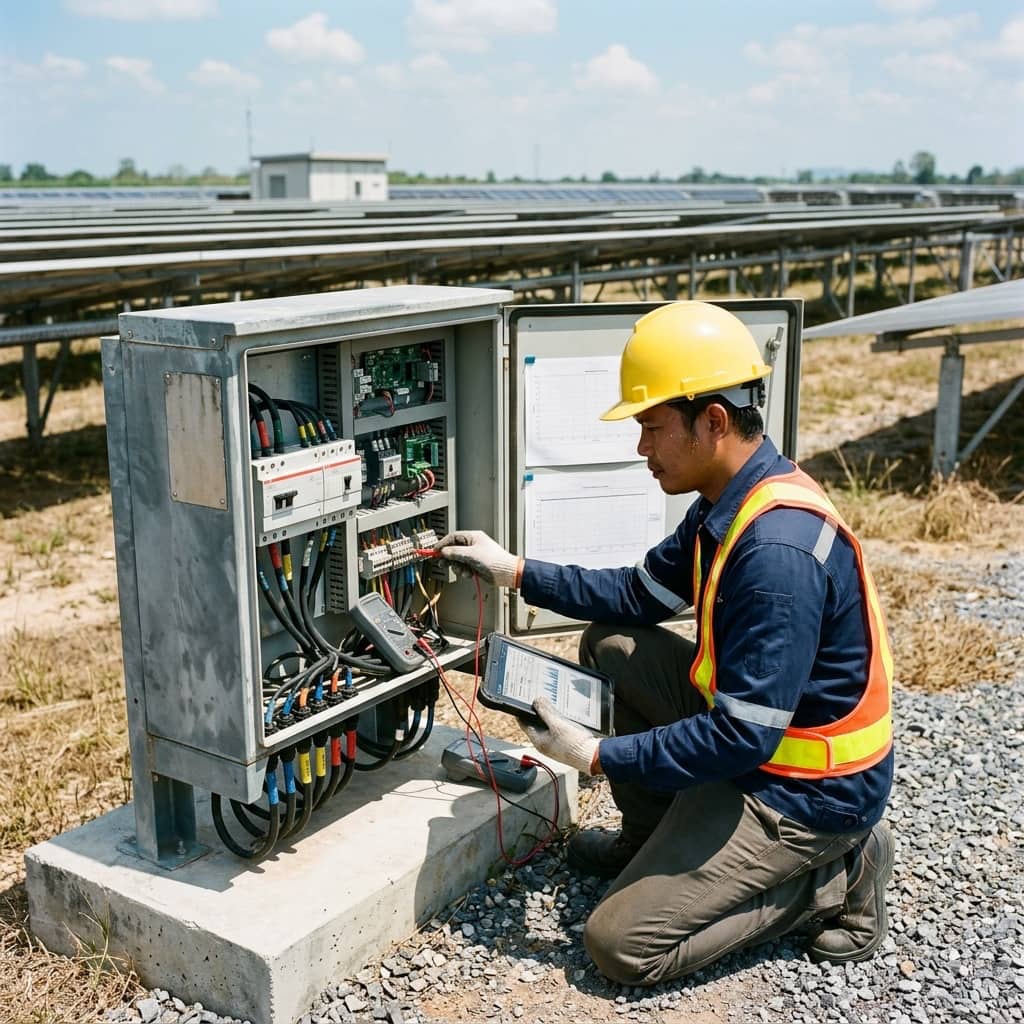
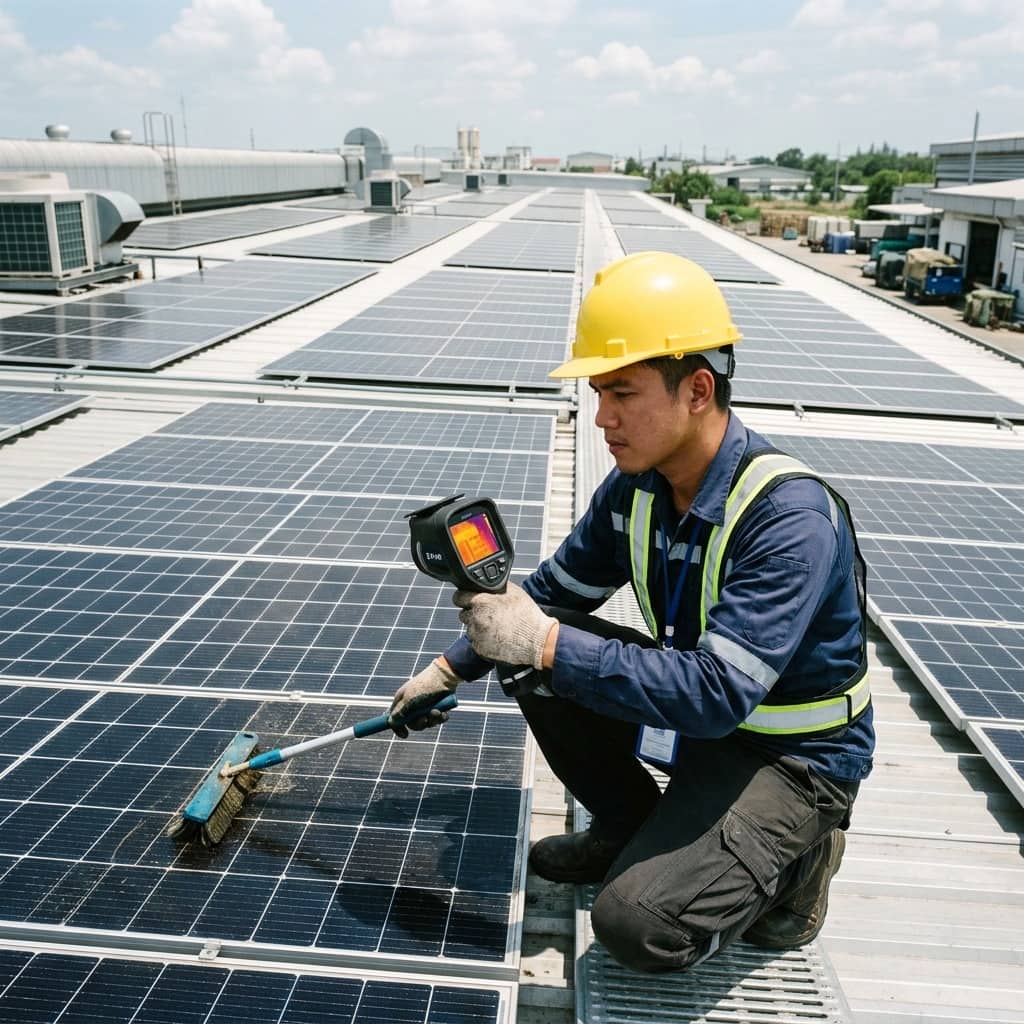
Thermographic inspection checks module health without contact or shutdown. An infrared camera reveals temperature differences across the module surface that translate into electrical diagnoses: a single cell hotter than its neighbors from shading or cracking; one-third of a module uniformly warm indicating a shorted bypass diode; or a junction box heated by degraded solder joints. IEC 62446-3 provides a systematic methodology for thermographic PV inspection.
Inspection conditions strongly affect reliability: survey under high, stable irradiance so anomalies show clear temperature contrast, angle the camera to avoid glass reflections, and log anomaly locations systematically for follow-up. For large plants, drone-mounted thermal cameras cover area quickly, after which ground teams verify only the locations the aerial imagery flags, combined with electrical measurements such as I-V curves of the affected strings.
- Survey under high, stable irradiance for clear contrast
- Avoid reflection angles off the module glass
- Follow the IEC 62446-3 methodology
- Screen by drone, verify on the ground at flagged spots
- Confirm findings with electrical tests on affected strings
3. Correct Cleaning Methods and Scheduling
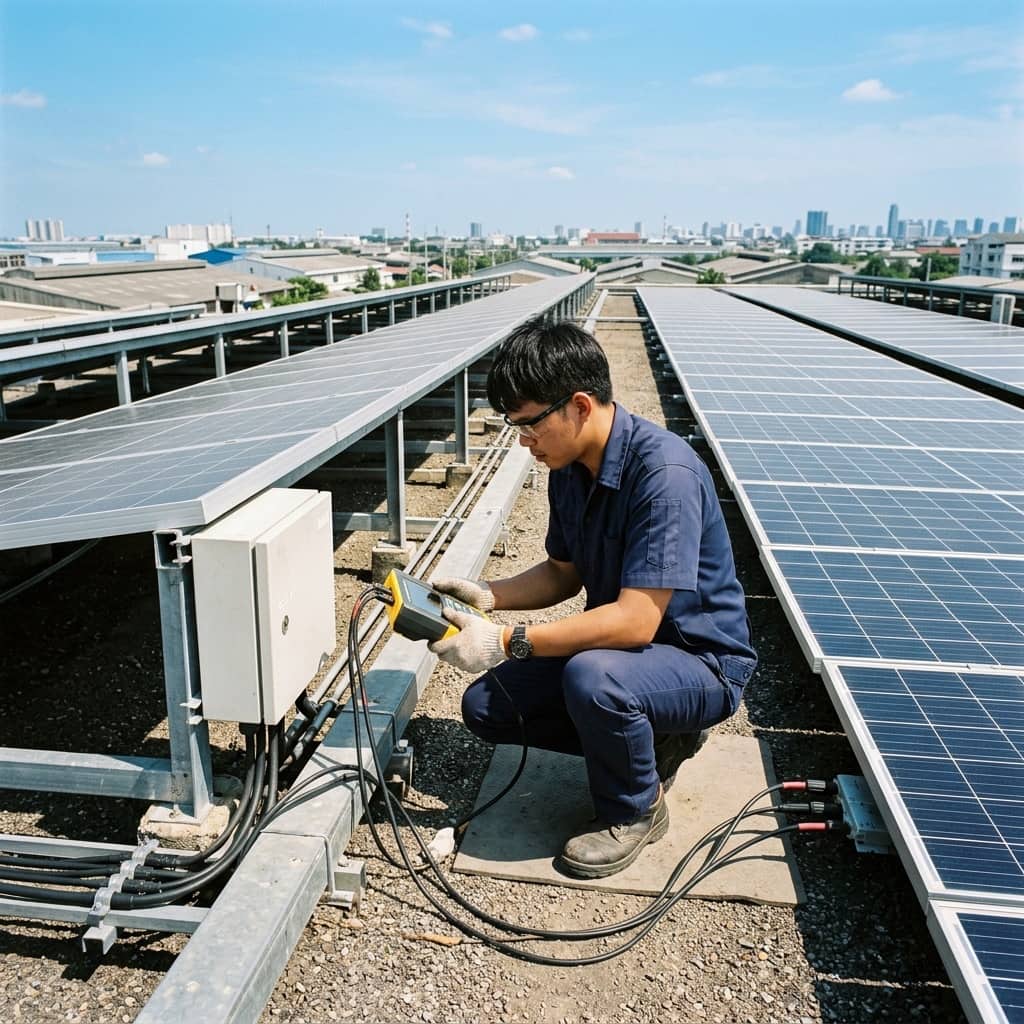
Proper cleaning uses low-mineral clean water with soft brushes designed for PV work, avoiding corrosive detergents and close-range high-pressure jets that can damage the glass coating and edge seals. Clean in the early morning or evening when modules are not hot — cold water on hot glass causes thermal shock, risking cracks and dried water stains — and never step on modules, which causes cell-level microcracks invisible to the naked eye.
A cost-effective cleaning cycle should not be fixed by calendar but driven by measured loss: compare yield before and after cleaning, or track performance ratio and soiling ratio where sensors permit. Heavy-dust industrial sites may need frequent dry-season cleaning while the wet season partly relies on rain. Every rooftop session also requires full work-at-height safety measures — lifeline anchor points and control of work near live electrical runs.
4. Module Maintenance Mistakes to Avoid
Common mistakes include using high-mineral groundwater that leaves white scale on the glass, washing under intense midday sun causing staining and crack risk, using stiff brushes or abrasive pads that permanently scratch the glass and reduce light transmission, walking on modules during cleaning, and washing without simultaneously inspecting connectors and cabling under the array — missing the chance to catch degradation before it spreads.
Good practice combines cleaning, thermal scanning, and visual inspection into a single maintenance round: clean modules make thermal images more accurate and clearly separate internal defects from soiling artifacts. Keep a register of modules with recurring hotspots to plan replacement before damage propagates, and record yield before and after each round so the owner sees maintenance return as a tangible number.
- Low-mineral water, cool modules, never step on the array
- Combine cleaning, thermal scan, and inspection in one round
- Register recurring-hotspot modules for planned replacement
- Record yield before and after every maintenance round
Need engineering consultation regarding Solar & Clean Energy?
The WIN TECH SERVICE engineering team is ready to provide site surveys, electrical system inspections, and prepare accurate legal certification reports.