Infrared Optical Gas Imaging (OGI) for SF6 Leak Detection in High Voltage Switchgear
📌 Executive Summary
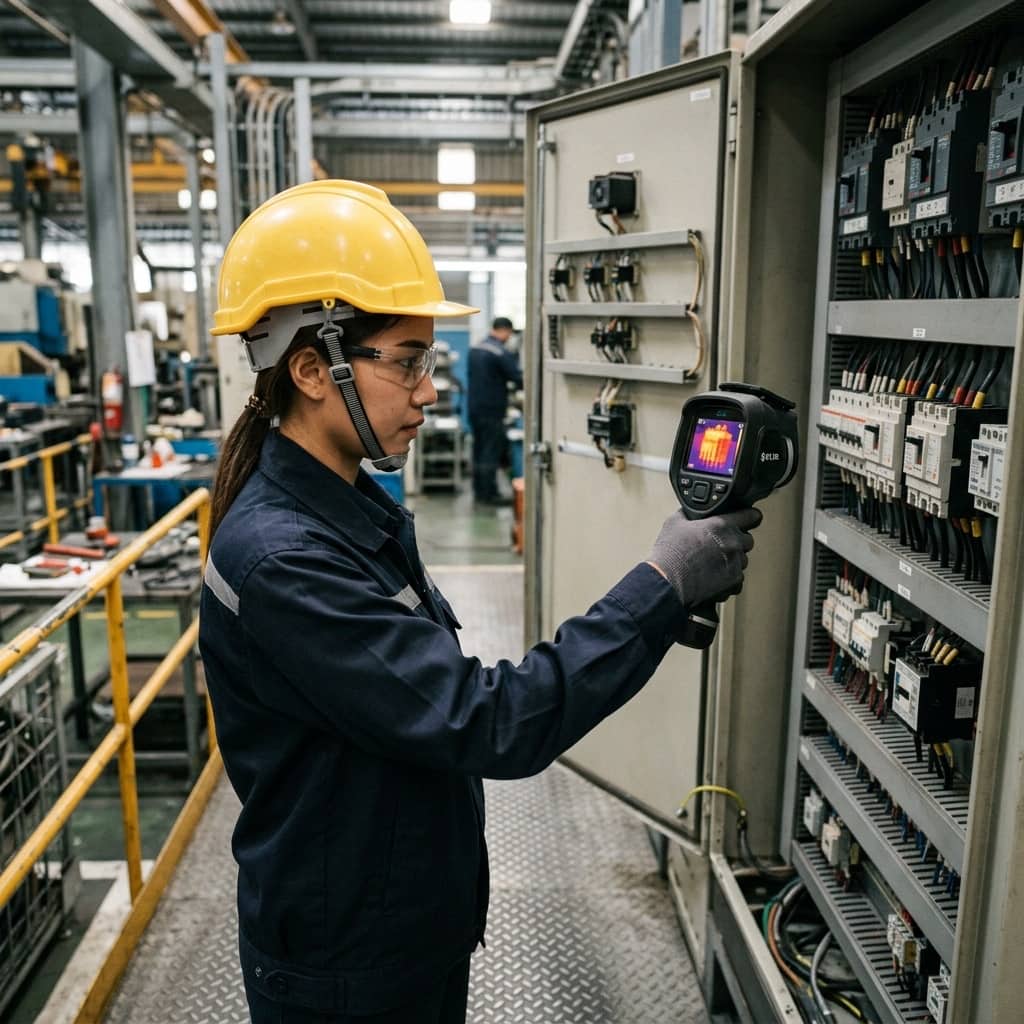
Using specialized thermal imaging cameras tuned to SF6 absorption wavelengths to pinpoint micro-leaks without contact.
1. SF6 in High-Voltage Switchgear and Why Leaks Matter
Sulfur hexafluoride (SF6) serves as the insulating and arc-quenching medium in gas-insulated switchgear (GIS) and high-voltage breakers because its dielectric strength is several times that of air and its arc interruption is excellent. All of that depends on gas density in the enclosure: if leakage drops pressure below limits, the equipment loses both insulation capability and fault-interrupting capacity. Density switches therefore provide a first-stage alarm and, at the critical stage, block breaker operation.
The environmental dimension is equally serious. SF6 is one of the most potent greenhouse gases in common use, with a global warming potential tens of thousands of times that of CO2 by mass and an atmospheric lifetime of thousands of years. Even small releases matter for both the environment and corporate greenhouse gas reporting. Finding and fixing leaks quickly is simultaneously a reliability engineering task and a sustainability obligation.
2. OGI Camera Technology: Seeing the Invisible Gas
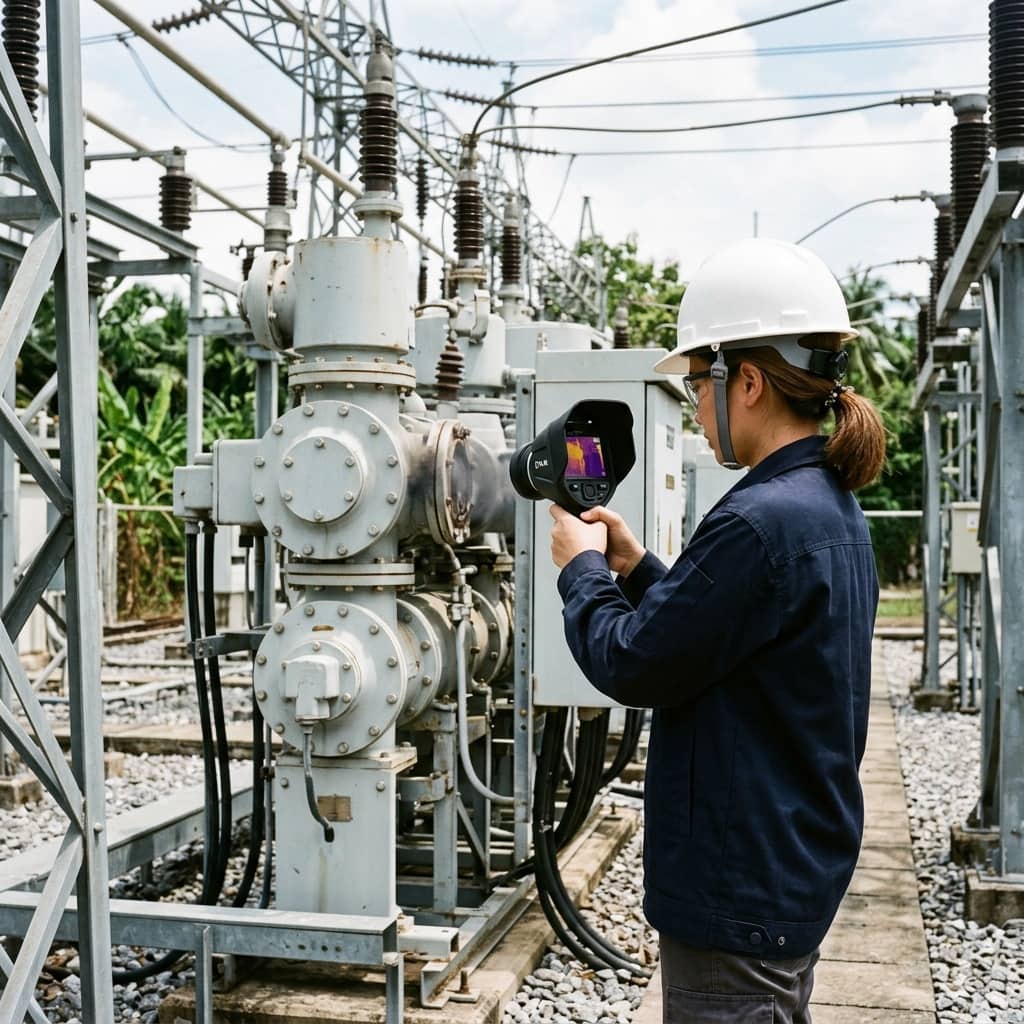
Optical gas imaging (OGI) cameras for SF6 use infrared sensors tuned to the wavelength band where SF6 absorbs strongly, around 10.5 micrometers. When a leaking gas plume drifts in front of a background at a different temperature, the camera renders it as a moving smoke-like cloud, pinpointing leaks from several meters away — no outage, no contact with equipment, no scaffolding to reach elevated points. This advantage turns leak hunting from a multi-day job into a matter of hours.
Effective use requires sufficient temperature contrast (Delta-T) between gas and background; calm wind makes plumes easier to see, and operators must learn to distinguish genuine gas images from interference such as heat shimmer and reflections. OGI is best for rapid leak localization across an entire station, after which quantitative instruments confirm and measure the leak rate at each identified point.
- Surveys without outage or contact, from a safe distance
- Needs adequate gas-to-background Delta-T for clear imaging
- Ideal for fast leak localization across a whole station
- Follow up with quantitative instruments to confirm and measure leak rate
- Operators must learn to separate real gas plumes from heat shimmer and reflections
3. Other Detection Methods and Pressure Trend Monitoring
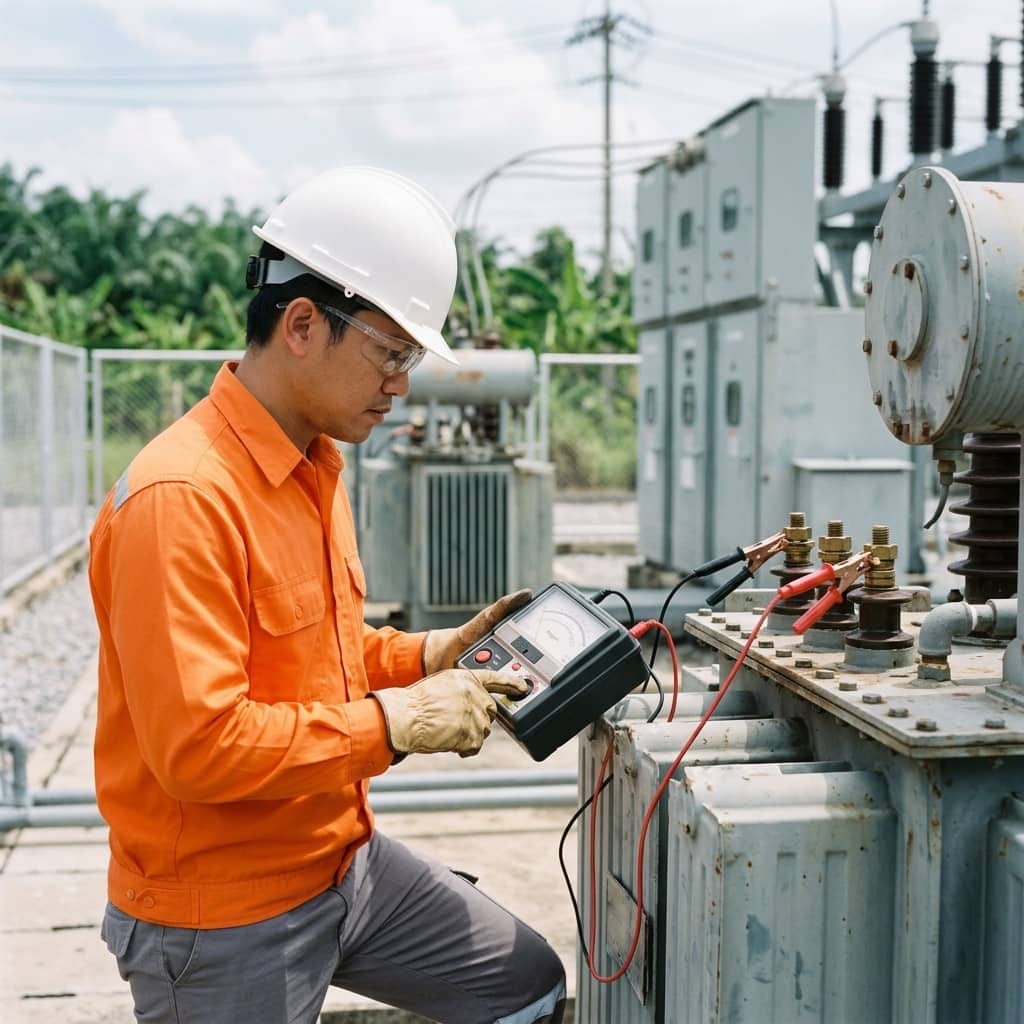
Beyond OGI cameras, several complementary tools exist. Portable sniffer detectors trace along joints, flanges, valves, and seals point by point with high sensitivity, ideal for precise confirmation. Soap solution still works on accessible points with sufficient pressure. At the system level, continuously trending each gas compartment's density/pressure sensor readings — corrected for temperature — reveals slow leaks months or years before the density switch alarms.
Frequent leak locations include age-degraded flange gaskets and O-rings, breaker mechanism shaft seals, gas filling valves, tubing connections to gauges and density switches, and porous castings or welds. Keeping a refill history per compartment is essential: a compartment needing repeated top-ups has a chronic leak that belongs in the repair queue — continually refilling it wastes gas and money while emitting a potent greenhouse gas.
4. Leak Repair and Responsible Gas Handling
Repairing a leaking gasket or seal requires first depressurizing or evacuating that compartment using a gas handling cart, which recovers the SF6 into storage cylinders and filters out moisture and contaminants; after repair, the compartment is vacuum-processed and refilled per the manufacturer's procedure. Venting SF6 to atmosphere is strictly prohibited, and weighing cylinders before and after every transfer maintains a mass balance for accurate usage and loss reporting.
For personnel safety, pure SF6 is non-toxic but heavier than air and can displace oxygen in confined spaces, while arced gas contains toxic, corrosive decomposition byproducts such as white metal-fluoride powders. Appropriate PPE is mandatory when opening compartments that have interrupted fault current. Good practice assigns trained personnel to all SF6 work, records every fill and recovery, and makes leak surveying a permanent line in the substation's annual PM plan.
Need engineering consultation regarding Preventive Maintenance?
The WIN TECH SERVICE engineering team is ready to provide site surveys, electrical system inspections, and prepare accurate legal certification reports.