Maintenance & Gas Quality Inspection for SF6 GIS Switchgear
📌 Executive Summary
Monitoring SF6 gas purity, moisture content, decomposition products (SO2), and pressure leak detection in HV substations.
1. Why SF6 Gas Quality Is the Heart of a GIS System
Gas Insulated Switchgear (GIS) relies on sulfur hexafluoride (SF6) gas as both the electrical insulating medium and the arc-quenching medium. Because SF6 offers roughly three times the dielectric strength of air at the same pressure, substations can be built far more compactly than with air-insulated designs. All of this performance, however, depends on maintaining gas pressure and purity inside each compartment within the manufacturer's specified limits throughout the equipment's service life.
When gas pressure drops due to leakage, or the gas becomes contaminated with moisture and air, insulating capability degrades significantly. Decomposition by-products formed after arc interruption, such as SO2 and HF, are also corrosive to internal components. Periodic gas quality testing is therefore the single most important preventive maintenance task for GIS — far more than simply topping up gas when a low-pressure alarm operates.
2. Reference Standards and Gas Quality Criteria
The principal international standards governing SF6 quality are IEC 60376 for new gas and IEC 60480 for used gas intended for re-use, which define clear limits for purity, air contamination, moisture, and decomposition products. The switchgear itself is designed and type-tested to the IEC 62271 series, which covers permissible annual leakage rates and gas density monitoring requirements.
Field engineers routinely measure SF6 purity (generally above 97 percent by volume for gas in service), dew point as an indicator of moisture, and SO2 content, which reveals whether internal arcing or discharge has occurred. Pressure readings should always be recorded together with ambient temperature, because gas pressure varies with temperature — uncompensated readings can easily lead to a false leakage diagnosis.
- IEC 60376 — quality requirements for new SF6 gas
- IEC 60480 — criteria for re-use of used SF6 gas
- IEC 62271 series — HV switchgear design and testing
- Purity, moisture (dew point), and SO2 are the three key measurements
- Always temperature-compensate pressure readings
3. Field Procedure for Gas Quality Testing and Leak Detection
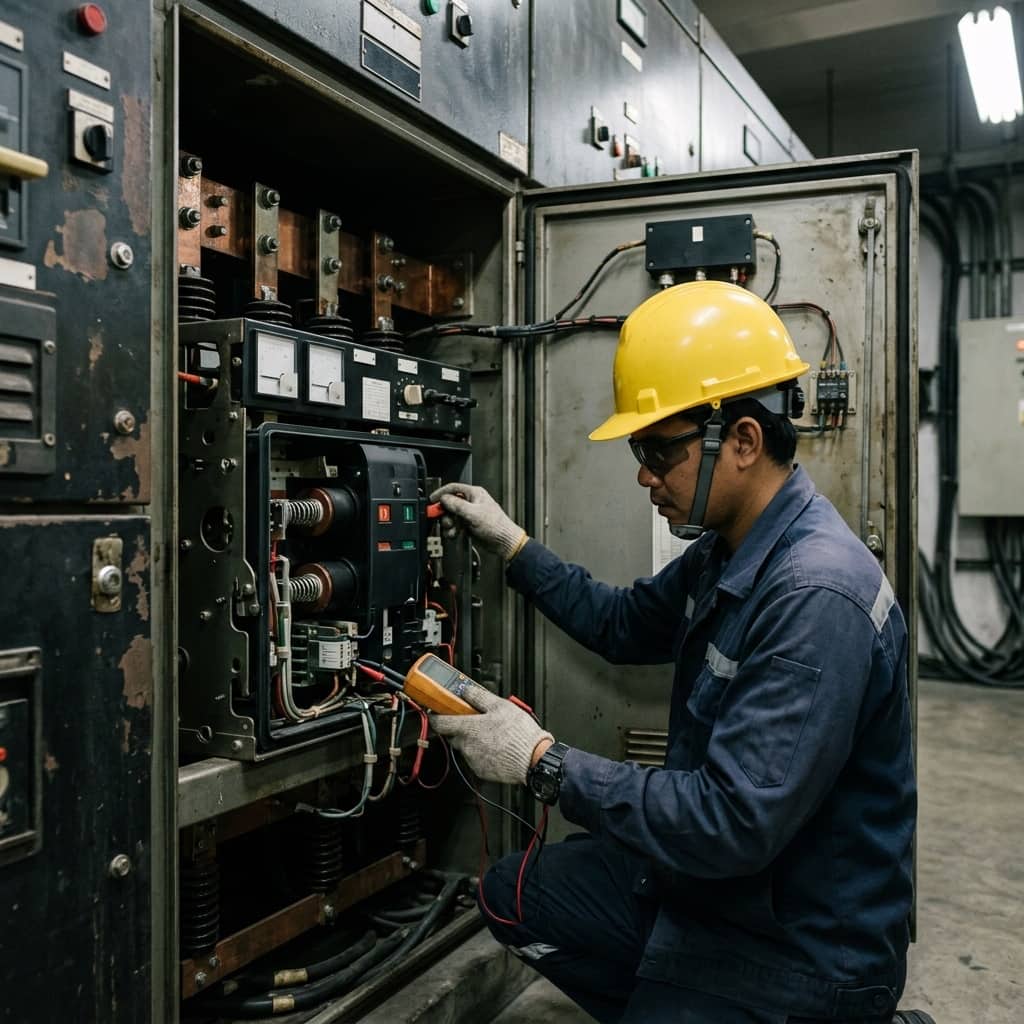
Testing begins by connecting a multi-parameter gas analyzer to the compartment service valve through self-sealing couplings, so that sample gas is recovered into the instrument's internal storage rather than vented to atmosphere. Purity, moisture, and SO2 readings are recorded once values stabilize and compared against previous results — trending over time tells far more than any single measurement.
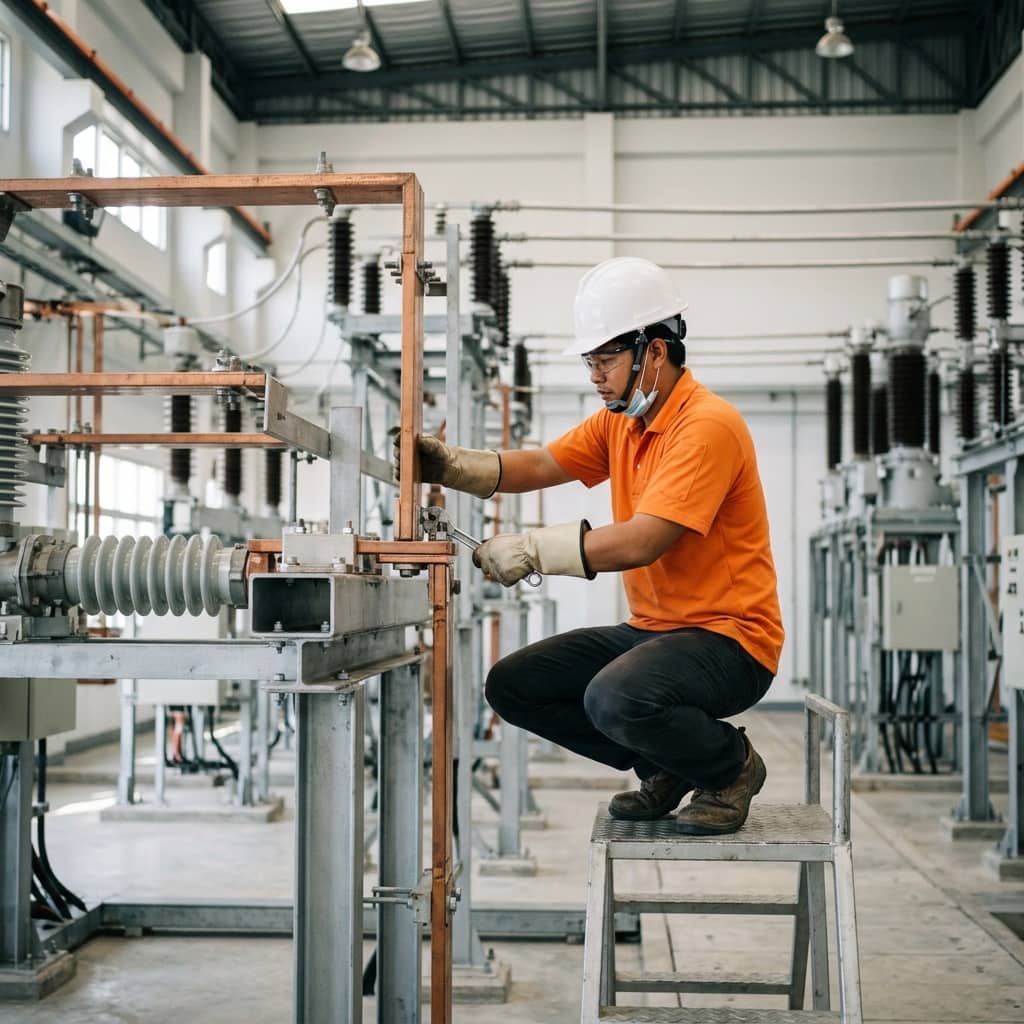
If abnormal pressure loss is found, locate the leak with a high-sensitivity sniffer around flanges, gaskets, valves, and pipe joints, or use an infrared SF6 imaging camera for hard-to-reach areas. Common leak points include aged O-ring gaskets, density monitors, and welded joints on gas manifolds. Any repair requiring a compartment to be opened must be preceded by full gas recovery in accordance with safe work procedures.
4. Common Problems and Preventive Measures
The most common GIS problem is a slow leak that goes unnoticed until the first-stage alarm or lockout threshold operates, by which point insulation margin may already be substantially reduced. Another frequent issue is moisture ingress through aged gaskets or from refilling without adequate vacuum evacuation; moisture combines with gas decomposition products to form acids that attack epoxy spacers and internal metal surfaces.
Prevention rests on a fixed gas quality testing schedule, monthly trending of density monitor readings, periodic functional testing of low-pressure alarms, and gasket replacement at manufacturer-recommended intervals whenever a compartment is opened. Crews should also be trained in correct SF6 handling, since SF6 is a very high global warming potential greenhouse gas that must never be released to atmosphere.
- Trend pressure monthly — do not wait for alarms
- Moisture plus decomposition products form corrosive acids
- Periodically function-test density monitor alarm/lockout stages
- Replace O-rings and gaskets whenever a compartment is opened
Need engineering consultation regarding High Voltage?
The WIN TECH SERVICE engineering team is ready to provide site surveys, electrical system inspections, and prepare accurate legal certification reports.