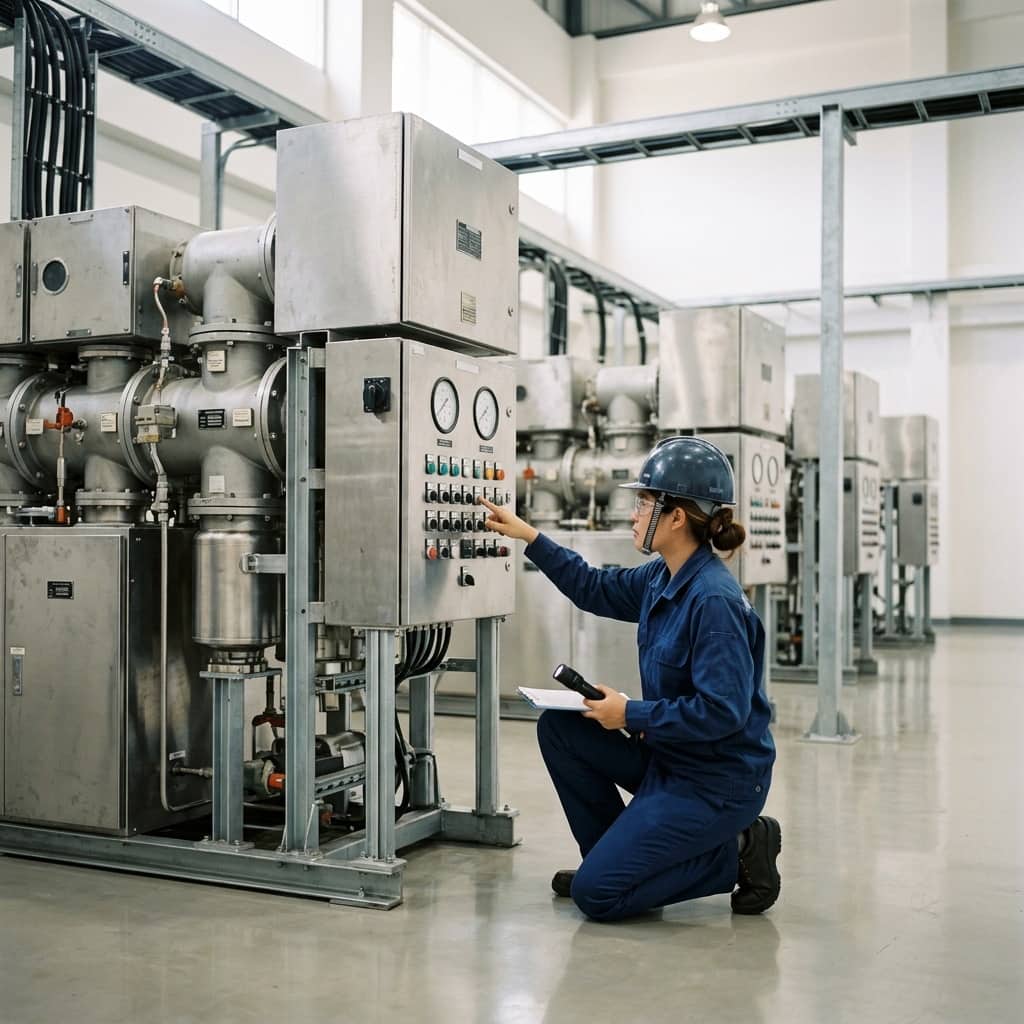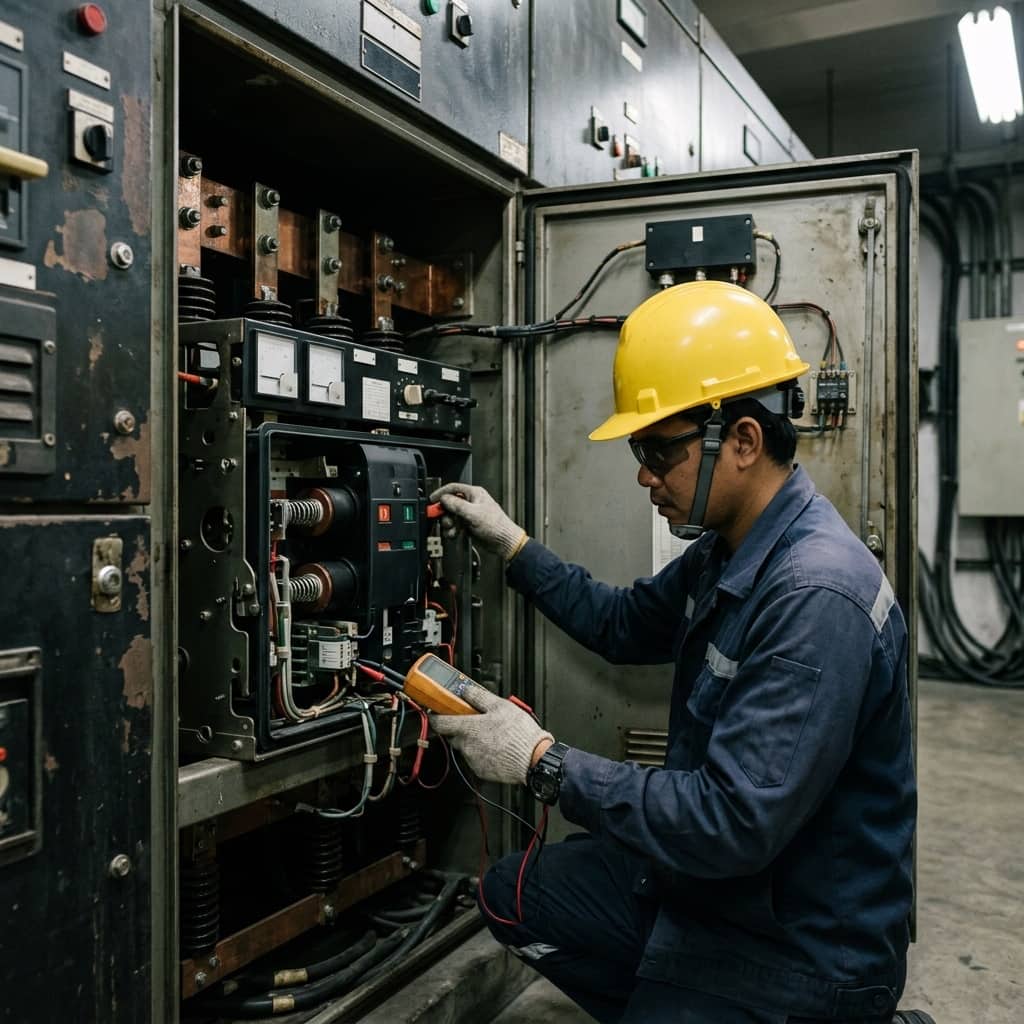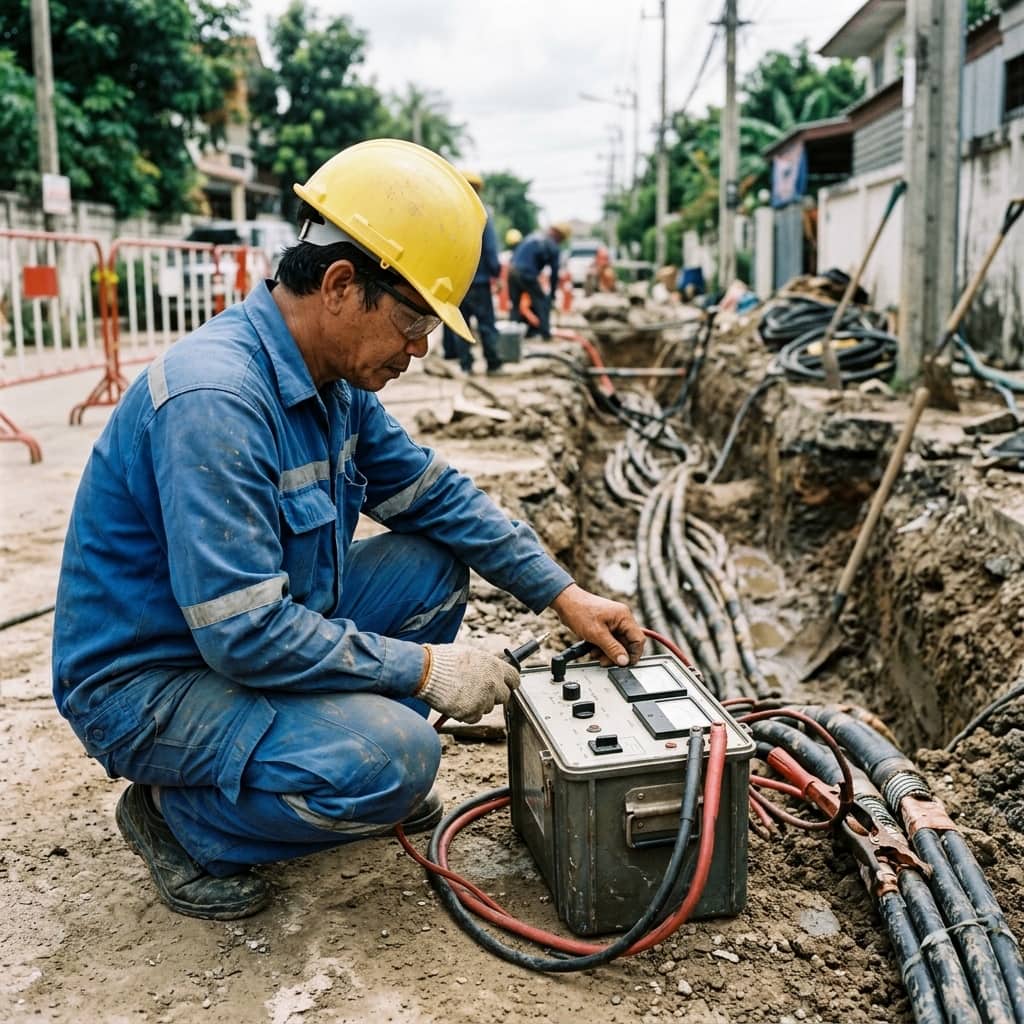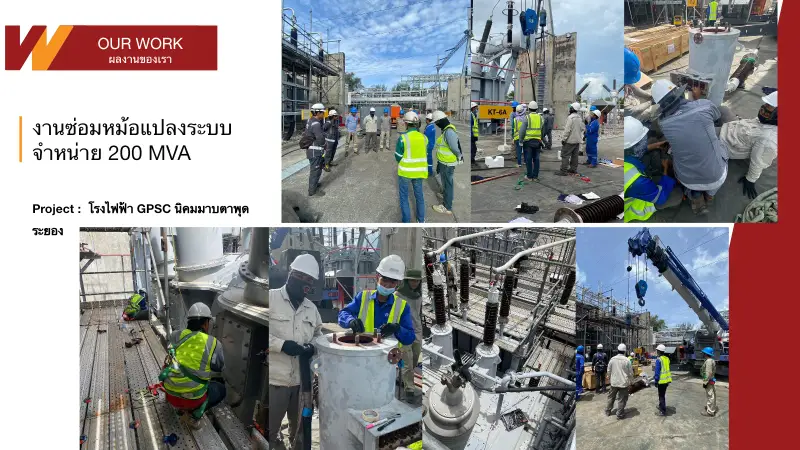
Air Insulated Switchgear (AIS) Busbar & Isolator Overhaul
📌 Executive Summary
Cleaning epoxy insulators, torquing copper busbar joints, and lubricating mechanical interlocks to prevent flashover.
1. The Role of AIS and Why Periodic Overhaul Matters
Air Insulated Switchgear (AIS) uses ambient air as the primary insulation between live parts, the enclosure, and adjacent phases. Its simple, accessible construction makes it the most common form of medium-voltage switchgear in Thai factories and buildings. Using air as insulation, however, ties performance directly to the environment: dust, humidity, salt-laden air, and small animals entering the enclosure can all erode the designed insulation clearances.
Dust accumulating on epoxy insulator surfaces combines with moisture to form surface leakage paths (tracking) that can develop into flashover, while busbar joints loosened by thermal cycling develop rising resistance and accumulate heat, sometimes to the point of melting. Periodic overhaul restores insulation surfaces, joint tightness, and mechanism freedom to design values before degradation accumulates into a failure.
2. Reference Standards and Inspection Criteria
Medium-voltage switchgear assemblies are designed and tested to the IEC 62271 series, particularly IEC 62271-200 for metal-enclosed switchgear from 1 to 52 kV. Installation practice and electrical clearances within Thai electrical rooms follow the EIT (Engineering Institute of Thailand) electrical installation standard, together with the utility connection requirements of PEA or MEA depending on the service area.
Overhaul acceptance criteria include phase-to-earth and phase-to-phase insulation resistance, busbar joint resistance in micro-ohms compared between similar joints, bolt torque per the busbar and panel manufacturer's tables, and thermographic scans under load before and after maintenance to confirm that identified hot spots have genuinely been corrected.
- IEC 62271-200 — metal-enclosed switchgear 1–52 kV
- EIT electrical installation standard for Thai installations
- PEA / MEA connection requirements by service area
- Compare joint resistance between similar joints
- Thermal scan before and after maintenance
3. Overhaul Procedure for Busbars, Insulators, and Mechanisms
Overhaul work is performed de-energized with earths applied on all sides of the bus under a permit-to-work procedure. Begin with photographs and a thermal scan before shutdown to target the work. Clean epoxy insulator and bushing surfaces with lint-free cloths and dedicated insulation cleaner — never water-soaked rags or general solvents that can leave conductive residue — and inspect every surface for crazing, burn marks, and tracking traces.
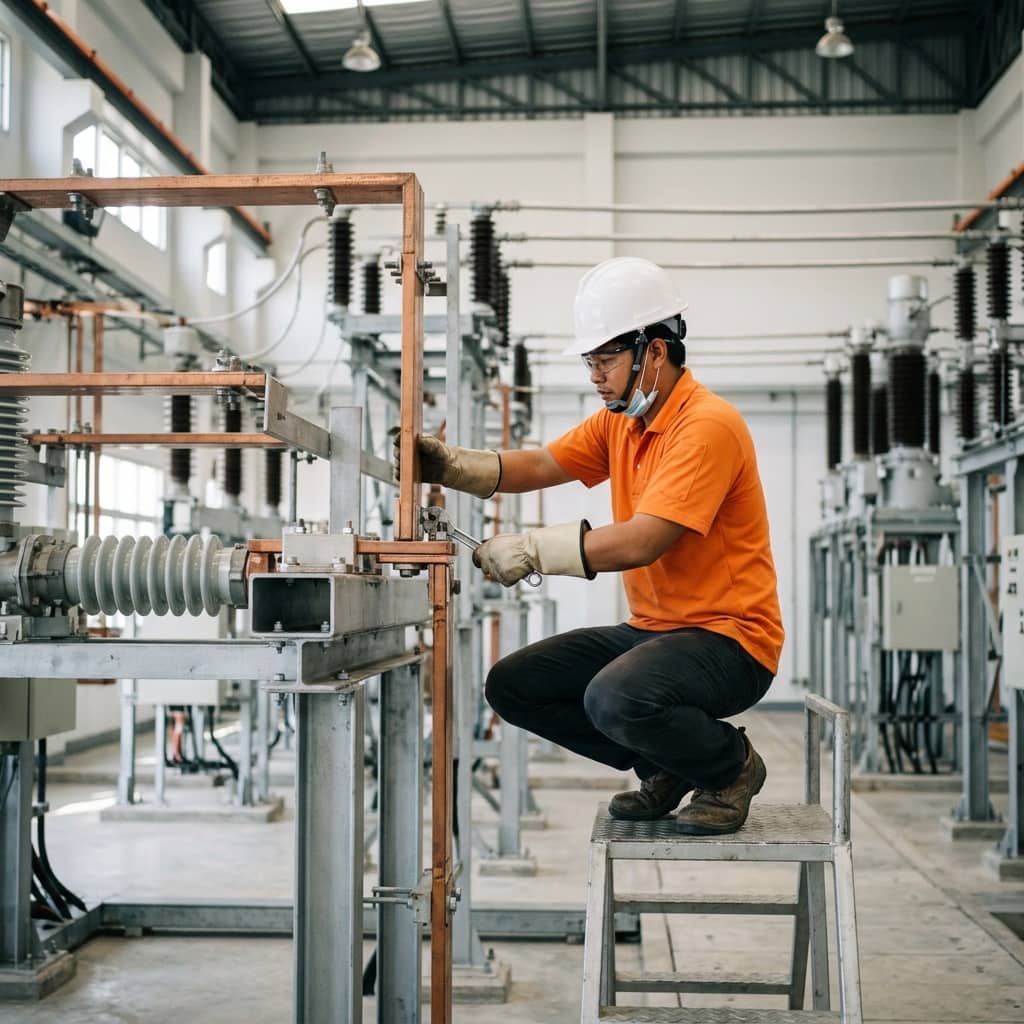
Check copper busbar joint torque against the manufacturer's table using a calibrated torque wrench. Joints flagged hot in the scan should be dismantled, contact surfaces dressed, oxide inhibitor applied, then reassembled and verified with a micro-ohm measurement. Clean and lubricate disconnector mechanisms and interlocks with the specified grease, operate them several times to confirm simultaneous three-phase contact engagement, and close out with an overall insulation resistance test and a foreign-material check before re-energization.
4. Common Problems and Flashover Prevention
Most AIS flashovers do not occur without warning: corona hiss, ozone smell, white or dark deposits on insulator surfaces, and heat discoloration at joints usually precede them. Common root causes include high electrical-room humidity from failed ventilation or air conditioning, openings that admit snakes and rodents, and conductive process dust such as carbon or metallic dust, which is far more dangerous than ordinary dust.
Prevention starts with keeping the electrical room dry and clean, sealing openings with fire-rated material, verifying that the panel space heaters provided by the manufacturer actually work, and setting insulator cleaning intervals according to site pollution severity. Between overhauls, online partial discharge detection combined with thermographic scanning provides early warning of developing defects without requiring an outage.
- Corona hiss, ozone smell, and insulator deposits precede flashover
- Control room humidity and verify space heaters actually work
- Seal animal-entry openings with fire-rated material
- Conductive process dust is far more dangerous than ordinary dust
Need engineering consultation regarding High Voltage?
The WIN TECH SERVICE engineering team is ready to provide site surveys, electrical system inspections, and prepare accurate legal certification reports.