Planning & Execution of Annual Factory Shutdown Electrical PM
📌 Executive Summary
Critical timeline management, safety permit to work, crew dispatching, and emergency power sourcing during full plant shutdown.
1. The Annual Shutdown: Maintenance's Golden Window
Many of the most important electrical maintenance tasks can only be done with the whole system de-energized: transformer maintenance, main breaker testing and overhaul, MDB busbar re-torquing, protective relay testing, and high-voltage switchgear cleaning. The annual production shutdown — often just a few days — is the year's only window for this work, and its success or failure determines the reliability of the electrical system for the next twelve months.
The distinctive challenges are a fixed and unmovable time limit, a dense scope of work, multiple crews working in overlapping areas, and pressure to re-energize by the production restart deadline. A good shutdown is therefore not merely a task list but a full project management exercise: planned months ahead, with a clear critical path and contingency plans for the unexpected findings that opening equipment always brings.
2. Advance Planning and Permit-to-Work Safety
Planning should begin two to three months ahead, consolidating the work list from findings during the year — thermo-scan hot spots awaiting correction, transformer oil results, and each asset's scheduled tasks. Then prioritize, estimate durations, assign crews and tools, order spares early (especially long-lead items), and build an hour-by-hour schedule showing which tasks gate which others.
Safety runs on a strict permit-to-work system combined with energy isolation and lockout/tagout (LOTO). Points demanding special care in electrical work are verifying dead at every point before work starts, applying temporary grounds on the high-voltage side, and controlling backfeed from standby generators, solar systems, or UPS units — a frequent accident cause because crews assume everything is de-energized. All of this aligns with the requirements of the Thai electrical safety Ministerial Regulation B.E. 2558.
- Start planning 2-3 months ahead and order long-lead spares early
- Build an hour-by-hour schedule with a defined critical path
- Use permit-to-work + LOTO and verify dead at every point before work
- Guard against backfeed from generators, solar, and UPS
- Reserve roughly 10-20% contingency time for findings discovered on site
3. Field Work Sequence During the Shutdown
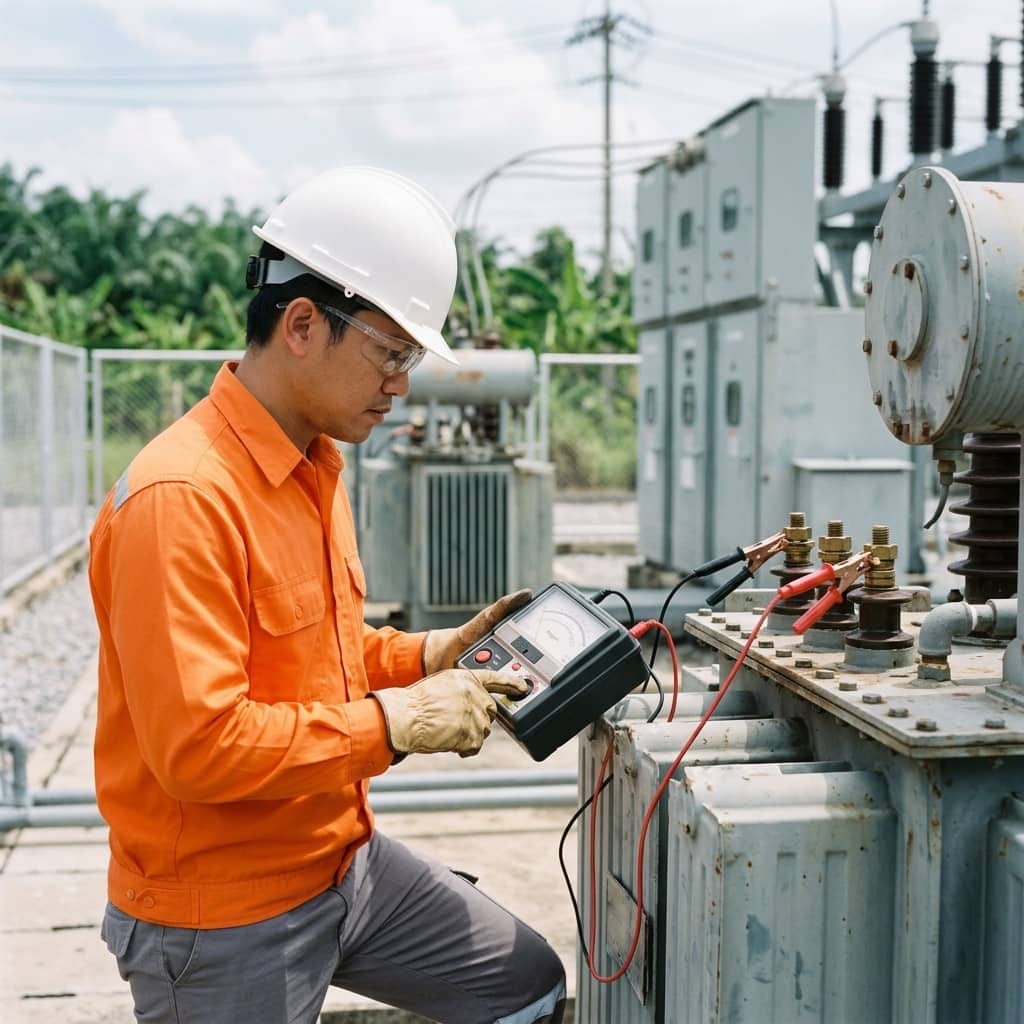
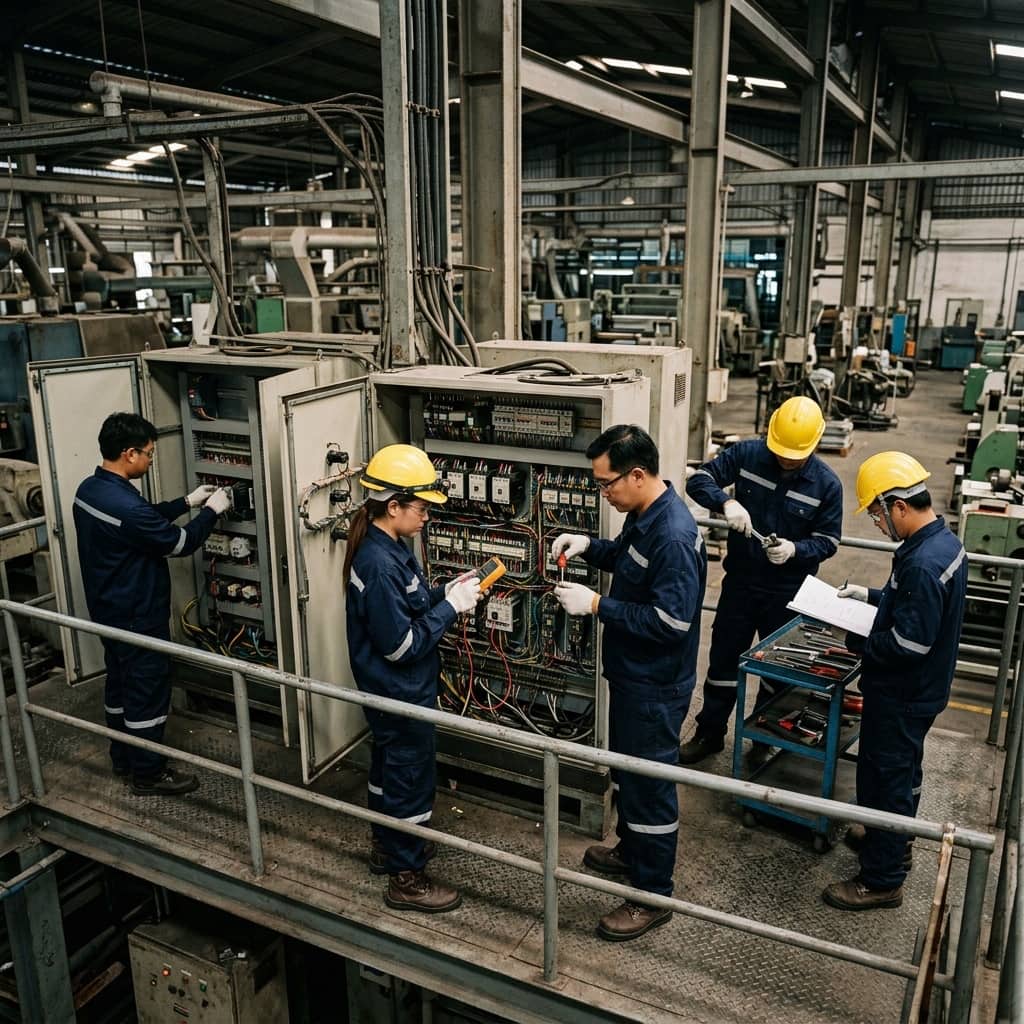
An efficient sequence generally runs from source to load. De-energize per procedure — coordinating with the utility if the HV intake must be opened — isolate and ground. The HV crew then works the switchgear and transformer side: oil tests, seal and silica gel checks, insulation and winding resistance tests. Meanwhile the LV crew cleans the MDB, re-torques busbars to specification, and tests ACBs and protective relays by secondary injection against the design settings.
Before re-energization comes a systematic pre-energization check: tool and material counts so nothing is left inside panels, removal of every temporary ground verified against a register, insulation measurements confirmed, breaker positions and relay settings restored to service values. Then energize stage by stage from the source downstream, observing current, voltage, and any abnormality at each stage before proceeding. Rushing to energize everything at once is a risk never worth the few minutes saved.
4. Common Lessons and Professional Closeout
Recurring shutdown problems include underestimated durations that force late tasks to be dropped, incomplete spares from late ordering, unexpected damage found on opening equipment with no contingency plan, and failed re-energization from settings not restored or grounds not fully removed. Nearly all are preventable with more detailed planning, pre-shutdown equipment surveys, and a strictly enforced re-energization checklist signed off item by item.
Professional closeout goes beyond successful re-energization: a report summarizing every task, all test values against criteria, abnormalities found with photographs, deferred work carried to the next window, and the team's lessons learned. This data is the direct input to next year's EPM plan and maintenance budget. Plants that keep multi-year shutdown records can see the health trend of the entire electrical system and base major replacement investments on real data rather than intuition.
Need engineering consultation regarding Preventive Maintenance?
The WIN TECH SERVICE engineering team is ready to provide site surveys, electrical system inspections, and prepare accurate legal certification reports.