Standard Guide for Insulating Oil Sampling (ASTM D923 & IEC 60475)
📌 Executive Summary
Preventing atmospheric contamination during transformer oil sample extraction using glass syringes and stainless steel valves.
1. Why Sampling Technique Matters as Much as the Lab Analysis
Insulating oil analysis is among the most powerful transformer health diagnostics — dissolved gas analysis (DGA), moisture content, breakdown voltage, and acidity. Yet results are only meaningful if the sample reaching the laboratory truly represents the oil in the transformer tank. Samples contaminated by atmospheric moisture, air bubbles, or dirty sampling apparatus produce misleading results that can drive misdiagnosis in either direction.
Sampling errors are more dangerous than they appear: oil moisture is measured in parts per million, and some diagnostic dissolved gases such as hydrogen escape a sample very easily on contact with air. A poorly taken sample can make a healthy transformer look faulty — or worse, mask a genuine fault signature and forfeit the chance to intervene before failure. Sampling standards exist to control every step of the process rigorously.
2. What ASTM D923 and IEC 60475 Specify
ASTM D923 is the standard practice for sampling electrical insulating liquids, covering container selection, apparatus cleaning, sampling points, and flushing stagnant oil from valves and lines before the actual sample is drawn. IEC 60475 is its international counterpart for sampling insulating liquids from electrical equipment. Both enforce the same principles: the sample must not contact air or moisture during collection, and containers must be clean, dry, and made of materials that do not react with the oil.
For DGA, the analysis most sensitive to gas loss, the recommended container is a glass syringe with a three-way valve, which captures oil with zero headspace. General property tests may use amber glass bottles or thoroughly dried, tightly sealed metal cans. Every sample must be labeled with the transformer identity, sampling point, date and time, oil temperature at sampling, and weather conditions — contextual data the laboratory needs for correct interpretation.
- ASTM D923 — standard practice for sampling insulating liquids
- IEC 60475 — international standard for sampling from equipment
- DGA requires zero-headspace glass syringes
- Full labeling: transformer, point, date/time, temperature, weather
3. Correct Field Sampling Procedure
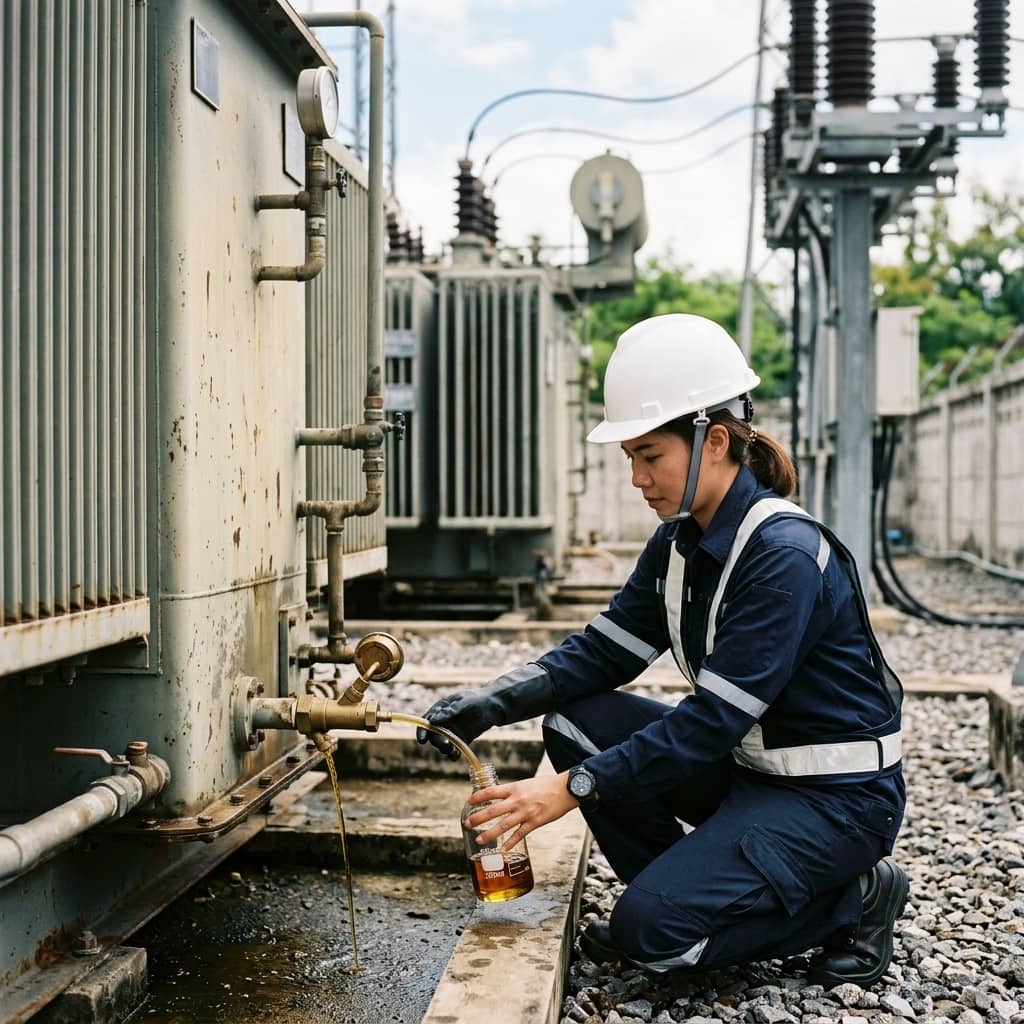
Sample from the transformer's lower sampling valve with the oil at normal operating temperature, and avoid rainy or very humid days unless the sampling is urgent. Clean the valve exterior, then flush at least one to two liters of stagnant oil into a waste container until the flow is clearly tank oil rather than line-standing oil, which typically carries more water and sediment.
For DGA samples, connect short tubing to the glass syringe's three-way valve and let tank oil pressure push the plunger back slowly by itself — never pull the plunger, as the vacuum created strips dissolved gases from the oil. Expel all air bubbles before closing the valve, rinse the syringe with sample oil at least once before the final draw, keep samples out of direct sunlight, and ship them promptly with shock protection. Photograph and document each step so every result remains traceable.
4. Popular Mistakes and Their Effect on Interpretation
The most common error is inadequate flushing, inflating moisture and sediment readings. Next is pulling the syringe plunger, stripping dissolved gases so hydrogen and other light gases read low and early fault signatures disappear. Others include using ordinary plastic bottles, which are moisture-permeable and can leach interfering substances into the oil, and sampling in rain or with wet hands, adding moisture directly to the sample.
Effective prevention means keeping a dedicated, clean, dry sampling kit ready at all times, training staff with a written standard procedure, having the same person sample from the same point each time so year-on-year results remain comparable, and re-sampling to confirm any sudden abnormal result unaccompanied by other symptoms before committing to major action — a repeat sample costs far less than a wrong decision based on a contaminated one.
- Flush at least 1–2 liters of stagnant oil before sampling
- Never pull the syringe plunger — let oil pressure drive it
- Never use ordinary plastic bottles for oil analysis
- Re-sample to confirm any sudden abnormal result
Need engineering consultation regarding High Voltage?
The WIN TECH SERVICE engineering team is ready to provide site surveys, electrical system inspections, and prepare accurate legal certification reports.