Equipotential Bonding in Hazardous Zone 1 & Zone 2 Chemical Facilities
📌 Executive Summary
Eliminating static electricity discharge sparks across metal pipes, tanks, and structural steel in ATEX explosion-proof zones.
1. Static Electricity and Explosion Risk in Hazardous Areas
In chemical plants, fuel depots, and other flammable vapor atmospheres classified as hazardous Zone 1 and Zone 2, a static spark of only a few millijoules can ignite a fuel-air mixture. Static charge is generated continuously — by liquid flowing in pipes, transfer into tanks, spraying, conveyor belt friction, and movement of powdered material. If any metal part is electrically isolated, charge accumulates and its potential rises until it discharges as a spark toward nearby metal at a different potential.
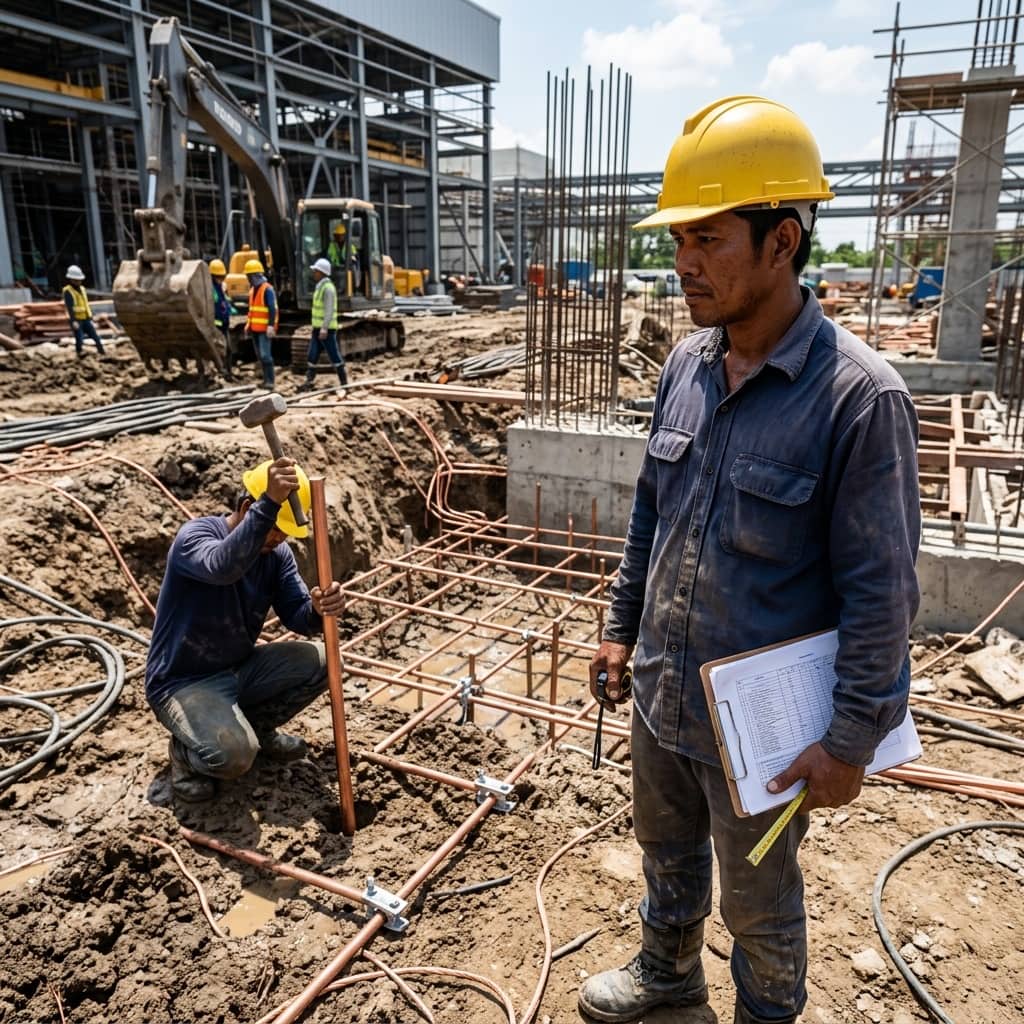
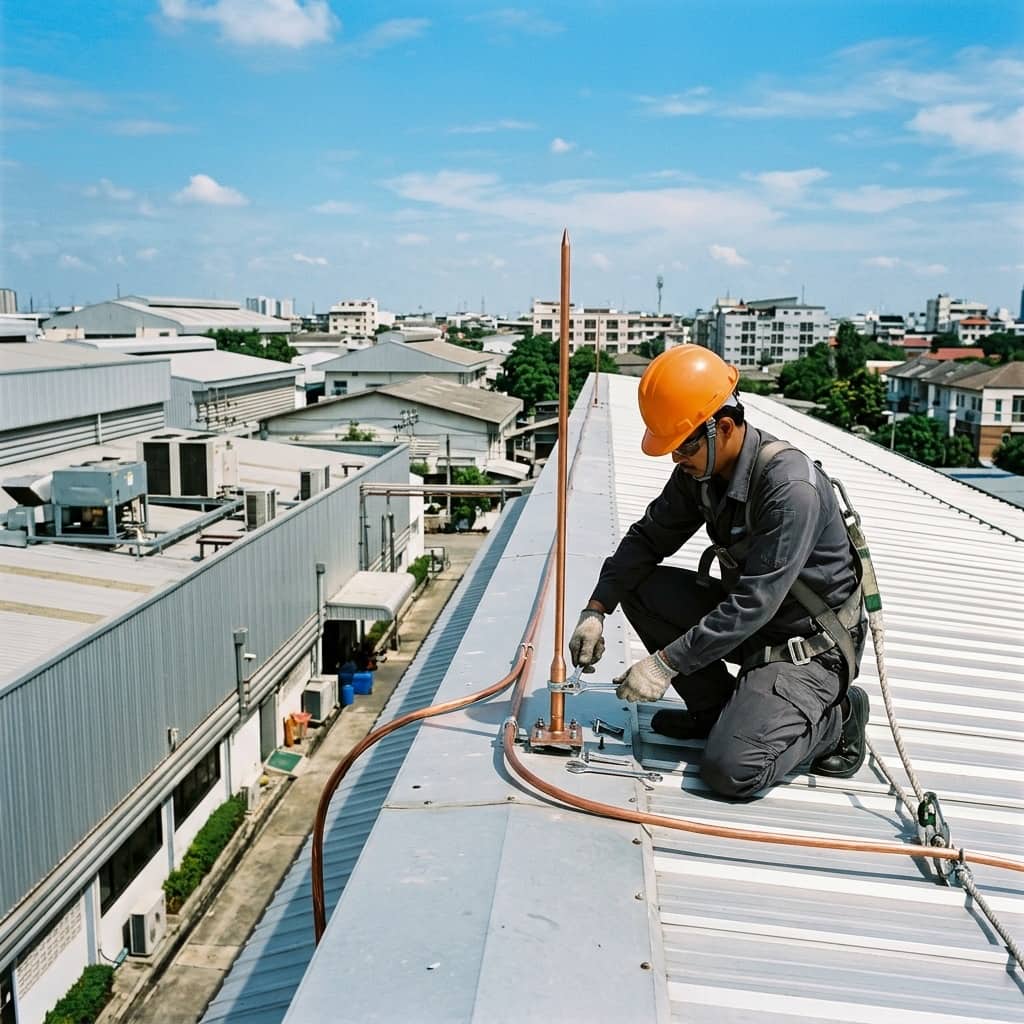
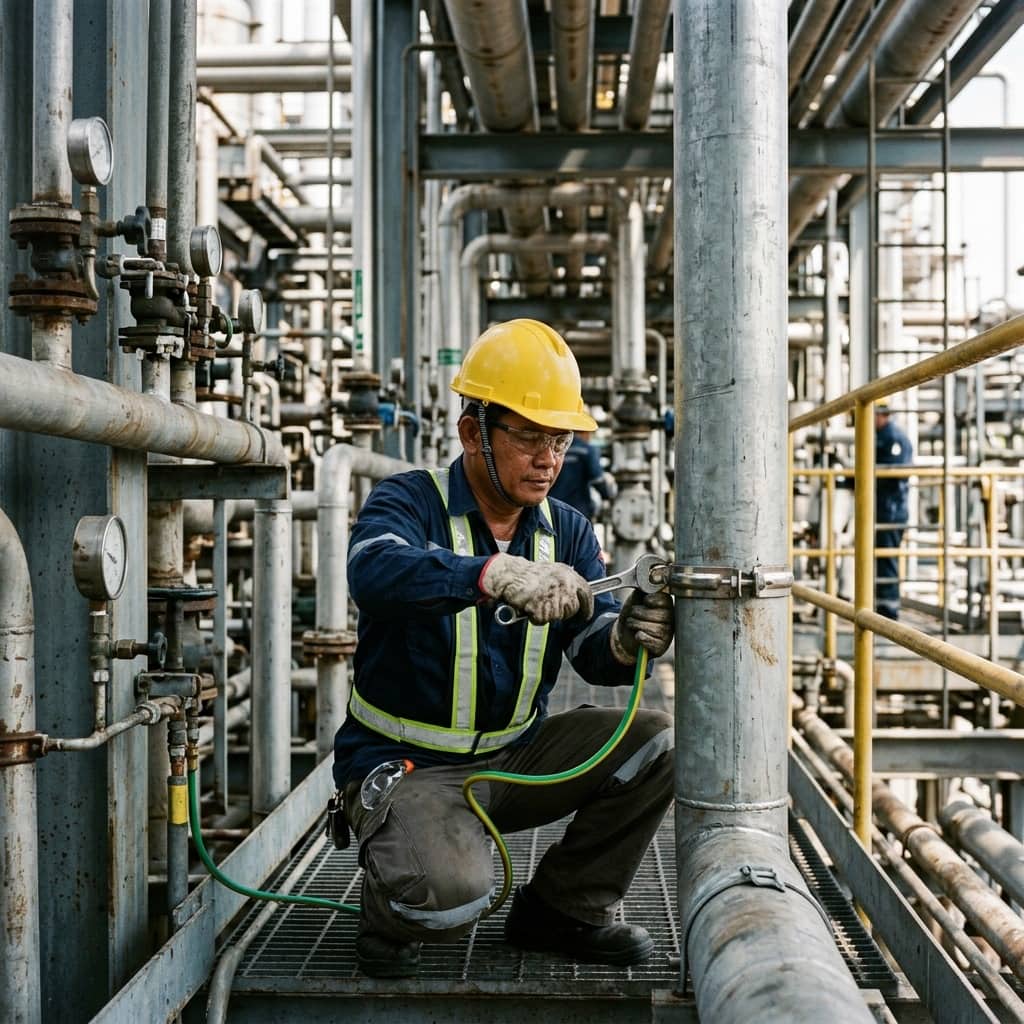
Equipotential bonding is the primary countermeasure: connecting all conductive items — structural steel, chemical piping, storage tanks, pumps, cable trays, and mechanical equipment — to one another and to earth so that everything remains at the same potential at all times. With no potential difference, no spark can jump a gap. This differs in intent from power system earthing: the primary goal is static charge control and potential equalization, not carrying fault current.
2. Requirements in Zone 1 and Zone 2 per the IEC 60079 Framework
Hazardous area classification under the IEC 60079 series divides gas and vapor atmospheres into Zone 0, 1, and 2 according to how frequently and how long a flammable atmosphere is present. Electrical installations in these areas must comply with IEC 60079-14, which covers explosion-protected equipment selection, wiring methods, and earthing and bonding requirements — mandating that all exposed and extraneous conductive parts in the hazardous area belong to a single equipotential bonding system.
For static electricity control specifically, the widely accepted technical references are IEC TS 60079-32-1 and NFPA 77, the Recommended Practice on Static Electricity. These provide resistance criteria for static dissipation paths to earth, bonding procedures for transferring flammable liquids between tank trucks and storage tanks, limits on liquid flow velocity in piping, and management of charge-generating insulating materials. Bonding connections in hazardous areas must also be permanent, vibration-resistant, and made of materials that cannot create friction or impact sparks.
- Every conductive item in the hazardous area must join a single equipotential bonding system
- Bond tank trucks to storage tanks before every flammable liquid transfer
- Limit flammable liquid flow velocity in piping to restrict charge generation
- Avoid isolated metal parts, such as flanges separated by gaskets without bonding jumpers
- Use permanent bonding connections resistant to vibration and chemical corrosion
3. Continuity Measurement and Bonding System Verification
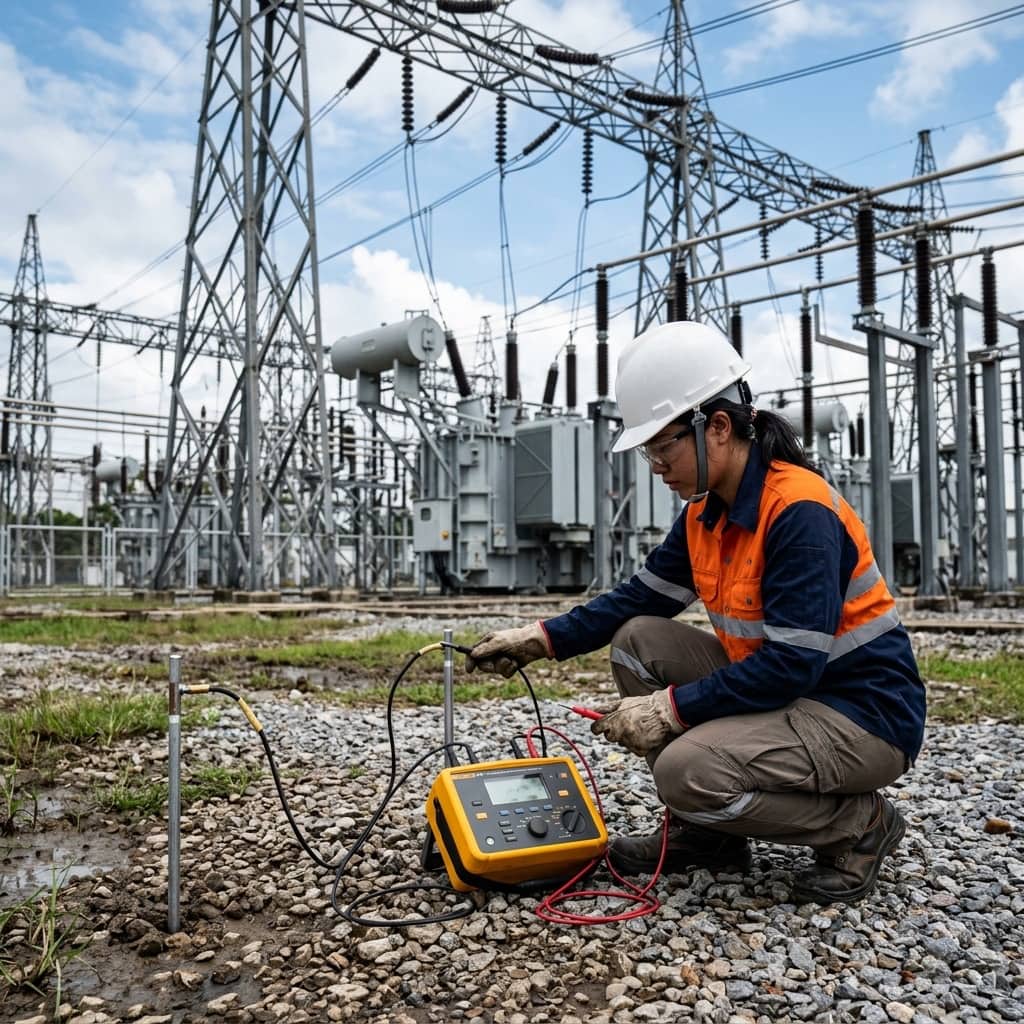
Verification in hazardous areas centers on bonding continuity measurement between each item and the main bonding bar using a four-wire low resistance ohmmeter. A healthy metal-to-metal bonding path should read very low — clearly below one ohm — while paths intended solely for static dissipation are judged against far more lenient criteria from the static electricity guides, since dissipating static requires only a continuous conductive path. The inspector must understand which type of path is being tested and which criterion applies.
A critical precaution: instruments brought into the hazardous area must be suitable for that zone, or the work must be controlled under a permit-to-work with gas testing confirming a safe atmosphere before and during measurement. Points deserving special attention include pipe flanges with insulating gaskets, flexible and expansion joints, components dismantled and reassembled during maintenance, and the bonding of mixing vessels to their internal agitators — collectively the locations where continuity is most frequently lost.
4. Frequent Failure Points and System Integrity Management
Nearly all bonding system failures stem from changes made after installation: maintenance work that removes a bonding jumper and never reinstates it, paint or anti-corrosion coating applied over joint contact surfaces, replacement of metal pipe sections with plastic pipe or non-metallic flexible couplings that break the continuity of an entire pipe run, chemical vapor corrosion at outdoor bonding points, and new equipment installed by contractors unaware of hazardous area requirements.
Integrity management must therefore be embedded in plant systems: a register of all bonding points with individual tags and layout drawings, continuity measurement at least annually with trending of recorded values, an enforced management-of-change process requiring every job that touches piping, tanks, or structure to assess its bonding impact before work starts, and visual bonding checks included in the daily operator rounds checklist for hazardous areas.
Need engineering consultation regarding Safety & Grounding?
The WIN TECH SERVICE engineering team is ready to provide site surveys, electrical system inspections, and prepare accurate legal certification reports.