Calibration & Accuracy Verification of Electrical Panel Meters & Transducers
📌 Executive Summary
Ensuring ISO 9001 / ISO 17025 compliance by calibrating voltage, current, frequency, and power measurement transducers.
1. Why Electrical Instruments Need Calibration
Panel meters, transducers, and portable test instruments all drift over time as electronic components age and as temperature, humidity, and vibration take their toll. Readings move steadily away from true values with no outward symptom. The consequences range from incorrect internal energy allocation and protection settings based on wrong data, to production processes quietly running with less precision than anyone realizes.
Calibration compares an instrument's readings against a reference standard of higher accuracy that is traceable to national measurement standards. The output is a report stating the error at each test point together with the measurement uncertainty, which determines whether the instrument remains within its acceptable tolerance and whether adjustment is required.
2. ISO 9001, ISO/IEC 17025, and Traceability
ISO 9001 requires organizations to control monitoring and measuring equipment that affects product quality: calibrated or verified at defined intervals, traceable to international or national measurement standards, status-identified, and protected from unauthorized adjustment. ISO/IEC 17025 is the competence standard for calibration laboratories themselves, so choosing a lab accredited to ISO/IEC 17025 in the relevant measurement scope is how you ensure the certificate actually means something.
The core of the system is an unbroken traceability chain from the field instrument to the lab's reference standards and back to the national metrology institute. A complete calibration certificate states the reference standards used, environmental conditions, As Found and As Left results, and uncertainty. The As Found data deserves special attention: it reveals how far the instrument had been reading in error before calibration, which may affect historical data collected in that period.
- ISO 9001: mandates control and calibration of quality-affecting instruments
- ISO/IEC 17025: competence criteria for calibration laboratories
- Certificates must include As Found / As Left results and uncertainty
- Label each instrument with status and calibration due date
- Maintain a full instrument register with calibration history
3. Calibration Scope for Plant Electrical Instruments
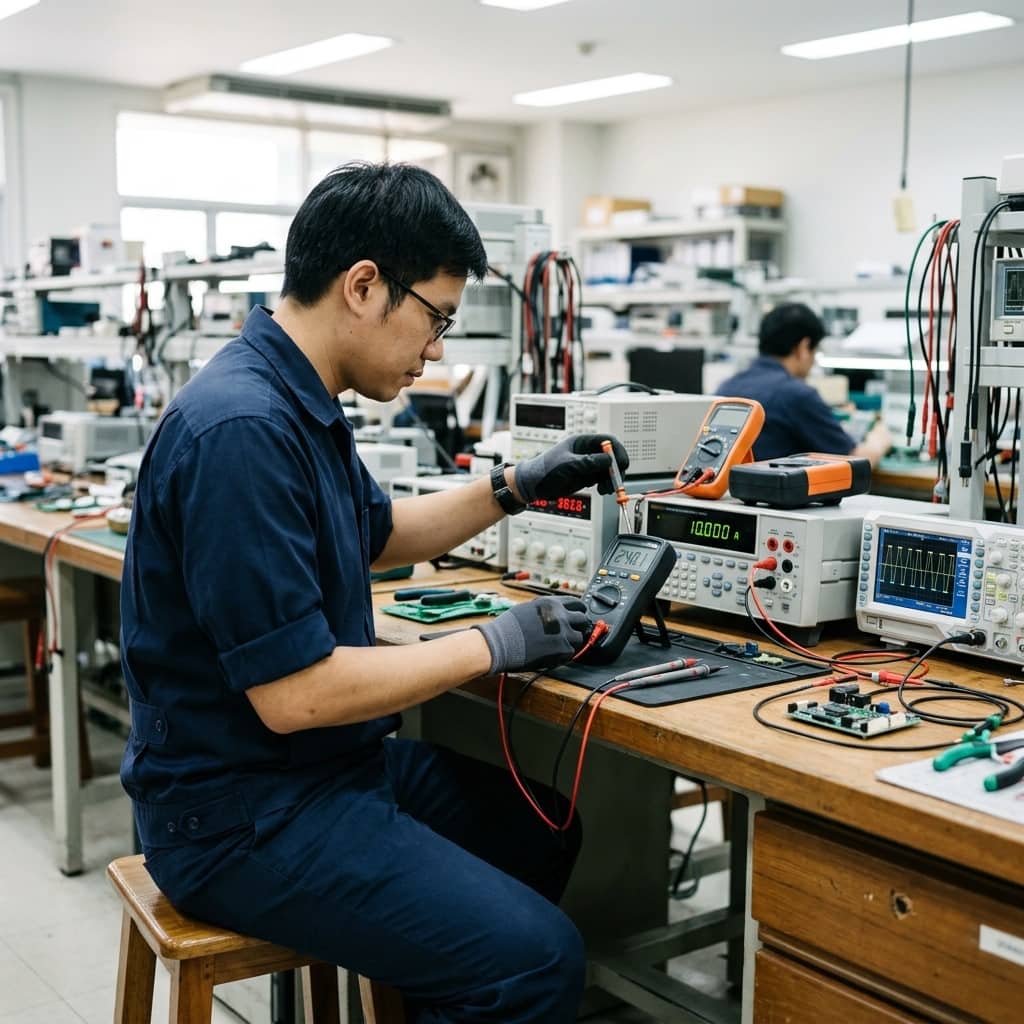
The core groups to include are: energy and power meters in the MDB; voltage, current, frequency, and power transducers feeding SCADA; instrument transformers (CTs/PTs), whose ratio and phase-angle errors directly affect energy measurement; and the maintenance team's portable instruments — multimeters, clamp meters, insulation testers, and earth testers — whose readings serve as statutory inspection evidence.
The common interval is annual, adjusted by actual risk: instruments behind important decisions, in heavy use, or with large drift found last time deserve shorter intervals, while instruments with consistently stable history can justify extension. Test points should span the actual working range — a voltage meter checked at several points across its span, not one — and transducers should be verified as a complete loop through to the final display to capture the system's accumulated error.
4. Common Problems and Instrument Management
Classic plant problems include instruments missing from the register — a multimeter bought later that never entered the calibration system — expired stickers still in service, and certificates filed without anyone reading the results, letting out-of-tolerance instruments continue in use unnoticed. More serious still is finding an instrument out of tolerance and performing no retrospective assessment of the measurements and decisions it had influenced.
Good management means a central instrument register with owners, intervals, and current status for every item; a mandatory out-of-tolerance procedure that forces retrospective impact review; acceptance criteria defined per instrument according to its actual use rather than copied wholesale from the datasheet; and intermediate checks against a simple in-house reference between calibrations to catch gross failures before the next scheduled cycle.
Need engineering consultation regarding Preventive Maintenance?
The WIN TECH SERVICE engineering team is ready to provide site surveys, electrical system inspections, and prepare accurate legal certification reports.