Liquid-Cooled Cable Technology for 500A Ultra-Fast DC Chargers
📌 Executive Summary
How synthetic oil coolant circulating inside lightweight charging cables enables 500kW ultra-fast charging without cable overheating.
1. Why High-Power Charging Cables Need Liquid Cooling
The physical obstacle to 350-500kW charging is heat in the cable. Conductor losses follow the I²R relationship, so raising current from 250A to 500A quadruples the heat for the same conductor size. Solving this by enlarging the copper cross-section makes the cable so heavy and stiff that ordinary users cannot handle it. Liquid-cooled cables attack the problem from the other direction: a smaller conductor with heat continuously removed by coolant circulating inside the cable assembly.
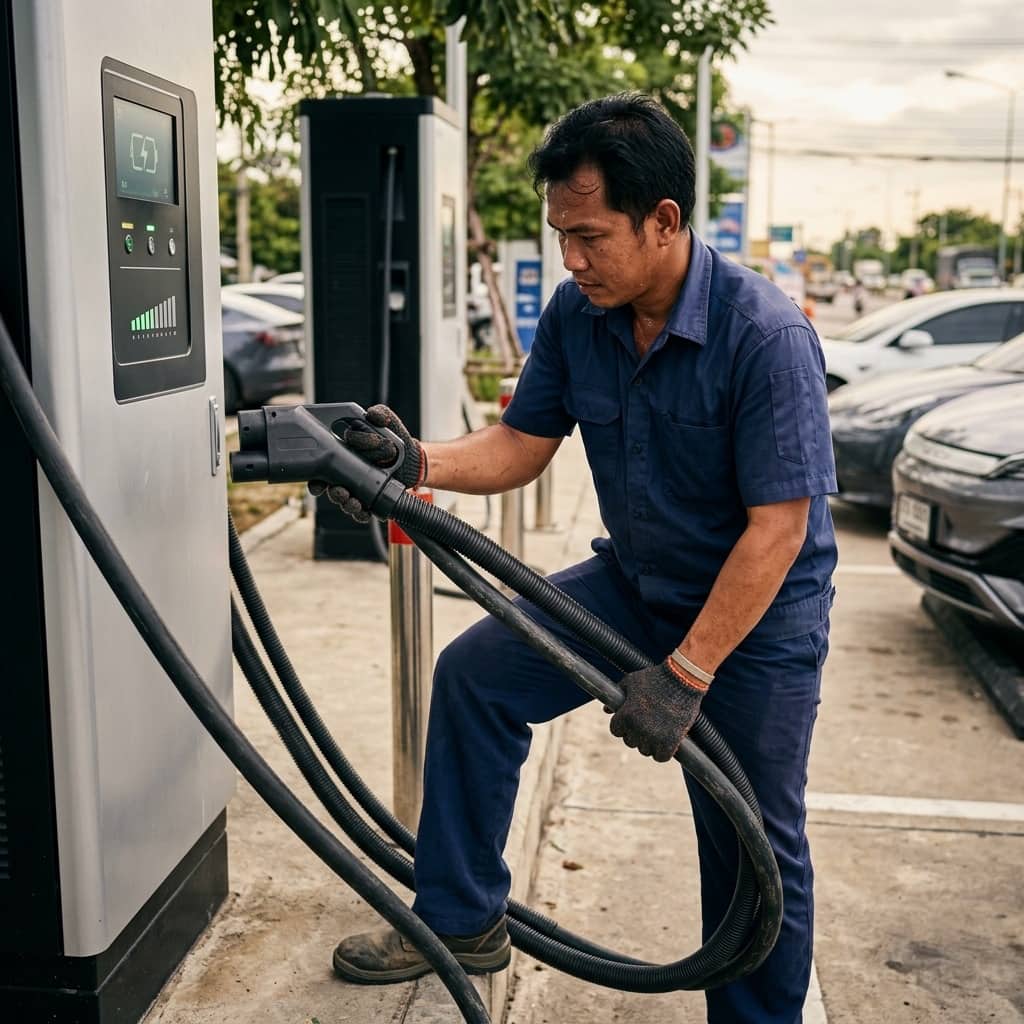
Internally the cable contains the positive and negative DC power conductors, coolant supply and return passages running between the charger cabinet and the connector, communication wiring, and an overall jacket. The coolant is a non-conductive dielectric fluid such as synthetic oil, or a water-glycol mixture in designs where the cooling circuit is isolated from the conductors. The result is a cable delivering up to 500A while remaining close in weight and flexibility to an ordinary charging cable, comfortable and safe for any user to handle.
2. Safety Standards and Operating Limits
High-power charging with CCS connectors falls under IEC 61851-23 for the station and the IEC 62196 series for the connector. The key safety principle is thermal management: temperature sensors embedded at the connector contact pins, automatic current reduction (thermal derating) as pin temperature approaches its limit, and immediate termination if the threshold is exceeded. This mechanism makes sustained operation beyond the contacts' continuous rating impossible as long as the sensing system functions.
What station engineers must grasp is that the 500A rating is contingent on the cooling system working. If the coolant pump degrades, coolant level drops, or the heat exchanger clogs, the unit will still charge but at a heavily limited current — users experience unexplained slow charging with no obvious alarm. Cooling system inspection is therefore maintenance with direct impact on user experience and station revenue, not an optional task to defer indefinitely.
- Temperature sensors at the connector pins are the core protection
- The unit derates current automatically as pins approach thermal limits
- Maximum current is contingent on cooling system condition, not fixed
- Unexplained slow charging often points to cooling degradation
3. Installation and Commissioning of Liquid-Cooled Systems
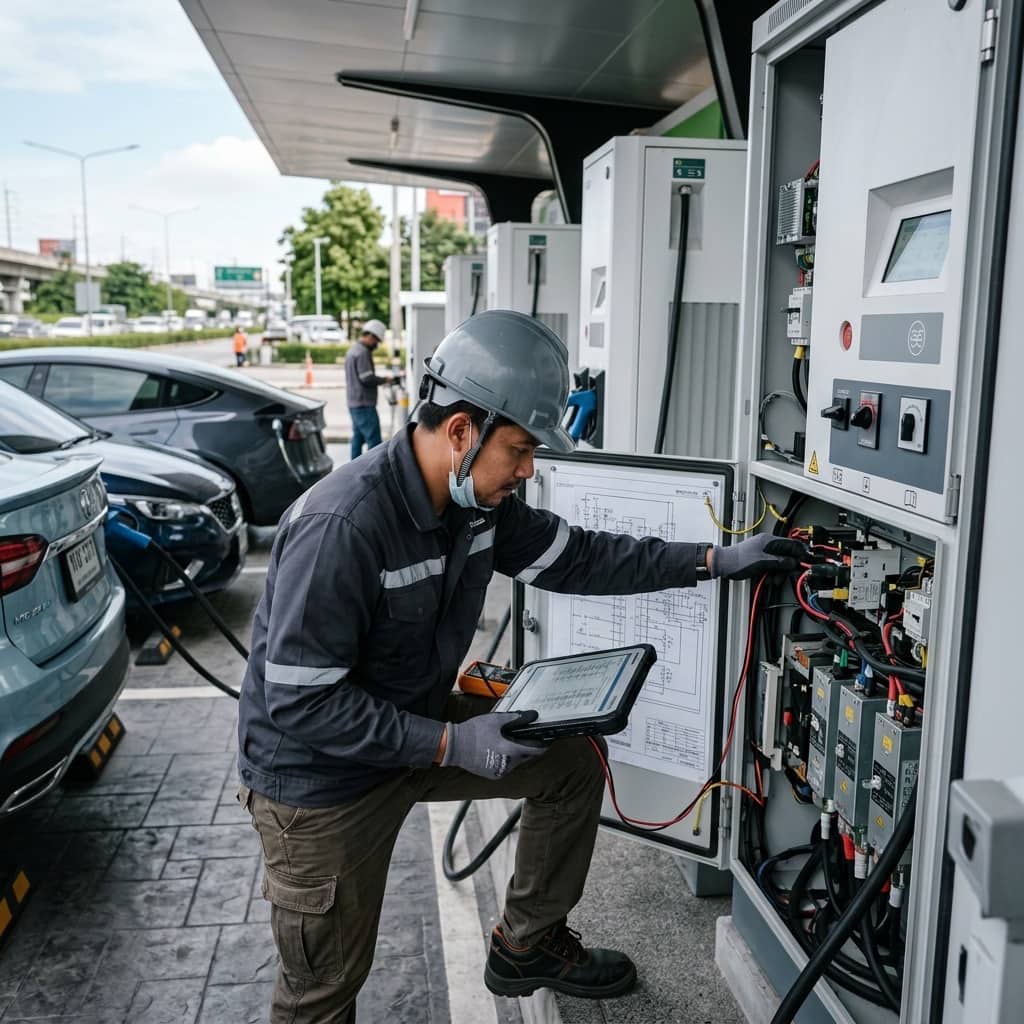
Chargers with liquid-cooled cables house the pump, reservoir, and heat exchanger of the cooling loop inside the cabinet or a separate power cabinet, so ventilation around the cabinet deserves particular attention — all the heat removed from the cable is rejected here. Avoid direct sun and dead-air walls, and respect the manufacturer's intake and exhaust clearances strictly. Power wiring and earthing follow the same principles as any DC station, with added attention to cable retention and management arms so bend points do not pinch the internal coolant passages.
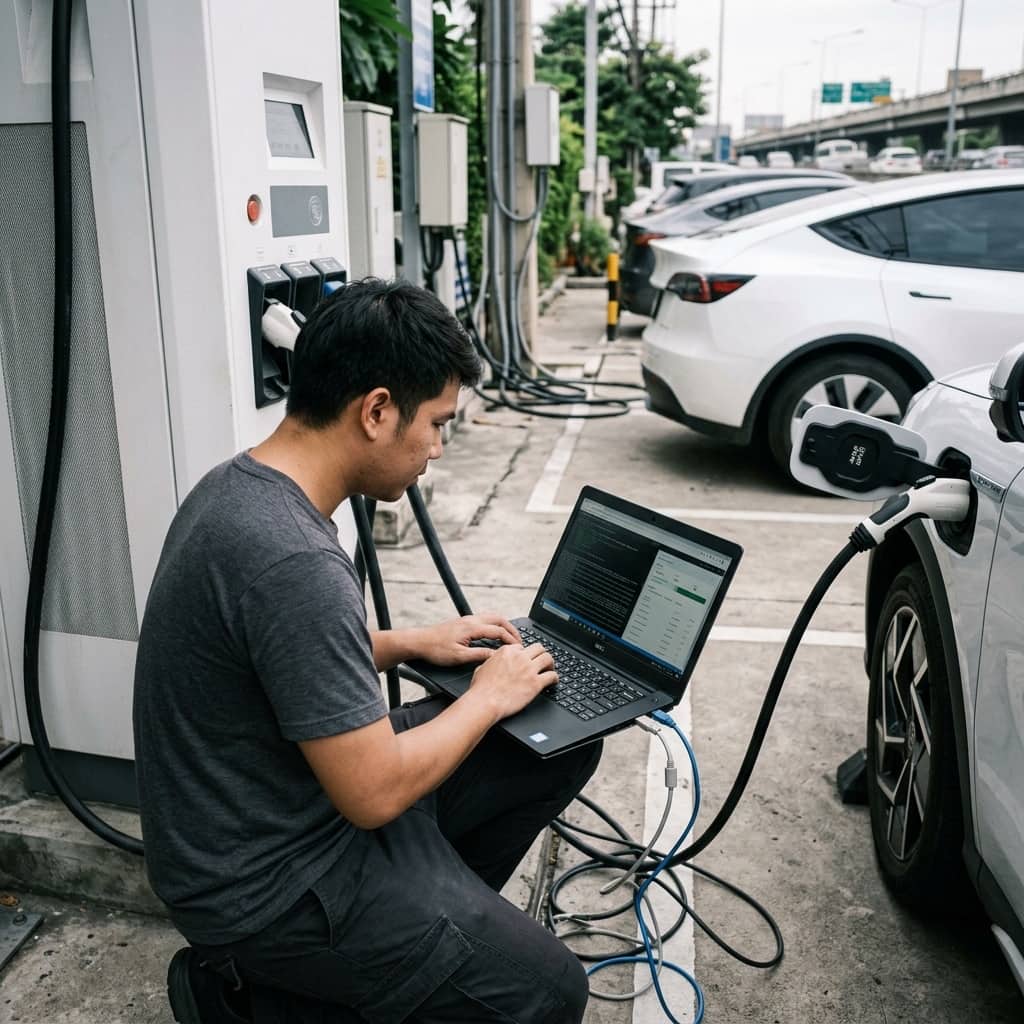
Commissioning must include cooling-specific tests: coolant level and type against specification, purging air from the loop, leak checks at fittings, and a sustained high-power charge with connector pin temperatures logged throughout to confirm the system holds design temperature at full rated current. The values recorded at handover should be kept as a baseline, because a rising temperature trend in subsequent tests is the best available indicator of cooling system degradation.
4. Maintenance and Degradation Symptoms to Watch
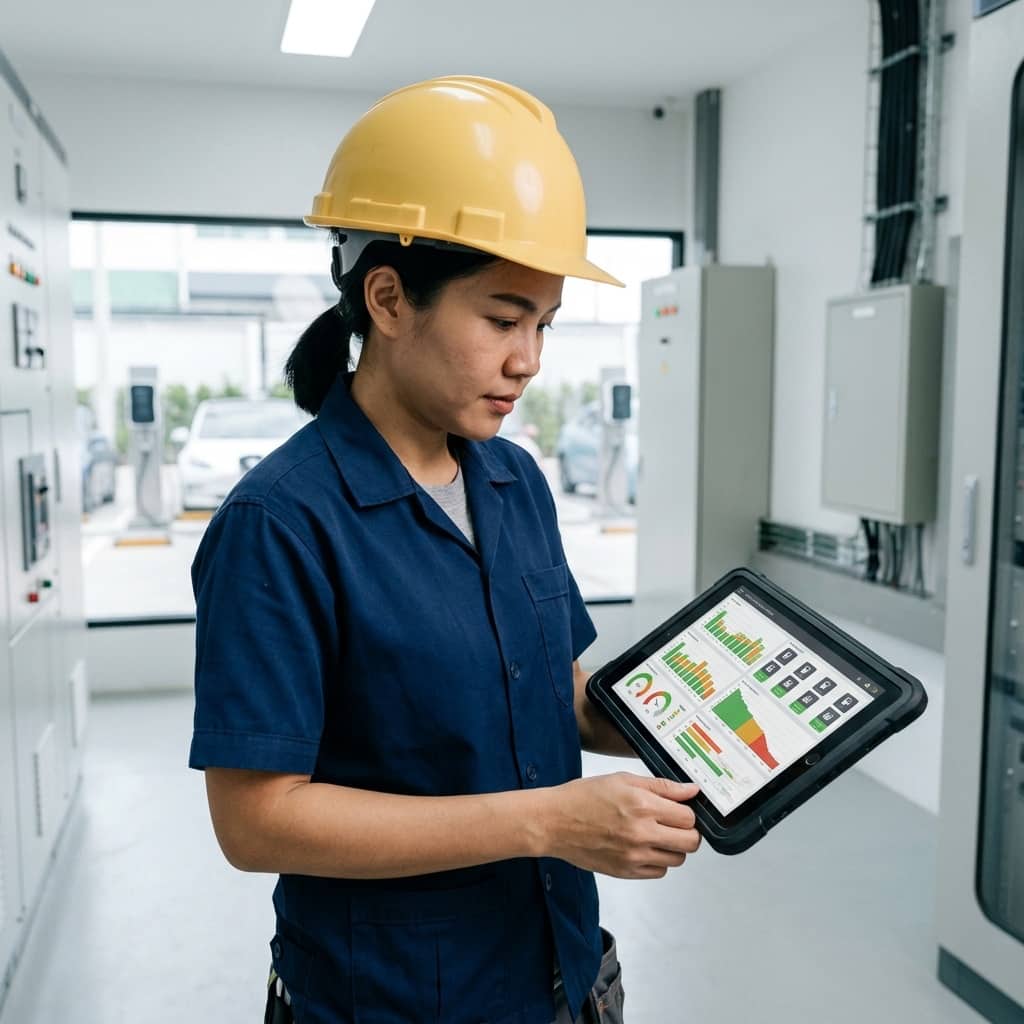
Principal degradation points are coolant aging or slow loss through seepage, circulation pump wear reducing flow rate, heat exchanger fins clogged with dust and insects, and leakage at the cable-to-connector junction — the part flexed most in service. User-visible symptoms are typically current limiting that kicks in unusually early on hot days, or high-temperature warnings in the unit's event log, which should always be configured to forward to central monitoring.
The maintenance plan should cover coolant level and condition checks on the manufacturer's schedule, cleaning of heat exchangers and air filters, visual leak inspection at the connector and along the cable, coolant replacement at its specified service life rather than on failure, and an annual high-power test comparing temperatures against the commissioning baseline. A cable with a torn jacket or a connector that has suffered a hard drop should be inspected only by a manufacturer-trained technician, because internal damage to coolant passages is invisible externally and can develop into a leak later.
- Check coolant level and condition on the manufacturer's schedule
- Clean heat exchangers and air filters
- Replace coolant at its specified service life, not on failure
- Run an annual high-power test against the commissioning baseline
Need engineering consultation regarding EV Infrastructure?
The WIN TECH SERVICE engineering team is ready to provide site surveys, electrical system inspections, and prepare accurate legal certification reports.