Online Double-Conversion UPS Architecture & Battery Autonomy Sizing
📌 Executive Summary
Evaluating static bypass, inverter efficiency, galvanic isolation transformers, and Lithium vs VRLA battery banks for industrial UPS.
1. Online Double-Conversion UPS Architecture
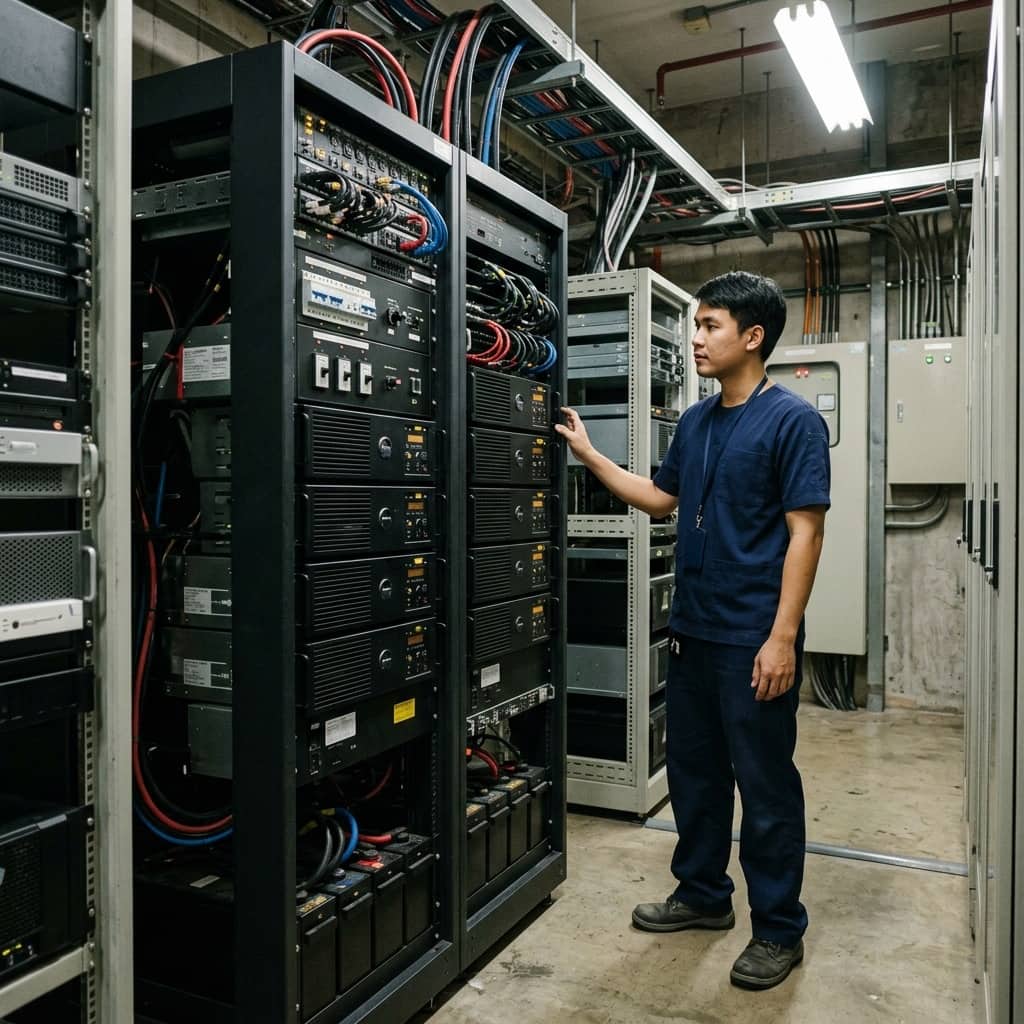
An online double-conversion UPS converts energy twice continuously: incoming AC is rectified to DC, then inverted back to clean AC. The load receives fully re-synthesized power, isolated from supply disturbances including sags, swells, frequency deviation, and noise. This architecture provides zero transfer time on outage, because the inverter is already carrying the load and merely switches its energy source from the rectifier to the battery.
Compared with offline and line-interactive types, which feed the load directly in normal conditions and transfer to the inverter only during disturbances, online UPS is best suited to critical loads such as data centers, server rooms, medical equipment, and process control systems. The trade-off is slightly lower efficiency from double conversion, which modern units offset with eco modes whose risk should be assessed before enabling them on critical loads.
2. UPS Performance Classification Standards
IEC 62040-3 classifies UPS performance with a three-part code such as VFI-SS-111. VFI (Voltage and Frequency Independent) means the output is independent of input voltage and frequency, the property of online double-conversion designs, while VI and VFD describe line-interactive and offline types. The remaining code parts specify output waveform quality and dynamic performance during load steps and mode transfers.
Reading this code allows objective comparison across brands instead of relying on marketing claims. The IEC 62040 series also covers safety and electromagnetic compatibility requirements. Purchasers should specify VFI-SS-111 for critical loads, request standard test results, and check both kVA and kW ratings, since modern computing loads have near-unity power factor, making the kW rating the true limiting figure.
- IEC 62040-3 — performance codes such as VFI-SS-111
- VFI = online, VI = line-interactive, VFD = offline
- Specify VFI-SS-111 in project specs for critical loads
- Verify both kVA and kW ratings of the unit
3. Sizing the UPS and Battery Autonomy
UPS sizing starts with a survey of all connected loads, including normal power draw and inrush at startup. A growth margin of roughly 20-30 percent is typical, and the unit should not run above about 80 percent of its continuous rating, both to extend service life and to absorb momentary load steps. Autonomy is calculated from usable battery energy divided by load power through inverter efficiency, using the battery manufacturer's discharge tables because usable capacity falls at high discharge rates.
A frequently overlooked issue is VRLA battery life, which is strongly temperature dependent; continuous operation above 25 degrees Celsius shortens life significantly, so the design must specify battery room air conditioning. Autonomy targets should also be deliberate: enough for a safe shutdown, or long enough to bridge generator start and load acceptance, commonly set at ten to fifteen minutes for systems backed by a standby generator.
4. Installation, Testing, and Maintenance Practices
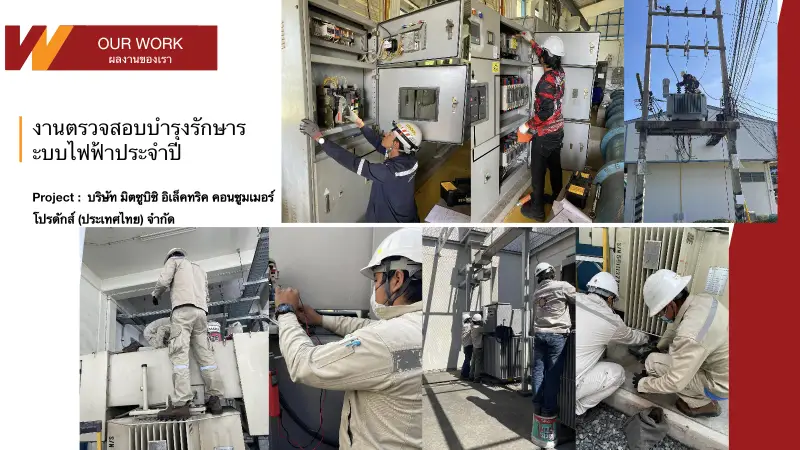
Installation should include an external maintenance bypass so the UPS can be removed for service without dropping the load, and the UPS input should be fed separately from disturbing loads such as large motors. The battery string requires its own overcurrent protection and ventilation per applicable requirements. Acceptance testing should include a genuine pull-the-plug test under real or dummy load to prove the designed autonomy.
In long-term care, batteries are the most failure-prone part of any UPS system. Discharge tests should follow a defined schedule, with per-cell or per-block voltage logging to find weak cells before they take down the whole string. Cooling fans and DC bus capacitors should be inspected and replaced at the manufacturer's recommended age. A preventive maintenance contract with remote monitoring surfaces anomalies before the next outage becomes a test the system fails.
- Always install an external maintenance bypass
- Perform a real pull-the-plug test under load at acceptance
- Run scheduled discharge tests with per-cell voltage logging
- Replace fans and capacitors at manufacturer-recommended age
Need engineering consultation regarding Power Quality & Energy?
The WIN TECH SERVICE engineering team is ready to provide site surveys, electrical system inspections, and prepare accurate legal certification reports.