Understanding Power Factor Penalties & Capacitor Bank Return on Investment

📌 Executive Summary
Calculating power factor surcharge fees when PF drops below 0.85 and designing automatic capacitor banks to maintain PF 0.95-0.98.
1. Power Factor and the Utility Tariff Structure
Power factor is the ratio of real power (kW) to apparent power (kVA). A low value means the system must deliver substantial reactive power (kvar) to feed loads such as motors, transformers, and ballasts. That reactive component performs no useful work yet raises line current, increasing losses in cables and transformers. Utilities therefore apply reactive power penalty mechanisms to large customers whose power factor falls below the threshold.
For medium-sized business tariffs and above under MEA and PEA, if the measured reactive demand exceeds the allowed proportion of real power demand, a penalty is charged per excess kvar in that billing cycle. The penalty recurs every month until corrected, which makes power factor improvement an investment whose return can be evaluated directly from the electricity bill.
2. Compensation Principles with Capacitor Banks
Power capacitors supply leading reactive power that cancels the lagging reactive power of motor loads, reducing the net kvar drawn from the utility. Required kvar is calculated from average real power and the phase angles before and after compensation. A target power factor of about 0.95 to 0.98 is common, leaving headroom for load variation while avoiding overcompensation.
Installations may be fixed, for steady continuous loads, or automatically switched by a power factor controller that steps capacitor stages in and out to follow the actual load. Automatic systems suit plants whose load varies widely across shifts. Critically, in systems with significant harmonics, detuned reactor capacitor banks must be used to prevent resonance from amplifying harmonic currents and destroying the capacitors.
- Target a corrected power factor of roughly 0.95–0.98
- Use fixed banks for steady loads, automatic controllers for variable loads
- Use detuned reactor banks where harmonics are significant
- Avoid overcompensation, which raises system voltage abnormally
3. Payback Assessment from Real Data
Payback assessment starts by collecting at least 12 months of electricity bills to see monthly reactive penalties and seasonal production trends. Actual kW and kvar profiles are then measured at the MDB with a power quality analyzer for at least a week. Together, these datasets determine the kvar to be installed, the number of steps, and the total investment estimate including installation.
Project returns come from two sources: eliminated reactive power penalties and reduced cable and transformer losses due to lower current. In many cases, power factor correction also releases transformer capacity previously occupied by reactive power, enabling load expansion without a transformer upgrade. Actual payback depends on each plant's penalty size and operating hours, so it should always be computed from that facility's own data.
4. Post-Installation Issues and Maintenance
Common issues include capacitors losing capacitance with age until compensation falls short, step contactors wearing out from frequent switching, fuses blowing due to harmonic currents, and controllers with improper C/k settings causing abnormally frequent step cycling. These conditions often go unnoticed until penalties reappear on the bill, so reviewing the monthly invoice is the simplest health indicator for the compensation system.
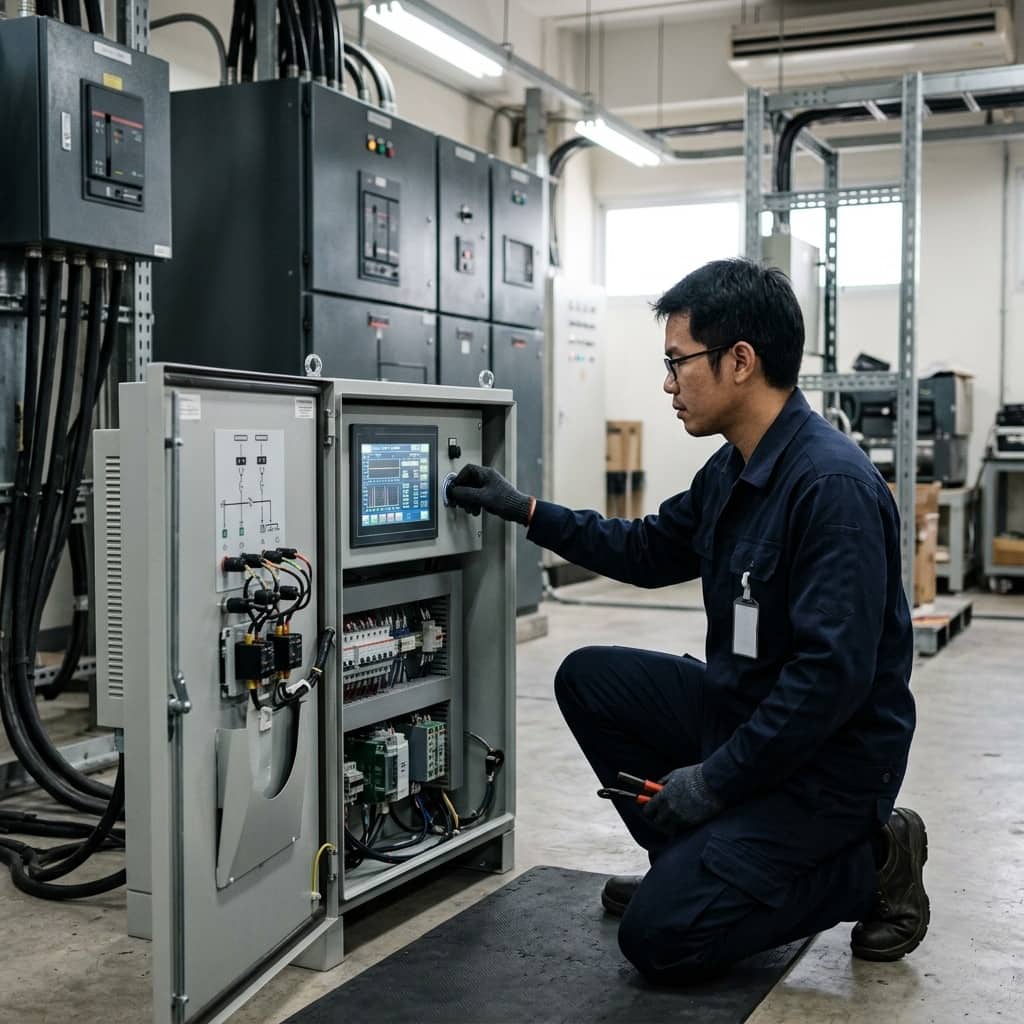
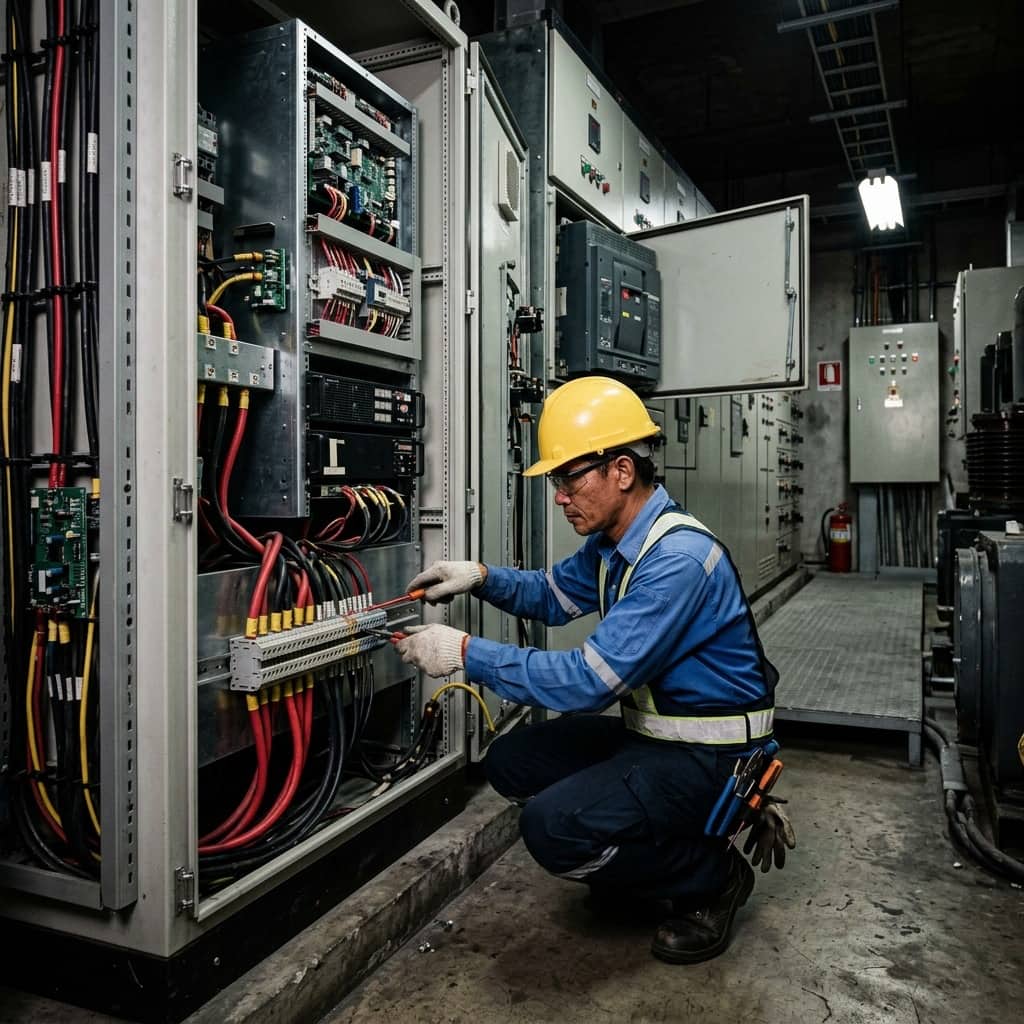
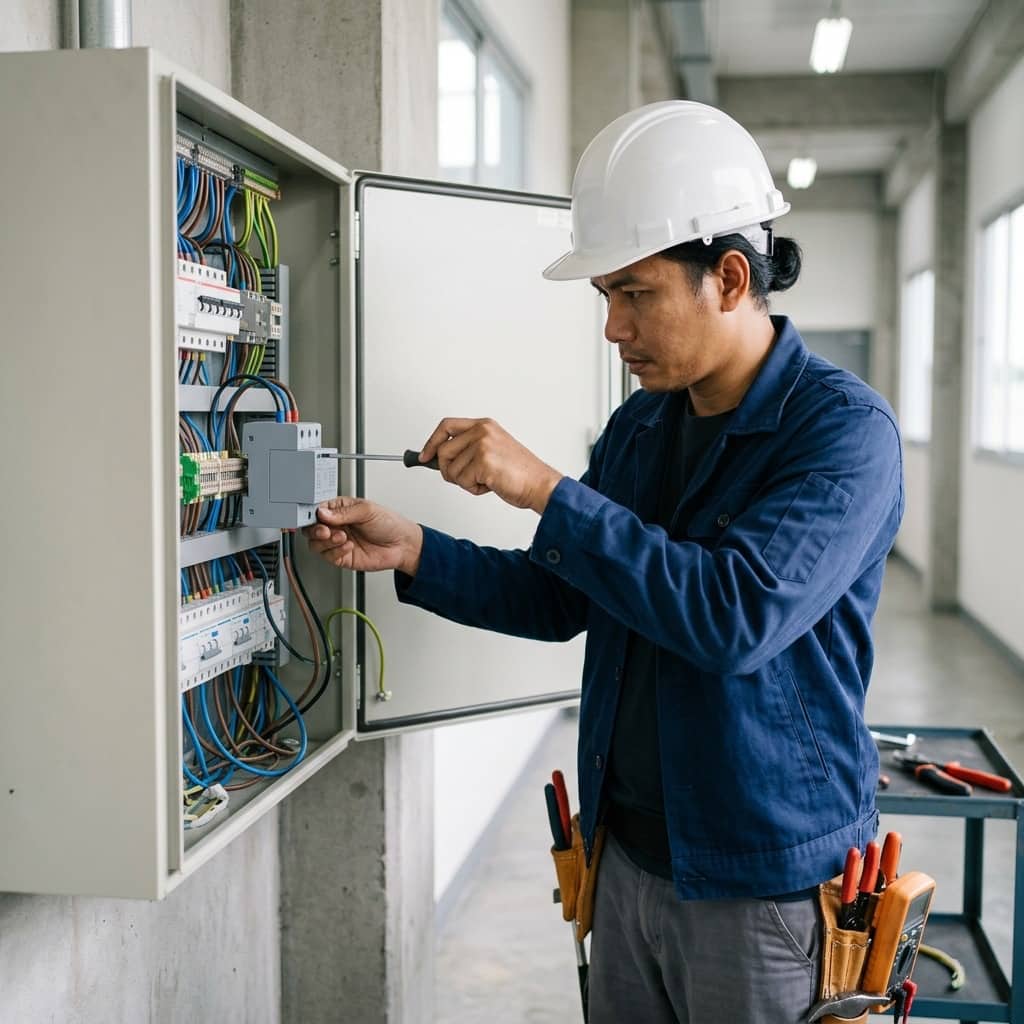
A maintenance plan should include measuring each step's capacitance against its rating at least annually, thermographic inspection of contactors and electrical joints, cleaning panel ventilation, and functionally testing every controller step. If plant loads have changed substantially since the design, such as adding many inverter drives, a new power quality survey should determine whether an upgrade to detuned banks is required.
- Review monthly bills to catch returning penalty charges
- Measure capacitor capacitance against rating at least yearly
- Thermally scan contactors and electrical connections
- Re-evaluate the design when plant loads change significantly
Need engineering consultation regarding Power Quality & Energy?
The WIN TECH SERVICE engineering team is ready to provide site surveys, electrical system inspections, and prepare accurate legal certification reports.