Transient Voltage Surge Suppressors (TVSS) for Critical IT & PLC Automation
📌 Executive Summary
Clamping nanosecond transient voltage spikes caused by inductive load switching and indirect lightning strikes.
1. Transient Surges and the Risk to IT and PLC Systems
A transient overvoltage, or surge, is an abnormal voltage spike lasting on the order of microseconds. The most severe external cause is lightning, whether by direct strike or induction onto supply lines. Far more frequent are internal causes: switching of inductive loads such as contactors, motors, and capacitor banks. Internal surges carry less energy than lightning, but recurring thousands of times per year they cumulatively degrade electronics without immediate symptoms.
The most vulnerable equipment includes low-voltage electronics in servers, network gear, PLC I/O cards, and HMI displays. Damage may be immediate failure or gradual degradation causing random malfunctions, which are harder to diagnose and often costlier to production than outright failure. Surge protective devices (SPDs, commonly called TVSS) are therefore a critical defense that must be designed as a coordinated system, not installed at a single point.
2. SPD Standards and the Layered Protection Concept
The international standard for SPDs in low-voltage systems is IEC 61643-11, which classifies devices as Type 1 for direct lightning current at the main board of structures with lightning protection systems, Type 2 for distribution boards handling induced surges, and Type 3 for installation near terminal equipment. Overall lightning protection design references the IEC 62305 series, which defines the Lightning Protection Zone (LPZ) concept.
The key principle is cascaded protection, where each SPD stage successively reduces surge energy from the MDB through sub-boards to the point of use. Cable length separation or decoupling inductors between stages ensure the SPDs operate in the correct sequence. Selection parameters include impulse current rating (Iimp), discharge current ratings (In/Imax), and the voltage protection level (Up), which must remain below the withstand capability of the protected equipment.
- IEC 61643-11 — SPD Type 1 / 2 / 3 classification
- IEC 62305 series — Lightning Protection Zone (LPZ) design
- Choose Up below the impulse withstand of the protected equipment
- Engineer coordination between SPD stages
3. Site Survey and Correct Installation Points
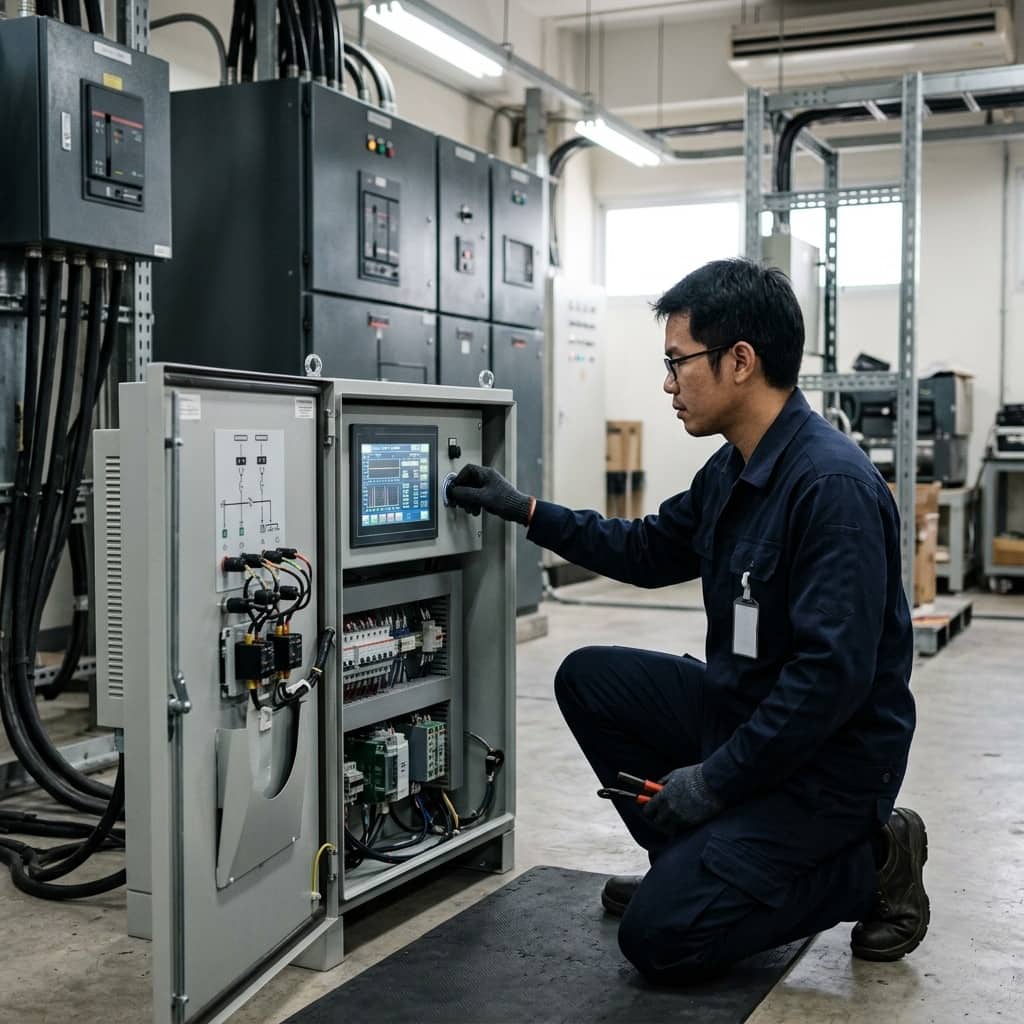
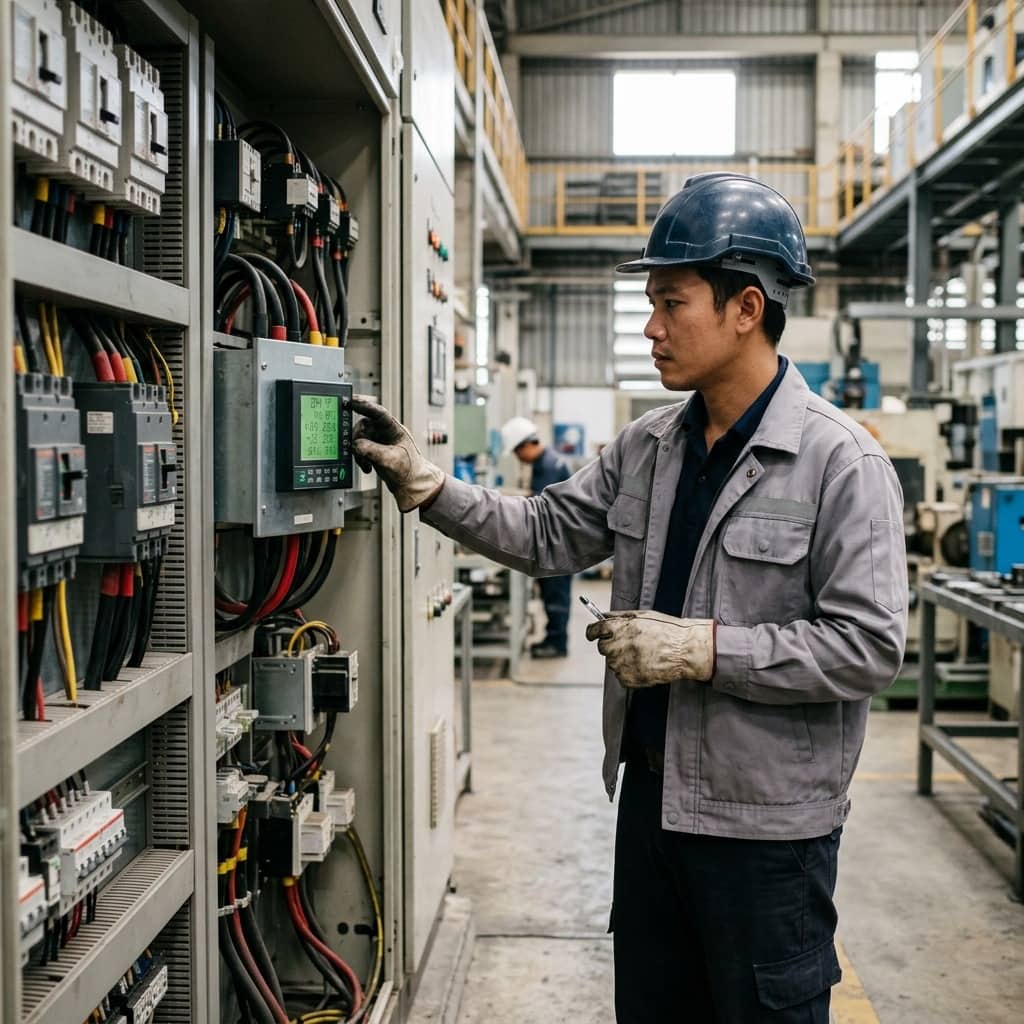
Design starts by surveying every path a surge can enter: power conductors, communication cables, antenna feeds, and metallic pipes entering the building. Risk is then assessed from the building's exposure, the existing lightning protection system, and the cost of equipment downtime. Server rooms and PLC control cabinets should be treated as zones requiring the highest protection, with SPDs on both the power feed and the signal lines entering each cabinet.
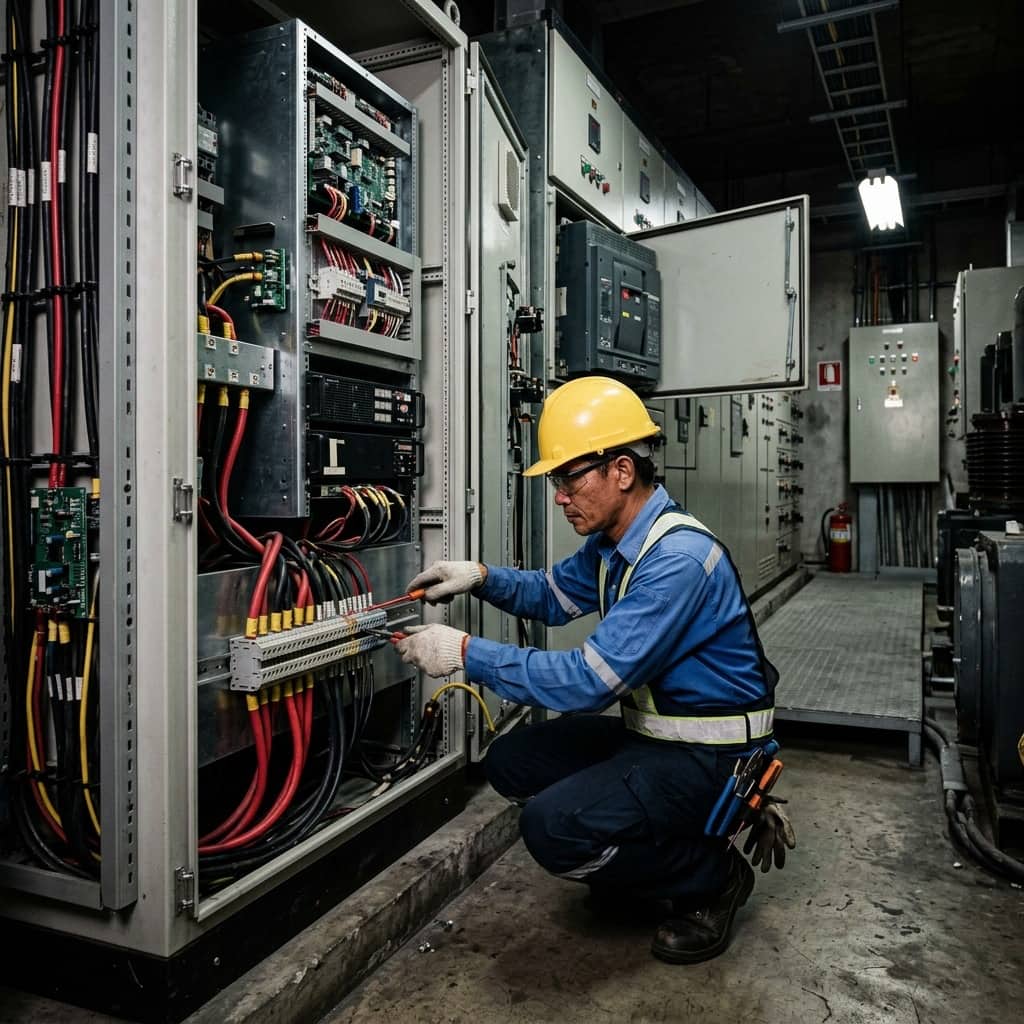
An often overlooked detail is SPD wiring quality. The total lead length from phase conductor through the SPD to the earth bus should not exceed roughly 0.5 meters, because every additional length adds inductive voltage drop while conducting surge current, leaving the equipment exposed to voltages well above the rated Up. Grounding and equipotential bonding must also be sound, since even the best SPD cannot perform on a defective earthing system.
4. Common Problems and SPD Maintenance
Frequent problems include installing a single SPD stage at the main board and expecting it to protect all terminal equipment, excessively long or coiled SPD leads, unprotected signal lines letting surges bypass through communication ports, and failure to check SPD status after thunderstorms. MOV-based SPDs degrade with every surge absorbed; once worn out, the internal disconnector isolates the device, leaving the equipment unprotected while power continues to flow normally.
Good practice is to select SPDs with status indicators or remote signaling contacts wired to the building monitoring system, inspect them routinely and after every severe storm, and verify earthing continuity during annual electrical maintenance. Replacing an exhausted SPD module promptly costs very little compared to the loss of an unprotected server or control system.
- Protect in layers; never rely on a single SPD at the main board
- Keep SPD leads as short as possible and never coiled
- Protect communication lines alongside power lines
- Check SPD status after every thunderstorm
Need engineering consultation regarding Power Quality & Energy?
The WIN TECH SERVICE engineering team is ready to provide site surveys, electrical system inspections, and prepare accurate legal certification reports.